Based on Hunterbrook Media’s reporting, Hunterbrook Capital is long $DDOG and short a basket of comparable securities at the time of publication. Positions may change at any time. See full disclosures below.
Anthropic has got that dog in them.
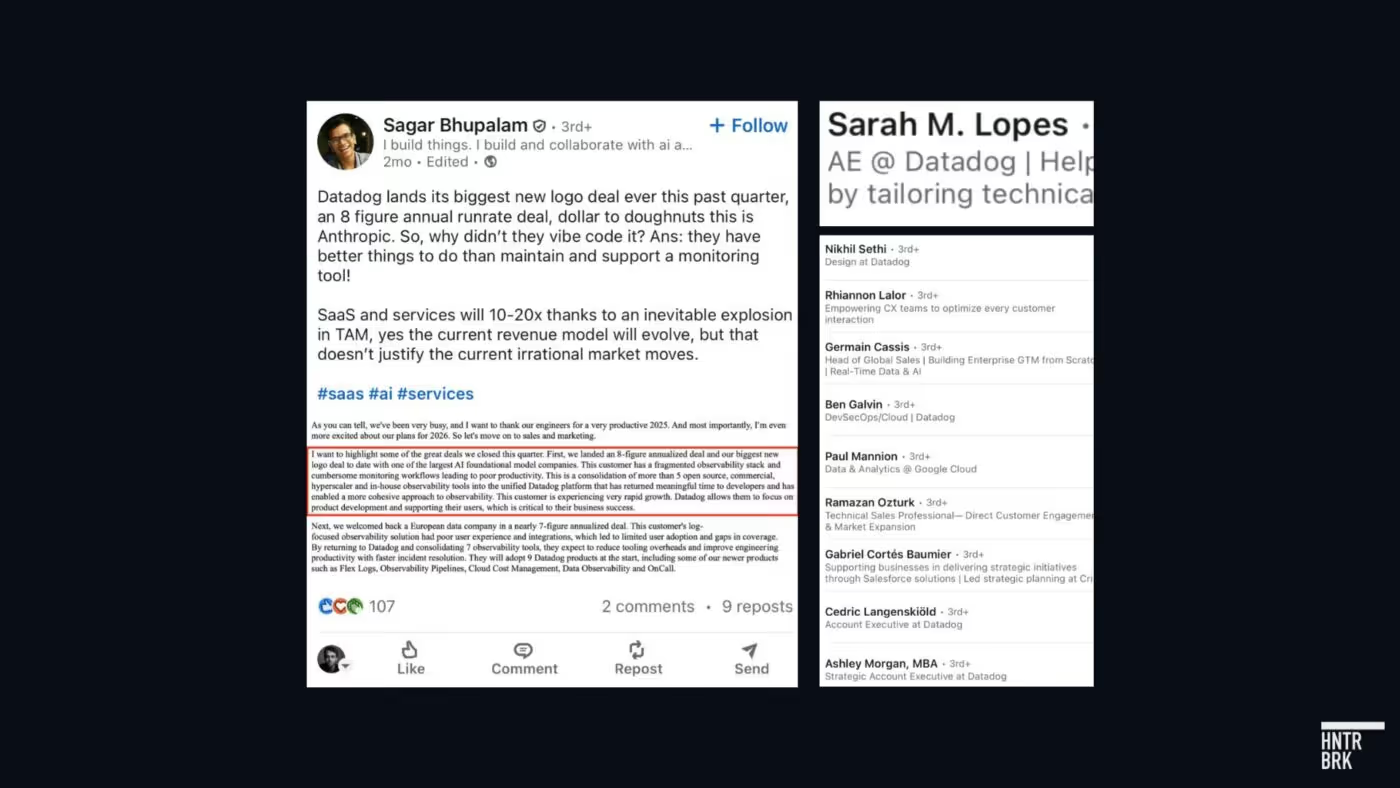
When Datadog ($DDOG) told analysts on its fourth-quarter earnings call in February that it had landed an “eight-figure annualized” deal with “one of the largest AI foundational model companies” — among the biggest new logos in the company’s history — CEO Olivier Pomel didn’t name the customer.
Datadog’s CFO David Obstler said the company modeled the contract with “very conservative” assumptions in 2026 guidance because of the unpredictability that consumption-based pricing introduces. A handful of analysts speculated about Anthropic being the customer. Neither company confirmed, though several Datadog employees liked a LinkedIn post whose author inferred an Anthropic partnership.
Hunterbrook Media dove deep into live browser traffic from Claude.ai and public bug reports filed against its developer tools to establish what had not previously been proven:
Datadog’s big new customer indeed appears to be the fastest-growing software company of all time — not bad for a deal with consumption-based pricing.
The evidence of an Anthropic partnership comes in two distinct forms.
The first is solid, universal, and trivial to verify: Datadog’s monitoring software is deeply embedded in Claude products, watching the sessions of millions of everyday users. This is incontrovertible — though comparatively modest financially.
The second is more circumstantial but suggestive of a much larger ticket: Anthropic appears to be quietly exploring using Datadog for all its essential telemetry — in a phased, experimental way that hasn’t been publicly disclosed, dating back to at least January.
One key clue came from a March 31 leak.
None of this is direct confirmation — and Anthropic may just be testing Datadog. But the evidence… certainly seems to amount to both bark and bite.
Datadog Likely Watches All Your Claude Sessions
Big Datadog is watching.
Hunterbrook’s engineering team conducted a live test using various Anthropic products.
What we found:
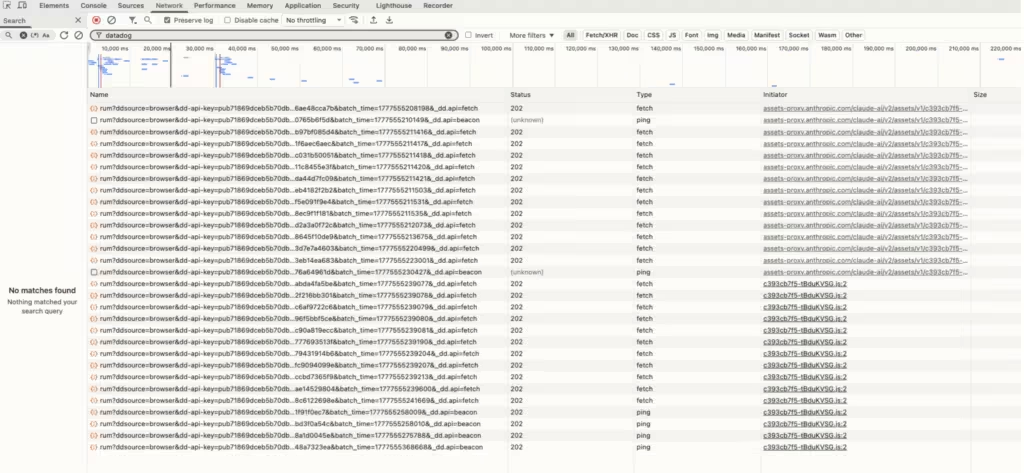
After loading Claude in your browser or desktop, Anthropic quietly ships packets of data capturing that experience — from how fast the page rendered to whether a script crashed — over to Datadog. That’s called telemetry. It’s how Anthropic engineers track whether things are working or not, and collect data to improve the experience of using Claude for all of its estimated 30 million users.
What Anthropic is trusting Datadog with is not trivial. A one-second slowdown or a silent error in the Claude composer can translate directly into churn and lost revenue. You can’t fix what you can’t see, and you can’t see tens of millions of browsers without piping their experience back to a central system.
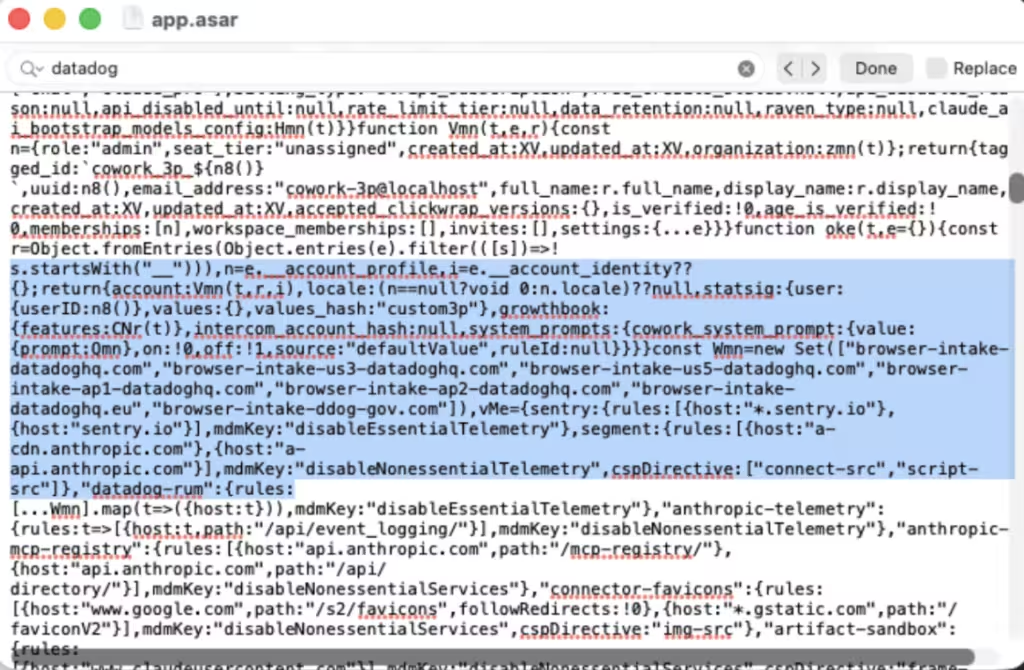
And it’s not just product analytics: Anthropic classifies Datadog Real User Monitoring (RUM) as essential — crash reports, error stack traces, and performance timings — meaning that it’s enabled by default, and enterprise customers need to actively elect to turn it off.
Datadog sells one of the most widely used RUM tools on the internet — which has helped power Datadog to its $45 billion market cap. RUM runs inside the user’s browser and ships that data regularly back to Datadog, where Anthropic’s engineers use it to find bugs and measure speed.
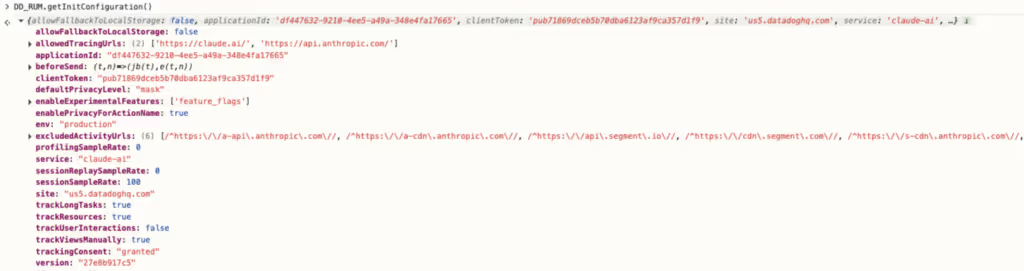
A live inspection of Claude.ai conducted for this story found the Datadog RUM software development kit — a small bundle of code that the website loads into the visitor’s browser — initialized with the service name claude-ai, the environment set to production, and a sample rate of 100%. That means literally every consumer session on the chat product is captured by Datadog. The same SDK is bundled inside the Claude desktop app.
Early Signs of a Wider Rollout
The second finding is harder to interpret. But, taken together with the first, paints a clearer picture.
Anthropic appears to be rolling out Datadog much deeper than RUM — using it for more types of telemetry — in a phased way that is consistent with an account in active expansion.
The clearest indicator is Claude Code, Anthropic’s developer command-line tool.
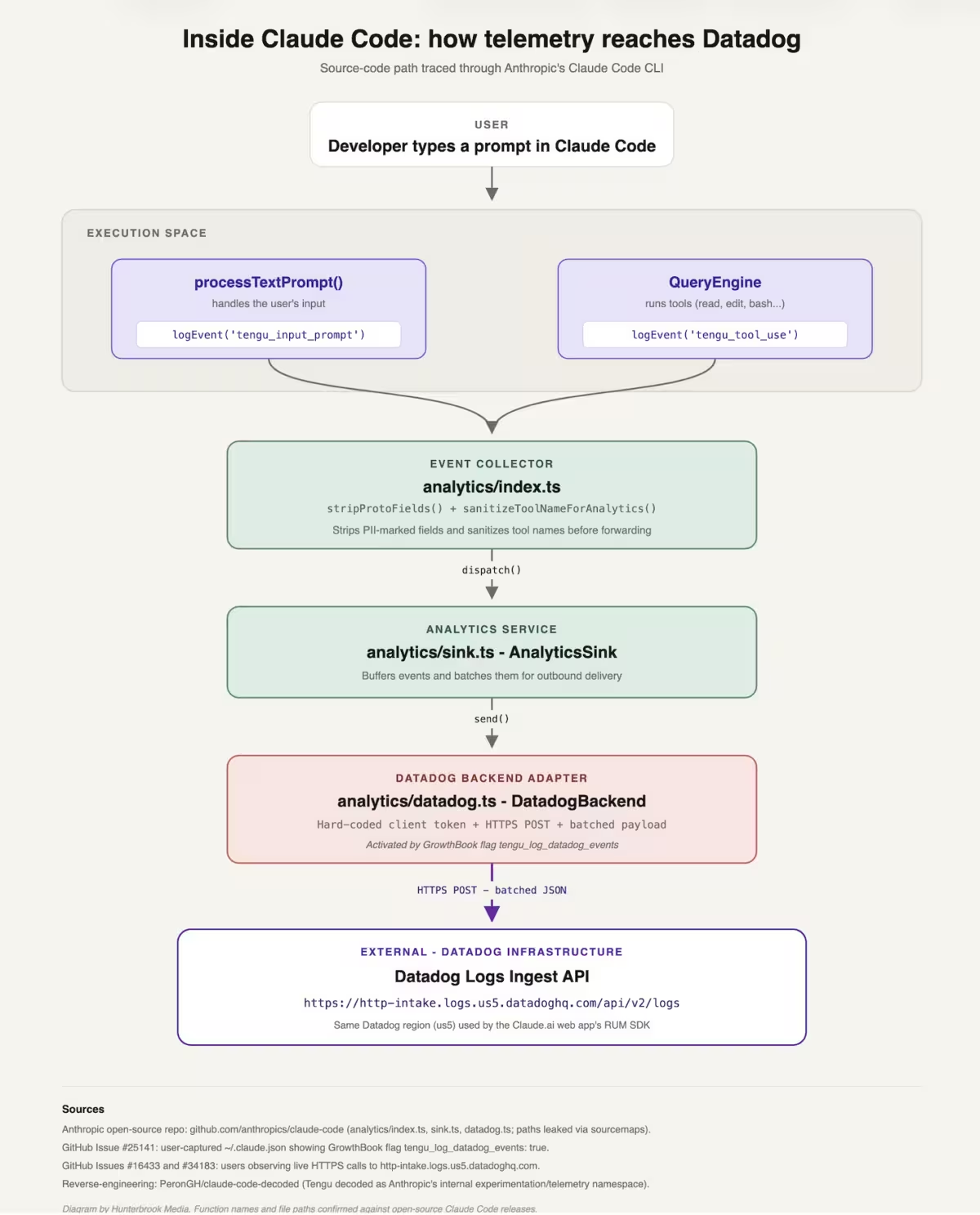
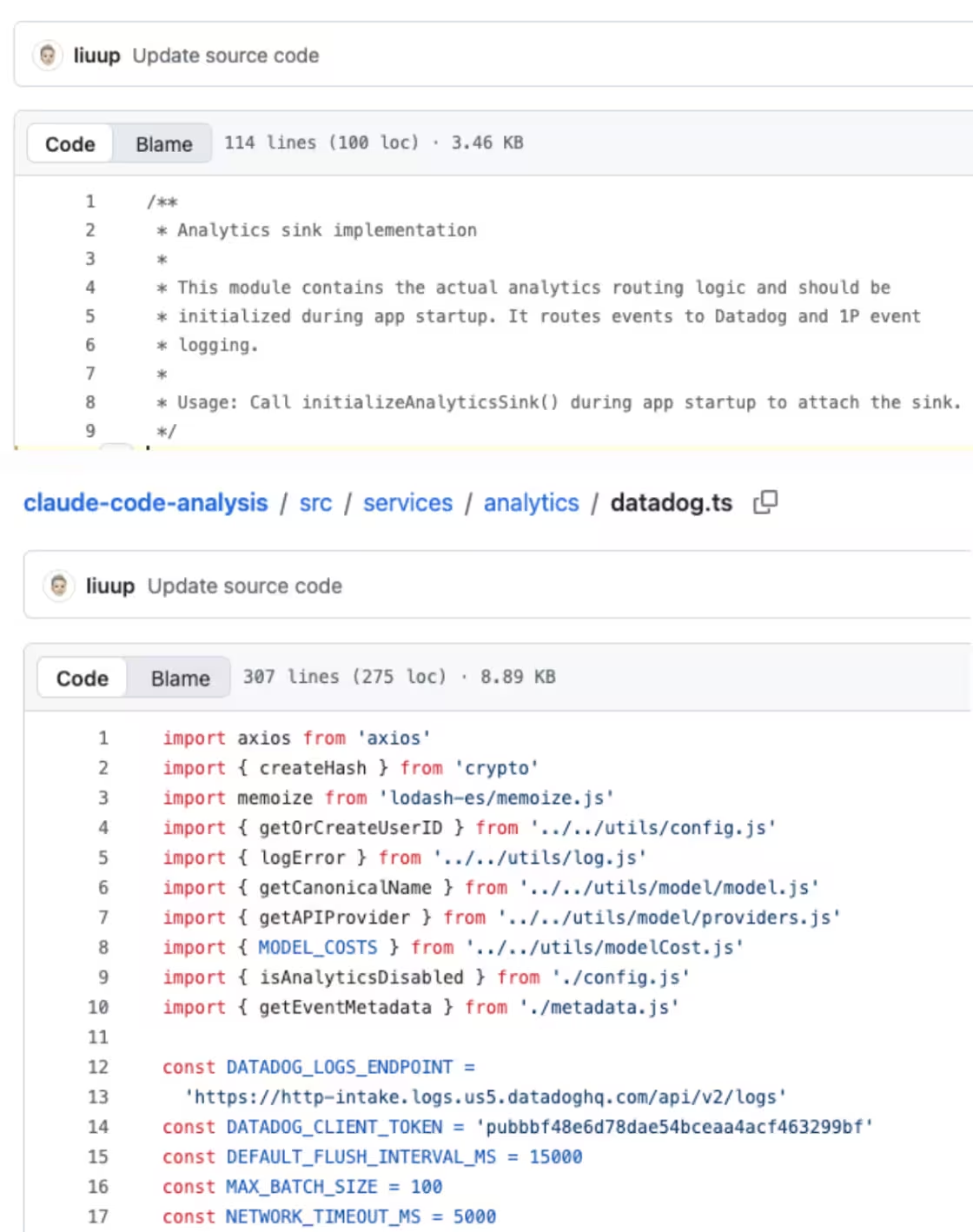
As part of a module, its source code contains a hard-coded Datadog client token and a dedicated Datadog integration, where there is capability for Claude Code to send telemetry events to Datadog. This is distinct from Datadog’s browser RUM product, which Anthropic is already using: Claude Code shipped with wirings to send analytics and telemetry to Datadog. Whether each user actually sends data to Datadog is governed by what engineers call a feature flag — an on-off switch that lets a company turn a feature on for some users and off for others.
The switch is named tengu_log_datadog_events. A user-submitted configuration dump captured the switch turned on, paired with settings that bundle telemetry into batches before sending — the architecture of a production telemetry pipeline mid-rollout, not a one-off debug log. The flag is managed through a third-party A/B testing tool called GrowthBook, the standard mechanism companies use to roll new features out to small subsets of users at a time.
Public bug reports show the rollout is real, even if its breadth is unclear.
As early as January 6, a user noticed Claude Code calling datadoghq.com every few seconds throughout each session and complained that the calls were undisclosed; the issue was closed as “not planned.” On March 13, another user reported that during a memory problem, Claude Code generated 1.2 million error log lines in roughly 80 minutes — a loop of failed attempts to deliver telemetry to https://http-intake.logs.us5.datadoghq.com/api/v2/logs, Datadog’s log-ingestion endpoint.
A March 18 outage report showed the same Datadog endpoint failing in lockstep with api.anthropic.com, suggesting the connection is part of the production critical path for users who have it turned on. Anthropic enterprise feature Cowork is similarly instrumented: A March 26 bug report references its OpenTelemetry exporter attempting to ship events to https://otlp.us5.datadoghq.com/v1/logs, with event types named user_prompt, api_request, api_error, tool_result and tool_decision. This is Datadog’s instance of the OpenTelemetry protocol, which signals that Anthropic is exploring using Datadog’s infrastructure for the telemetry surface of an LLM application.
The most direct evidence emerged on March 31, when Anthropic seemingly accidentally shipped a sourcemap file inside a software update to Claude Code — a debug file that maps the product’s compiled code back to its original internal layout, effectively a blueprint of the source tree. Several independent researchers — including Karan Prasad and Engineer’s Codex — had pulled the file apart and posted their findings. Among the files they identified was a path indicating a dedicated Datadog integration module sitting alongside Anthropic’s other analytics services.
A Chinese explanation of how this works was posted to GitHub. Here is a data flow diagram created by Hunterbrook summarizing the findings:
Why Occam’s Razor Is Anthropic
Datadog’s earnings-call description matches Anthropic’s known stack. Pomel told analysts the customer — the largest “new logo” in Datadog’s history — was consolidating onto Datadog from a fragmented mix of “more than five open-source, commercial, hyperscaler, and in-house” tools. That description fits Anthropic. Grafana Labs, a prominent open-source observability vendor, publicly names Anthropic as a customer in its September 2025 annual recurring revenue announcement — supplying exactly the kind of open-source observability tooling Pomel said the customer was migrating away from.
The “new logo” qualifier — Wall Street shorthand for a brand-new enterprise relationship, not the expansion of an existing one — narrows the field further. OpenAI, long flagged by analysts as Datadog’s largest single customer, is by definition not a new logo.
Among AI labs operating at the scale implied by an eight-figure annual contract, that leaves Anthropic as perhaps the most plausible candidate.
The two companies have also been moving toward each other publicly for more than a year. At Datadog’s DASH 2024 conference, Anthropic President Daniela Amodei announced a joint product integration. Datadog now publishes a dedicated Anthropic monitoring product and a Cloud Cost Management integration for tracking Anthropic spend, and is itself a named member of Anthropic’s Claude Design research beta.
The relationship cuts against a specific bear thesis on Datadog. Some investors have argued that AI-native companies will eventually “vibe code” their way out of buying observability software, building in-house tools instead. (A July 2025 Tegus interview with an Anthropic employee propagated this thesis, claiming the company “didn’t even touch Datadog ever.” That was, of course, before the announced partnership.)
Anthropic, the frontier-AI customer most capable of doing exactly that kind of vibe coding — and, according to Pomel, already running in-house tools before the deal — seemingly chose instead to consolidate at least five tools onto Datadog.
It’s living proof that there are plenty of “pick-and-shovel” plays left in software: OpenAI and Anthropic aren’t necessarily going to vibe code their own observability stacks — at least not now. They have better things to do. They need something robust and rigorous, so they tapped Datadog.
Observability software is like soy sauce. Whereas a Japanese restaurant specializing in making a few complicated dishes–say, Netflix or Salesforce–might make their soy sauce in house to suit their unique needs, Chinese restaurants generally buy their soy sauce from three trusted brands. Much like a rapidly-growing AI company like Anthropic, Chinese restaurants tend to have huge menus and wide offerings; the last thing the kitchen should worry about is making its own soy sauce.
But you can make a lot of money selling soy sauce to Chinese restaurants!
The OpenAI contract, alone, represents “4-6% of DDOG’s revenue run-rate,” wrote Wells Fargo last year, estimating it would total roughly $200 million annualized.
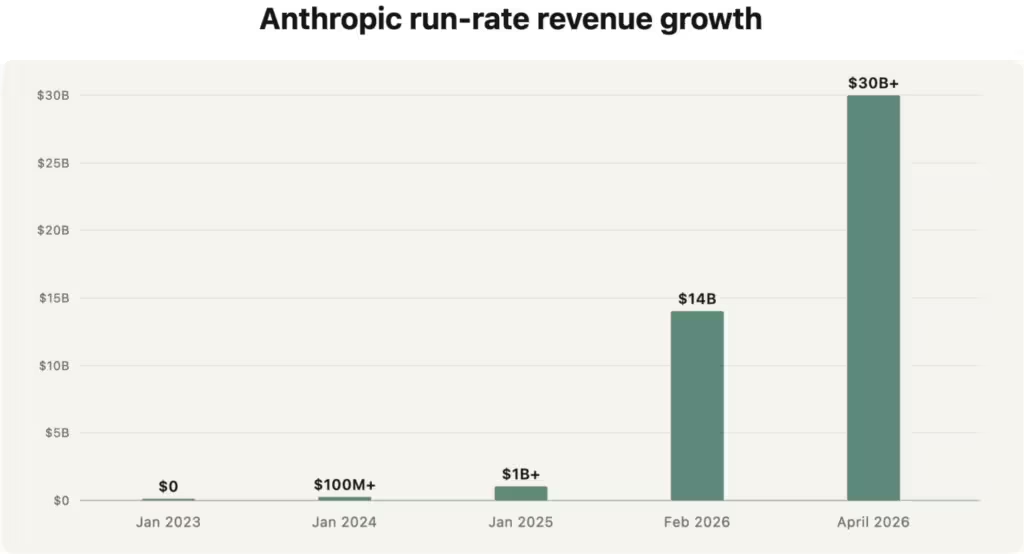
Because the Anthropic contract appears to be consumption-priced, Datadog’s revenue from that deal increases with every increment of Anthropic’s usage curve.
Which, right now, looks like this:
Why Occam’s Razor Is Anthropic
Datadog’s earnings-call description matches Anthropic’s known stack. Pomel told analysts the customer — the largest “new logo” in Datadog’s history — was consolidating onto Datadog from a fragmented mix of “more than five open-source, commercial, hyperscaler, and in-house” tools. That description fits Anthropic. Grafana Labs, a prominent open-source observability vendor, publicly names Anthropic as a customer in its September 2025 annual recurring revenue announcement — supplying exactly the kind of open-source observability tooling Pomel said the customer was migrating away from.
The “new logo” qualifier — Wall Street shorthand for a brand-new enterprise relationship, not the expansion of an existing one — narrows the field further. OpenAI, long flagged by analysts as Datadog’s largest single customer, is by definition not a new logo.
Among AI labs operating at the scale implied by an eight-figure annual contract, that leaves Anthropic as perhaps the most plausible candidate.
The two companies have also been moving toward each other publicly for more than a year. At Datadog’s DASH 2024 conference, Anthropic President Daniela Amodei announced a joint product integration. Datadog now publishes a dedicated Anthropic monitoring product and a Cloud Cost Management integration for tracking Anthropic spend, and is itself a named member of Anthropic’s Claude Design research beta.
The relationship cuts against a specific bear thesis on Datadog. Some investors have argued that AI-native companies will eventually “vibe code” their way out of buying observability software, building in-house tools instead. (A July 2025 Tegus interview with an Anthropic employee propagated this thesis, claiming the company “didn’t even touch Datadog ever.” That was, of course, before the announced partnership.)
Anthropic, the frontier-AI customer most capable of doing exactly that kind of vibe coding — and, according to Pomel, already running in-house tools before the deal — seemingly chose instead to consolidate at least five tools onto Datadog.
It’s living proof that there are plenty of “pick-and-shovel” plays left in software: OpenAI and Anthropic aren’t necessarily going to vibe code their own observability stacks — at least not now. They have better things to do. They need something robust and rigorous, so they tapped Datadog.
Observability software is like soy sauce. Whereas a Japanese restaurant specializing in making a few complicated dishes–say, Netflix or Salesforce–might make their soy sauce in house to suit their unique needs, Chinese restaurants generally buy their soy sauce from three trusted brands. Much like a rapidly-growing AI company like Anthropic, Chinese restaurants tend to have huge menus and wide offerings; the last thing the kitchen should worry about is making its own soy sauce.
But you can make a lot of money selling soy sauce to Chinese restaurants!
The OpenAI contract, alone, represents “4-6% of DDOG’s revenue run-rate,” wrote Wells Fargo last year, estimating it would total roughly $200 million annualized.
Because the Anthropic contract appears to be consumption-priced, Datadog’s revenue from that deal increases with every increment of Anthropic’s usage curve.
Which, right now, looks like this:
Jean Wang is a machine learning engineer and data scientist at Hunterbrook Media. Previously, Jean worked on the alternative credit and fixed income desk at Magnetar Capital, studied Math at Yale University, and served as an editor for the Yale Daily News.
Sam Koppelman is a New York Times best-selling author who has written books with former United States Attorney General Eric Holder and former United States Acting Solicitor General Neal Katyal. He helped build Fenway Strategies into one of the preeminent strategic communications firms in the country—with side quests speechwriting for Michael Bloomberg, running the surrogate remarks operation on the Biden-Harris campaign, and co-founding Mayday, which is now one of the leading information providers on how to access reproductive health care in states with bans. Sam has published in the New York Times, Washington Post, Boston Globe, Time Magazine, and other outlets — and occasionally volunteers on a fire speech for a good cause. He has a BA in Government from Harvard, where he was named a John Harvard Scholar and wrote op-eds like “Shut Down Harvard Football,” which he tells us were great for his social life.