investigations

CSG: Why the Largest Military IPO in European History Is Combusting

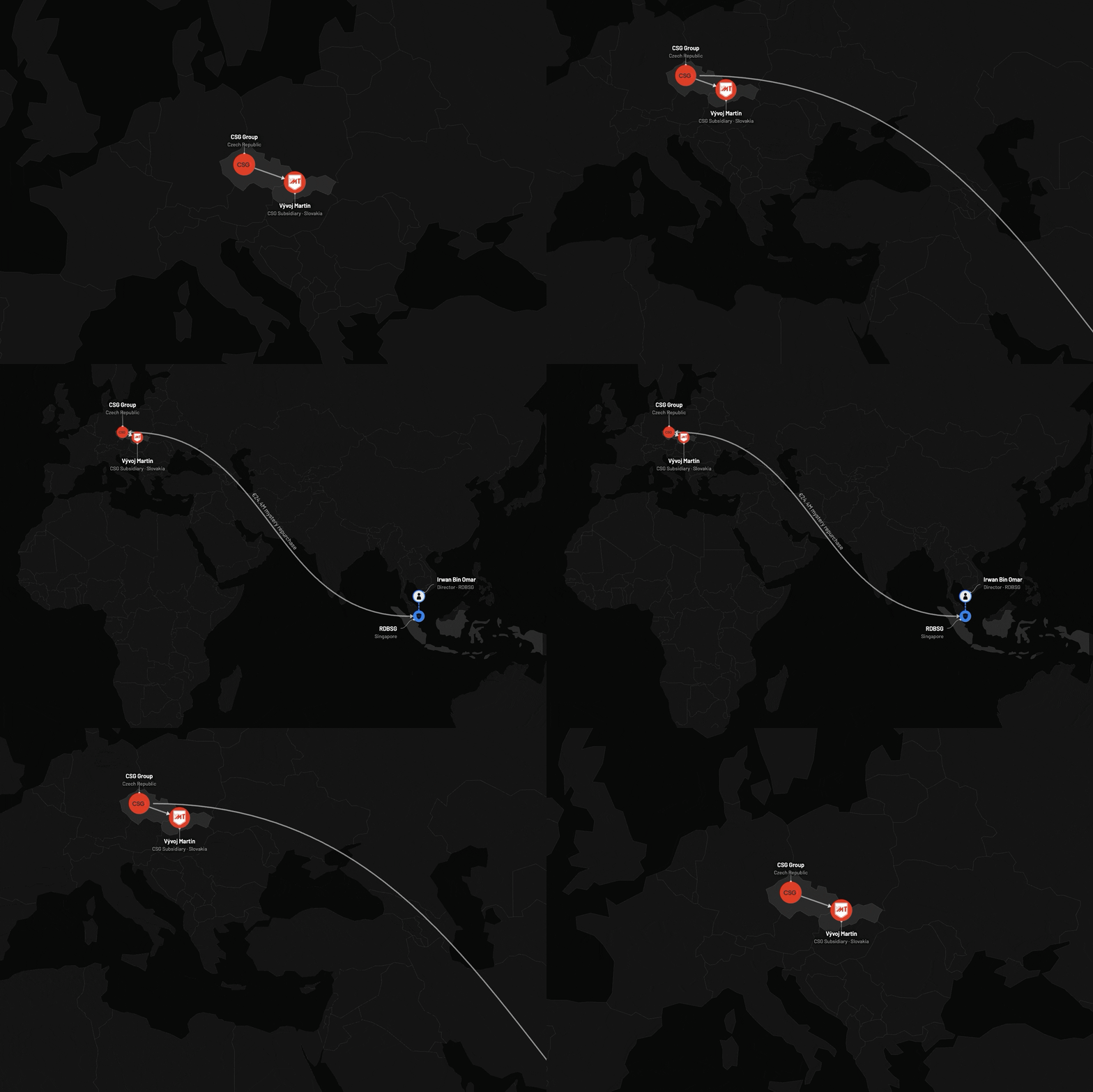
A 33-year old multibillionaire founder. Huge banks and funders. A 728-page prospectus filled with big promises and omissions. All raising a critical question: Does this Czech arms dealer actually have the capacity to mass-produce the ammunition that it calls its “principal driver of revenue and profitability” — or is CSG mostly refurbishing old ammo and running out of supply?
“Bullshit” — The New Way Health Giants Hide Billions
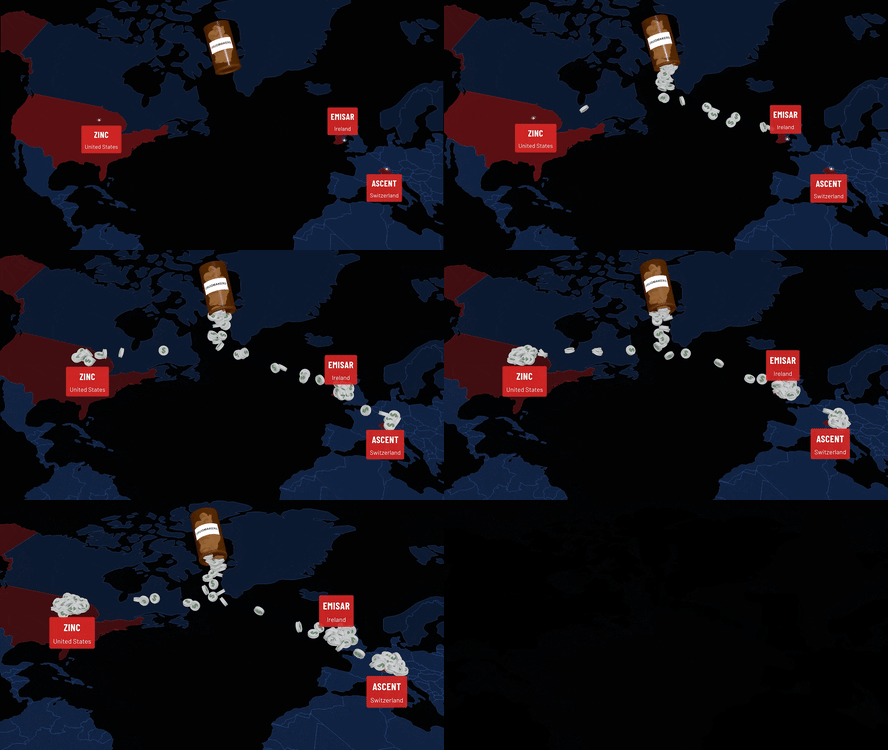
Three mysterious entities. Tens of billions in revenue. Our multinational investigation reveals how CVS, UnitedHealth, and Cigna created new subsidiaries to divert billions of dollars from health plans and patients. All three tried to keep it secret. None answered repeated questions. CVS sued to stop evidence getting out. Cigna called the police on a reporter. And the cost isn’t just higher drug prices. People have died.

EXCLUSIVE: Exxon Spinout Sable Leaked Key Info To Investors Including Golfer Phil Mickelson
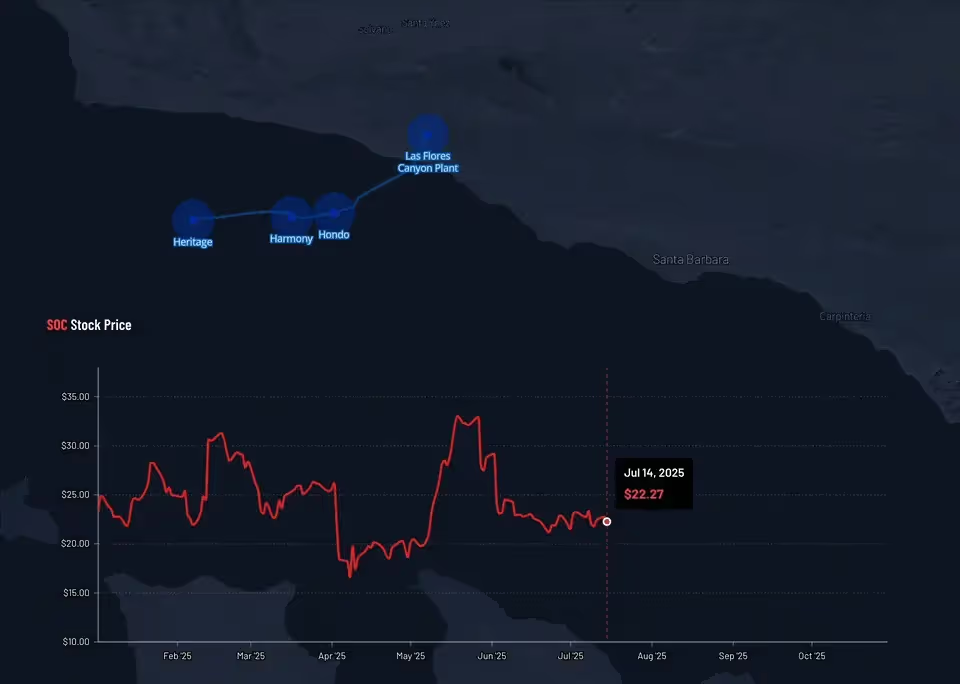
On a leaked call, Sable Offshore CEO Jim Flores told a select group of investors in October that the company would likely have to raise up to $200 million in equity by the end of 2025. The company had not disclosed this dilutive equity offering publicly. It’s one of several examples of apparently selective disclosure from Sable. The company seems to have shared information only with certain investors, a list that includes golfer Phil Mickelson, according to messages from a group chat leaked to Hunterbrook. In one of those messages, Mickelson passed on a tip allegedly from the company’s CEO in an X group chat that Sable would be issuing an 8-K filing about a material update later that day. Sable did in fact issue a market-moving 8-K shortly thereafter. “I believe this beyond any doubt: These guys definitely have first hand communication from Jim and they are being fed information from Jim and giving it to other group members,” one member of the chat, who previously owned the stock, told Hunterbrook, in reference to some of his fellow group chat members. Whether that material information was actually worth having is another question. While Sable’s stock rose 8% after hours on the day the 8-K was issued, it gave that all back (and then some) the following trading day. Meanwhile, courts, regulators, and activists have so far stopped Sable from utilizing its sole asset — a pipeline that in 2015 erupted into one of the worst oil spills in California history. Mickelson declined to comment directly to Hunterbrook despite repeated outreach. In a message to the group chat, which is called “Sable Quantum Offshore Compute,” he warned that Hunterbrook was “looking into this chat as if we have inside info.” “What’s funny about it is we’ve all been wrong on just about everything and we’ve all lost money but whatever,” Mickelson added, before posting a phone number of a Hunterbrook reporter to the chat. (Another group member then attempted to dox the reporter in a Craigslist post offering free dog food, apparently not realizing that Hunterbrook was still reading their messages. Lol.) On Wednesday, an anonymous X account posted a very short excerpt from the same call with investors obtained by Hunterbrook. Soon thereafter, a member of Mickelson’s chat relayed to the group that the company had contacted them claiming that the audio was AI generated, and asking investors to push back against an anticipated Bloomberg News article on Sable’s conduct. Within hours, a chorus of Sable investors, including Mickelson, was repeating that message on social media. In response to questions about this, Sable told Hunterbrook that “based upon information provided to us we believe that the alleged recording was either AI generated or otherwise altered.” The company did not respond to follow up questions regarding what led it to that belief, or what portions of the recording it believed had been altered. At Hunterbrook’s request, a leading AI detection company ran the recording through their platform and concluded that it is likely not to be manipulated using generative artificial intelligence in any way. Hunterbrook also asked a senior AI engineer at a top research lab to analyze the recording; he also confirmed that it was highly unlikely to be AI generated or altered. The recording Hunterbrook obtained includes the short excerpt that was posted on X, though the version on X sounds distorted. Perhaps the most notable part of the call comes toward the end — when Flores lays out his Hail Mary plan to bring his project online: Enlisting President Trump and Commerce Secretary Howard Lutnick to avoid California regulations and secure federal funding for the project. A carrot Sable is prepared to offer, according to the recording? A round of golf with “a certain lefty.” A source close to Lutnick told Hunterbrook: "He's never heard of the company and has no plans to golf with Mickelson."
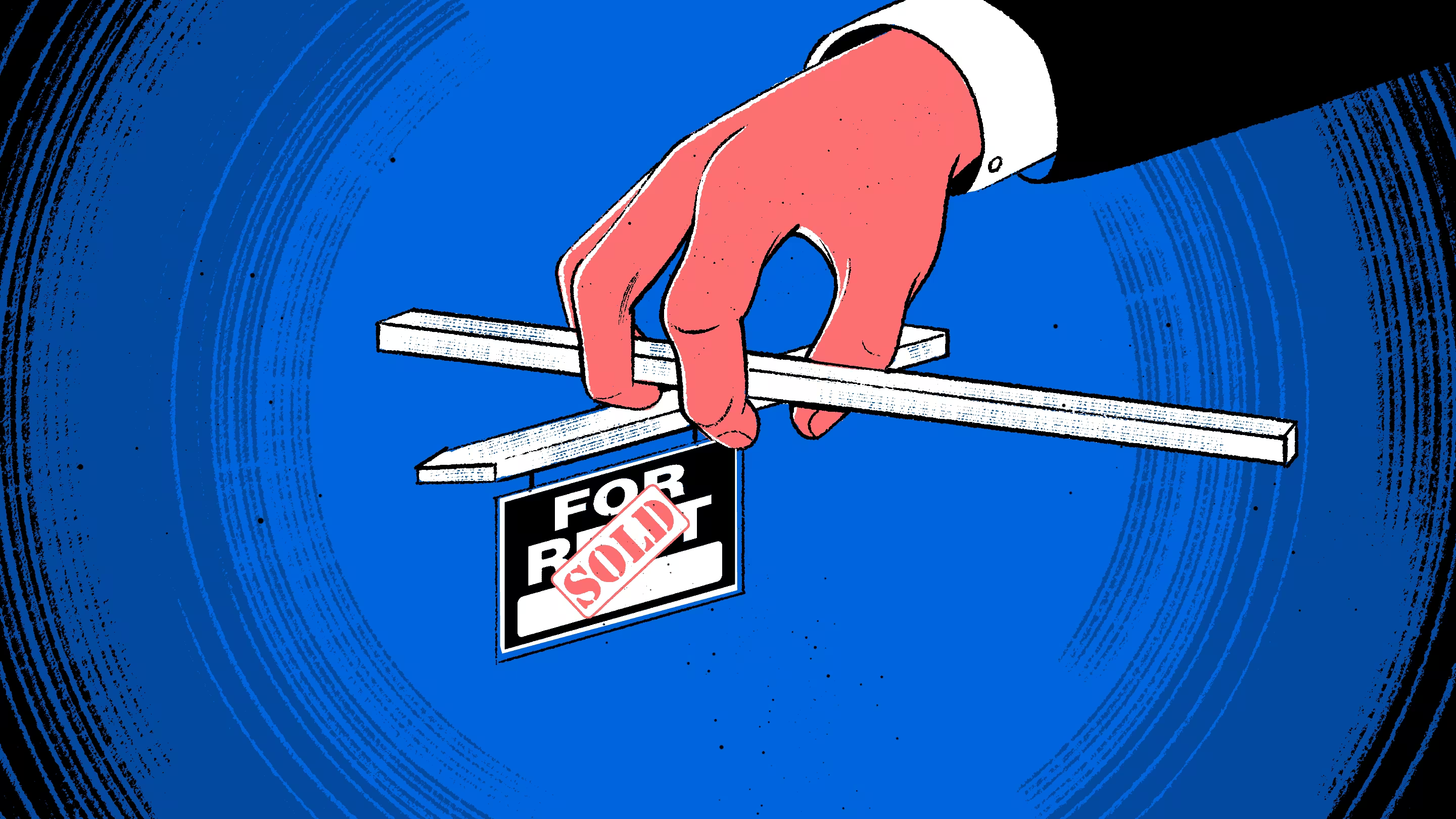
Buyer’s Remorse: How LGI Homes Lures Renters Into Buying Homes They Can’t Afford

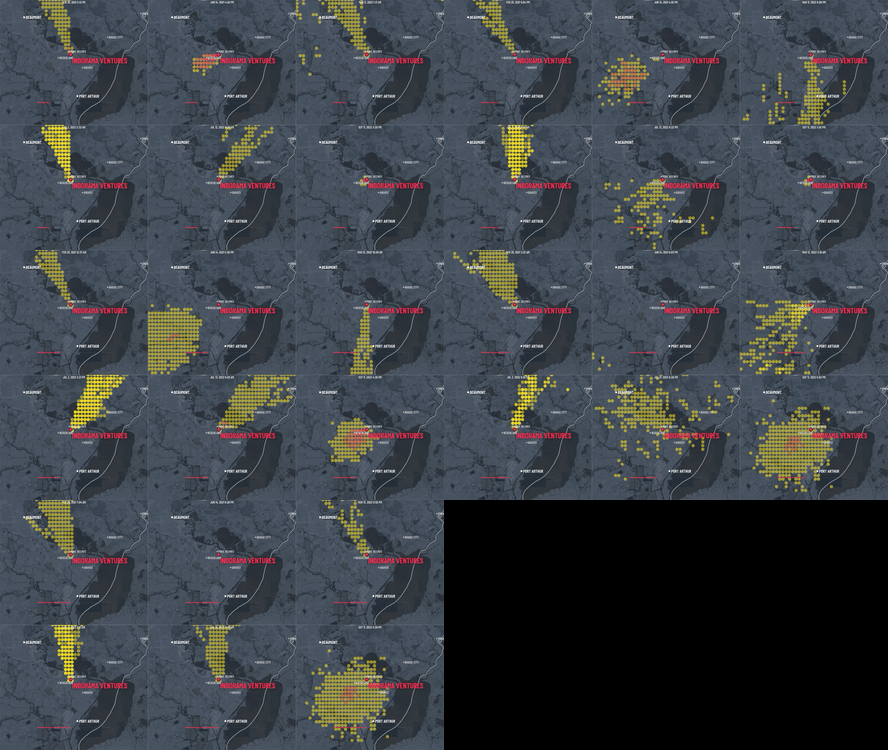
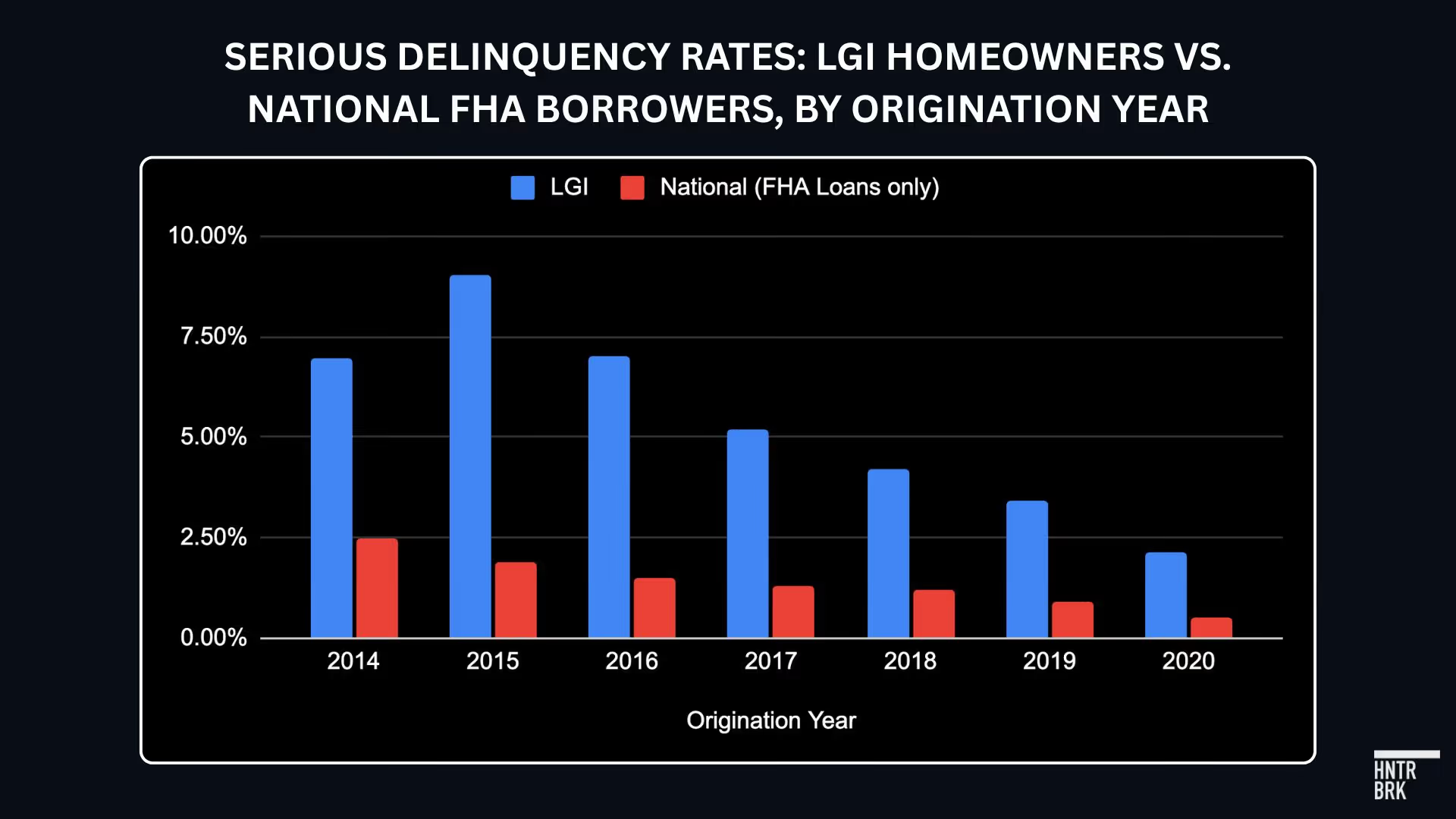
An investigation shows national homebuilder LGI Homes ($LGIH) may be targeting low-income renters with deceptive ads promising unrealistically low prices, then pressuring them to buy expensive homes through highly scripted, aggressive sales tactics. LGI homeowners were four times as likely to lose their home to a foreclosure than a typical FHA borrower — a pool already at higher risk — according to a Hunterbrook data analysis.
Dexcom’s Fatal Flaws

After inaccurate readings from Dexcom’s flagship G7 device, some diabetics are ending up in the ICU — or dead. A surprise FDA inspection revealed Dexcom made an unauthorized design change to a key component of the G7 that internal studies showed was inferior by “every accuracy metric.” Dexcom sold the “adulterated” device anyway. Then several execs fled amid FDA scrutiny, soaring complaints, rising competition, insiders dumping $DXCM, and questionable accounting. Patients are now returning to the G6 or switching to competitors. This investigation reveals Dexcom’s problems are far worse than previously known. It also tackles the mystery: How did a great innovator lose its way — and the trust of diabetics across America?

Poisoned USA: Hastings, NE
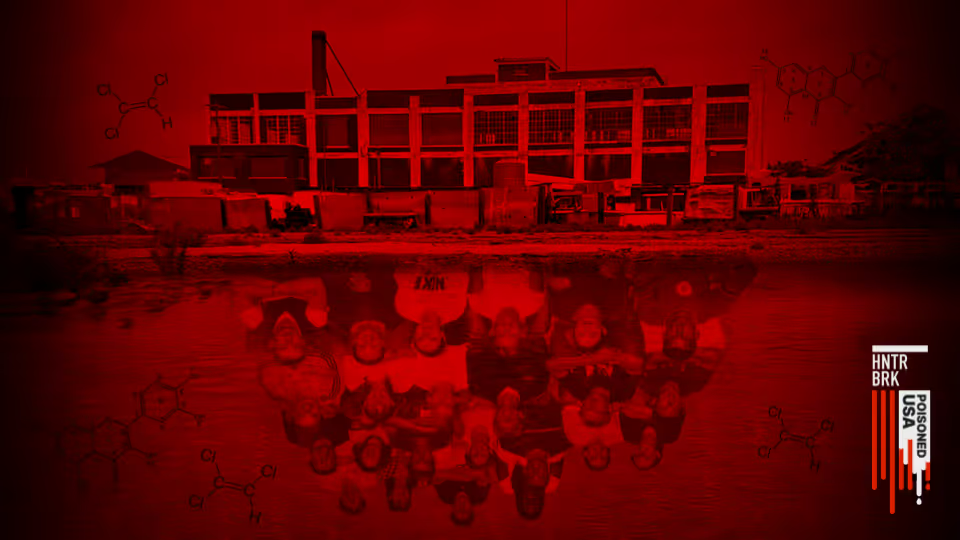
Contaminate. Clean Up. Repeat. This is the first investigation in a new Hunterbrook Media series on the poisoning of American communities. For decades, polluters have sickened towns and cities across the country by releasing toxic chemicals, often with impunity. Now — with the Environmental Protection Agency captured by the same industries the EPA was meant to regulate — the crisis worsens. Hunterbrook has built a nationwide database to expose harm to communities and ecosystems, then hold accountable those responsible. We start today in Nebraska. A factory in rural Hastings, Nebraska, is among the top emitters nationwide of trichloroethylene, a carcinogenic chemical. The county has among the highest rates of cancer in the country. From mechanics and a bartender, to parents and neighbors, the community is asking: Why are we so sick?
How Western Tech Powers Russia’s War Against Ukrainian Civilians

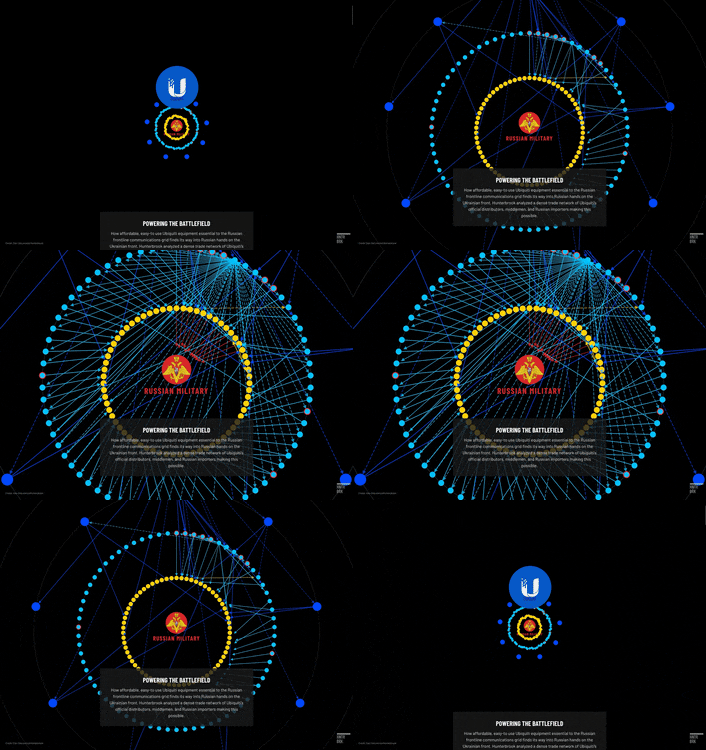
As the Trump administration reportedly prepares to pull funding for war crime investigations, a new international exposé reveals how microelectronics from American tech giants — household names like Intel and Texas Instruments — enable precision strikes on Ukrainian hospitals, schools, and shopping centers.


FDA Heads to Court to Defend Unprecedented Decision Protecting Lung Drug Monopoly From Liquidia Competition
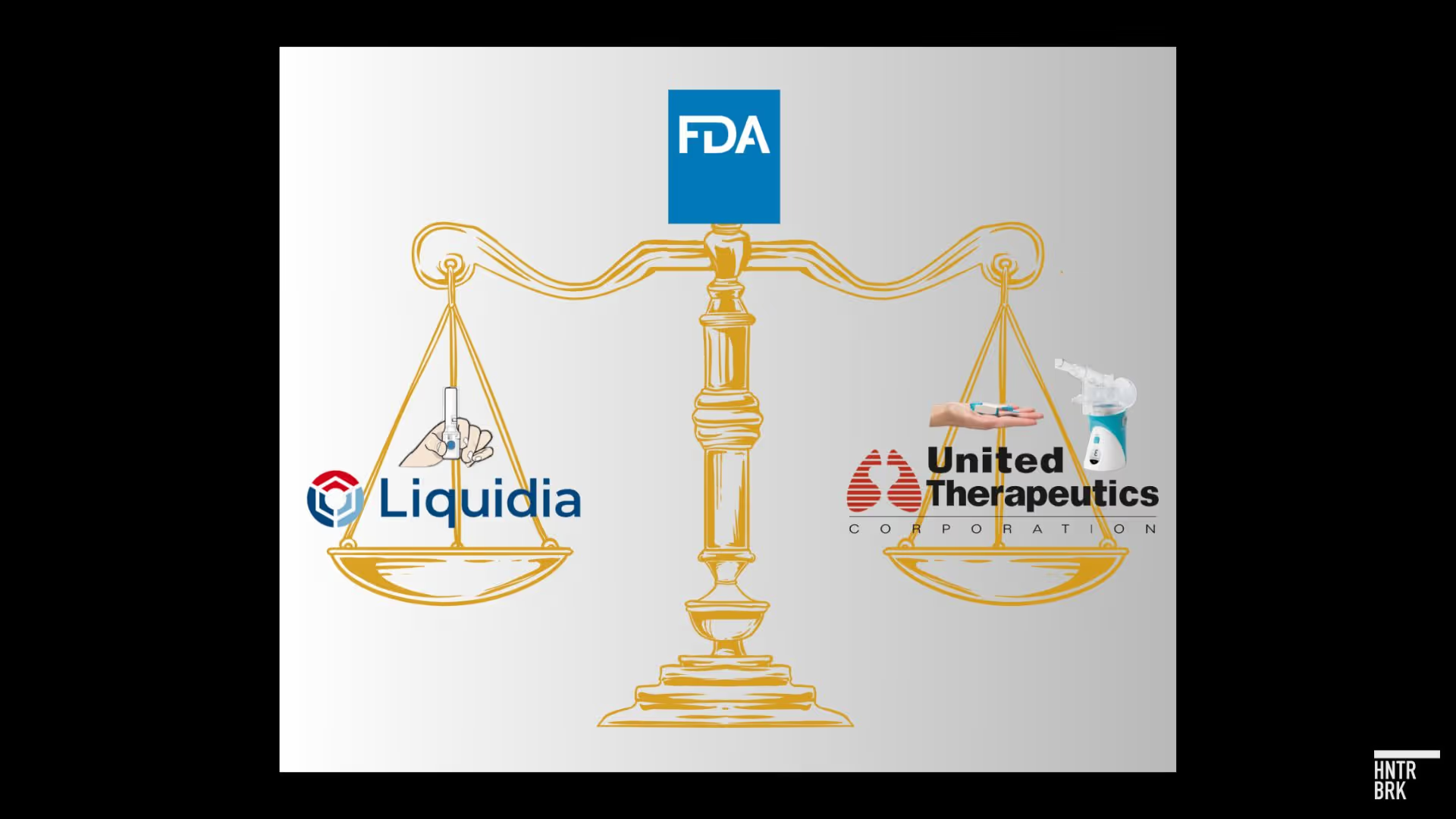
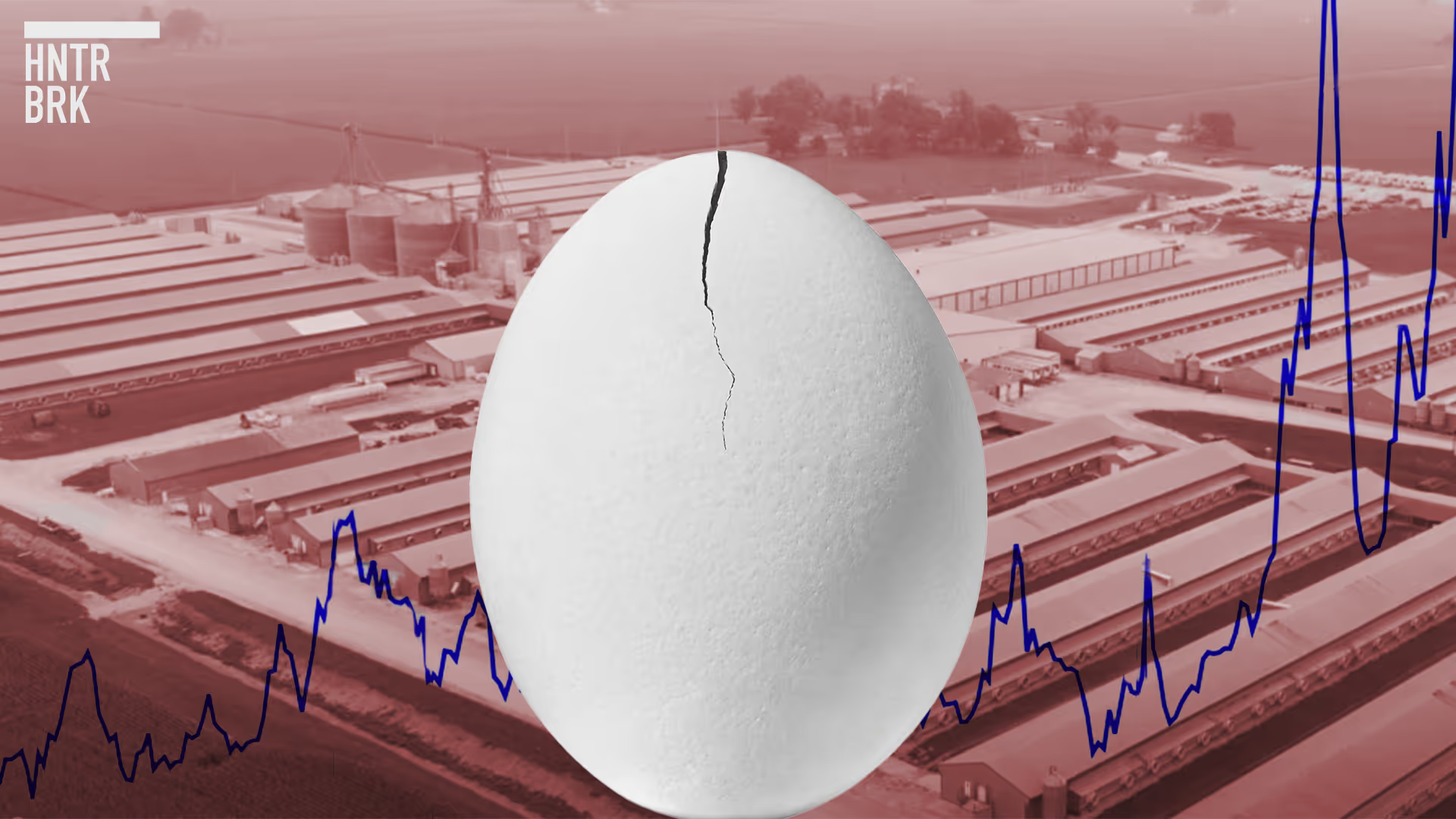
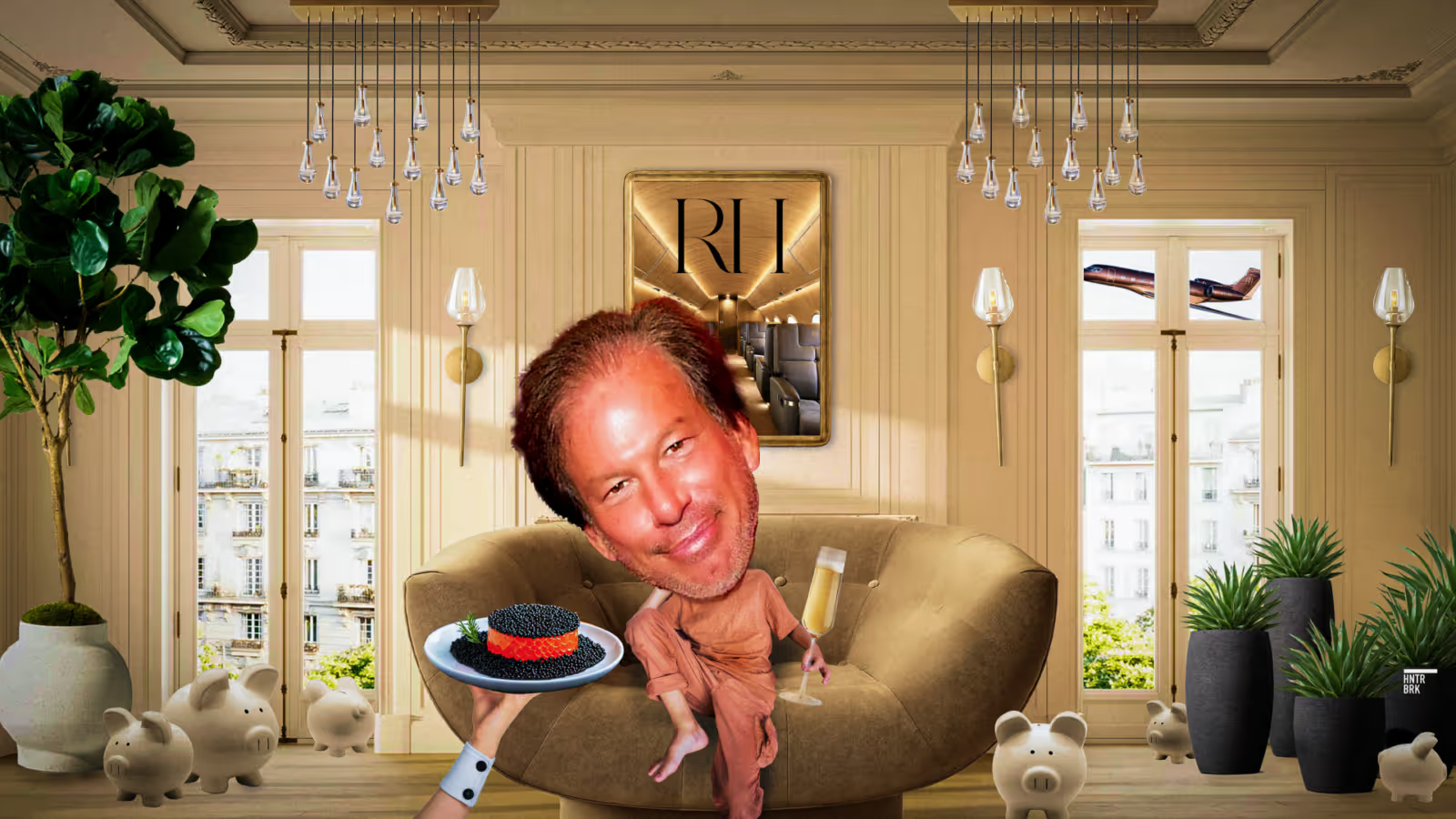
In October, the U.S. Supreme Court rejected the latest maneuver from United Therapeutics Corp. to block a new lung disease treatment from being offered to patients by rival Liquidia Technologies. Now, Liquidia appears set to launch its treatment — Yutrepia — in May 2025 but could get to market sooner if it wins a lawsuit challenging the unusual retroactive exclusivity the Food and Drug Administration granted to UTC in August. A federal judge will hear the case this afternoon. Yutrepia would compete with UTC’s best-selling drugs, which cost tens of thousands of dollars per month — and have helped fund UTC’s fleet of aircraft housed at a UTC-owned hangar complex — even though the original patent for the active ingredient expired over 20 years ago. After years of delays due to UTC’s interference, an earlier start could unlock hundreds of millions in additional revenue for Liquidia, across two severe diseases that analysts and companies say are each multibillion dollar markets. It would also bring another option to patients who have struggled with UTC’s products. Litigation, IP, and medical experts told Hunterbrook that the saga highlights the hardball tactics Big Pharma uses to delay the launch of new medicines that could give patients more choices and lower prices. One lawyer told Hunterbrook the FDA’s move “doesn’t inspire a lot of confidence.”
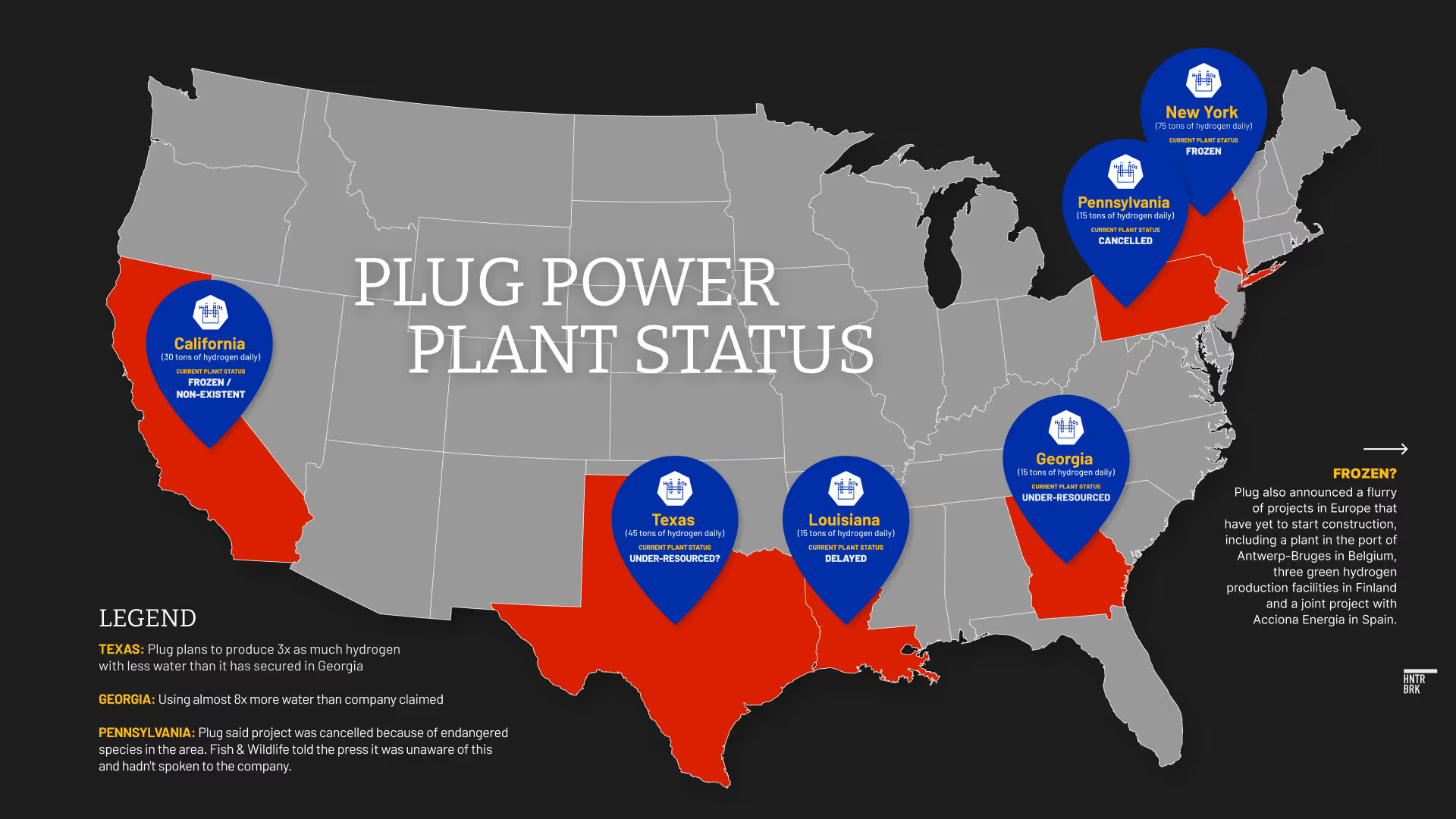
Plug Power Failure Part II: Is Plug The Next Solyndra? Accounting Analysis Reveals Dwindling Cash, Collapse of Margins, And Unprofitable Fuel Deliveries, Indicating Company May Not Be Able To Pay Back The DOE
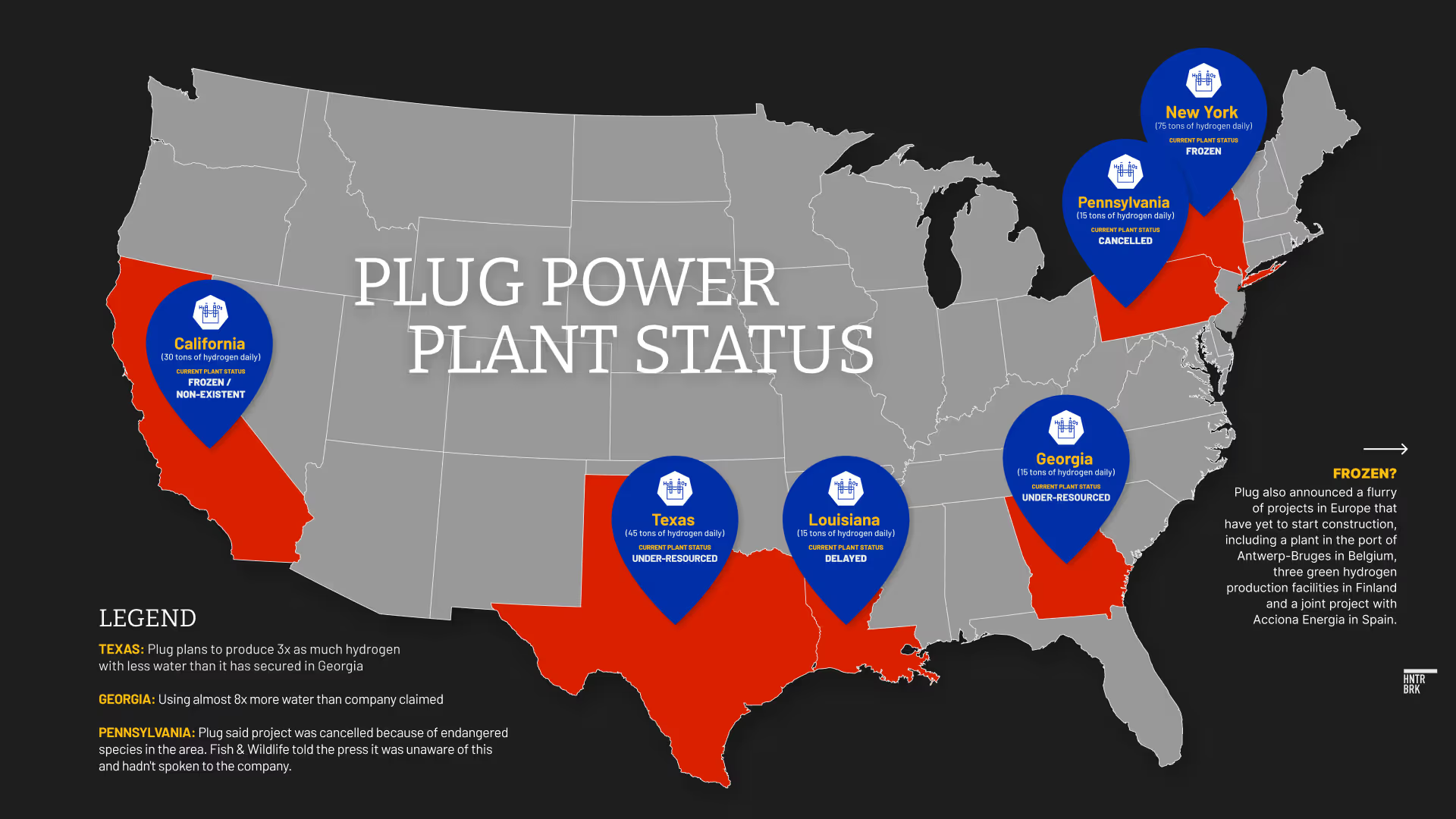
The author of today’s accounting analysis is Nick Gibbons, who teaches forensic accounting at New York University and is a Certified Fraud Examiner who has worked at Citadel, Two Sigma, and Norges Bank Investment Management. His articles are different from our traditional reporting — because they rely on deep technical expertise of SEC filings rather than interviews and other forms of OSINT. Think of it as our version of an editorial page, but sticking to exactly what we know and maintaining our open-source commitment to showing our work every step of the way.
Universal Stainless, Set To Be Acquired, Behind Fatal Bell Boeing Osprey Crash

Leaked Air Force Report Ties Steel Company to Fatal Crash Last Year. Employees Say Toxic Workplace Has Quality Control Problems, a Focus of Litigation Against Universal Dating Back to 2001. Accounting Red Flags Include Three Auditors in 2023 Amid Sky High Gross Margins. Will Aperam Acquire Universal at Highest Share Price in Over a Decade After Due Diligence, CFIUS, and Antitrust Review?
“WE’VE GOT A LOT OF PEOPLE KILLED HERE”
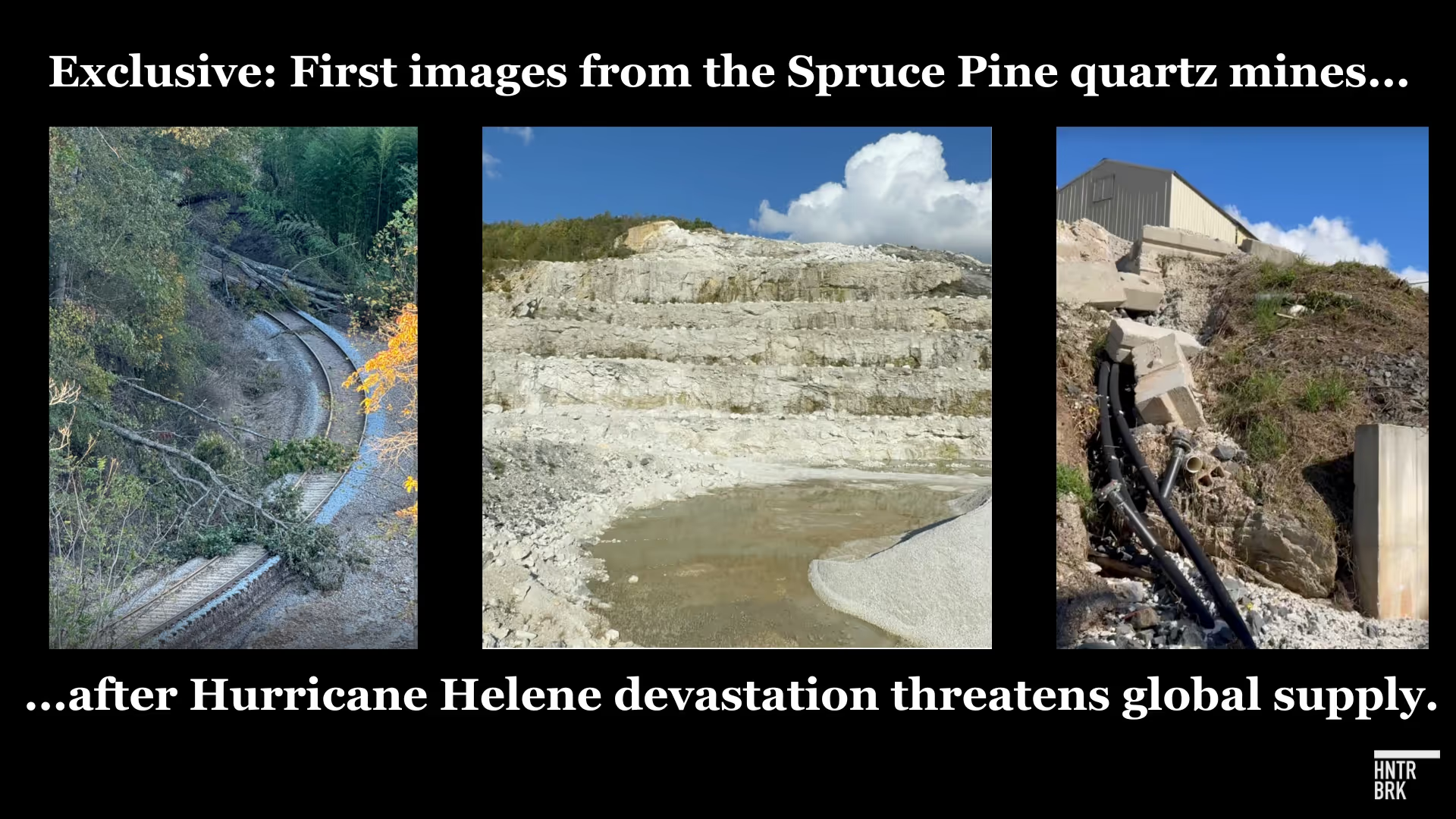
On-the-ground reporting in the aftermath of Hurricane Helene reveals no timeline for return of high-purity quartz production essential to the global technology supply chain — but resilience from the people fighting to bring the mines, and their community, back.
ESSENTIAL NODE IN GLOBAL SEMICONDUCTOR SUPPLY CHAIN HIT BY HURRICANE HELENE — COMPANY SAYS IT HAS “TEMPORARILY HALTED OPERATIONS” AFTER VIDEO REVEALS ENTRANCE TO MINE HAS FLOODED
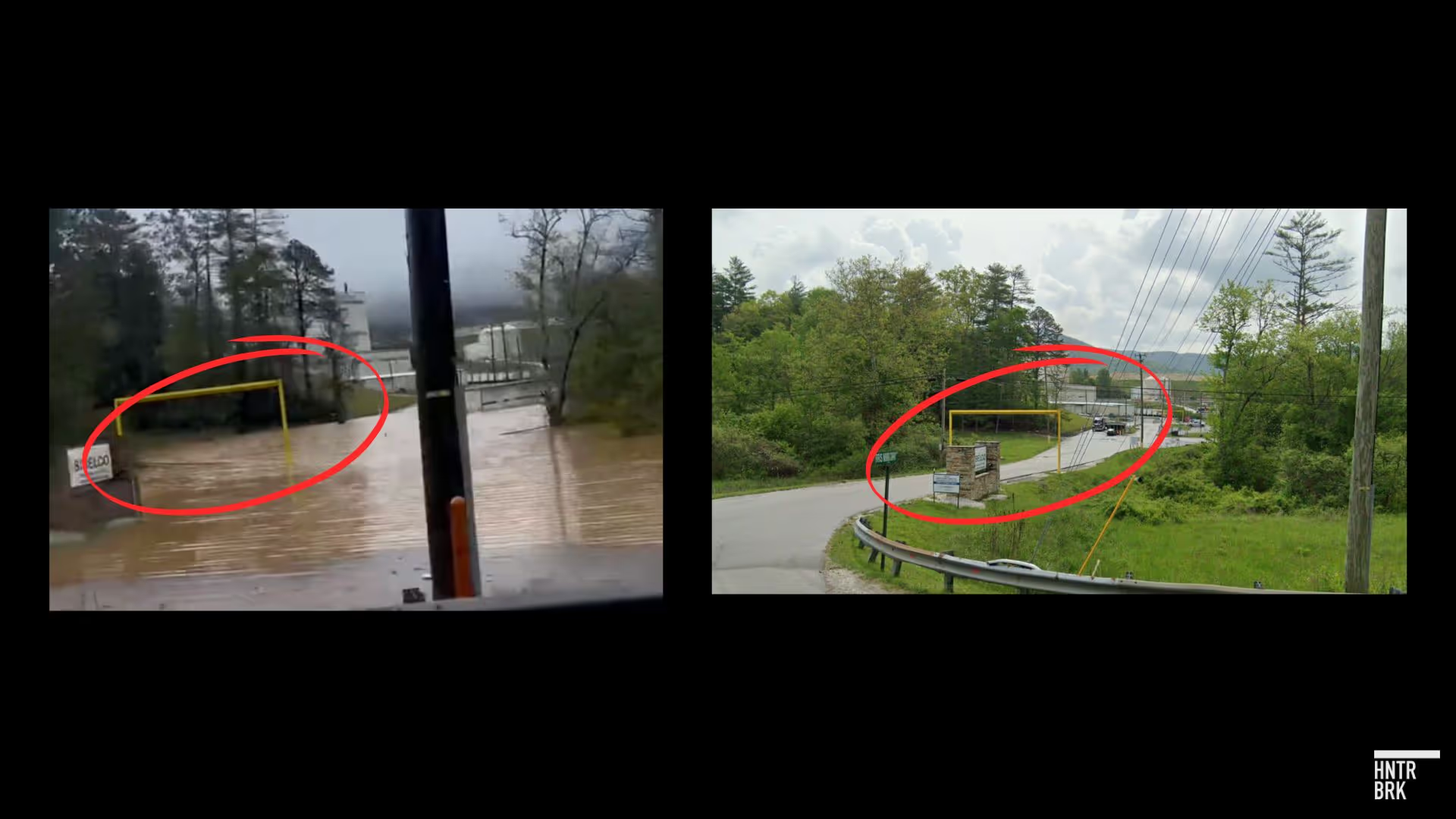
Hunterbrook Media review of open-source intelligence (OSINT) reveals arteries connecting high-quality quartz mines to the world — freight rail and roads — are damaged. Experts say risks could be significant but companies have stockpiles.
CAVA: FILTH FLIES, “C” SANITATION GRADES, FDA LISTERIA SWABS, SNEAKY SEED OIL, INSIDER SELLING, AND THE DIARRHETIC FALLOUT OF FAST GROWTH
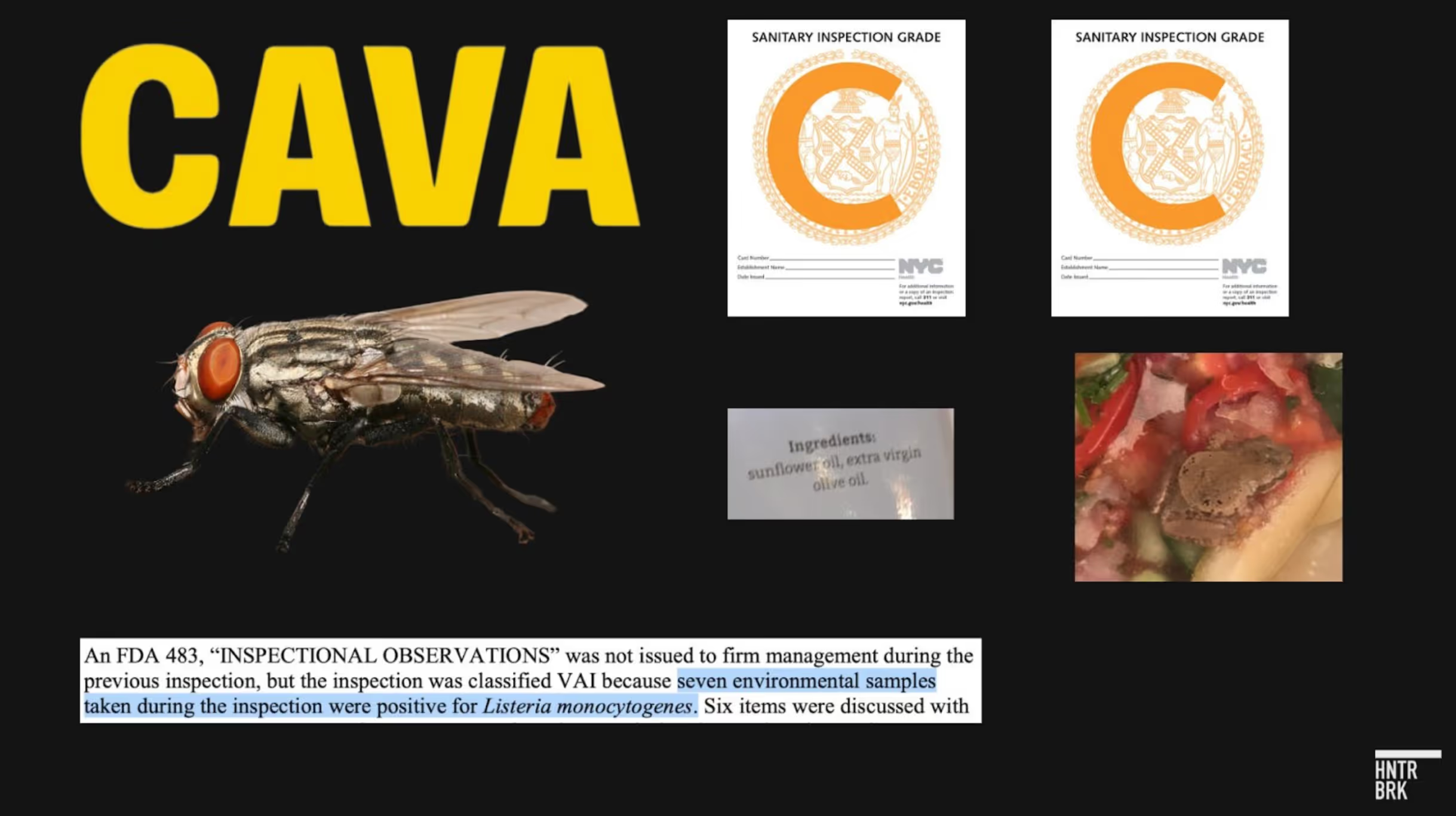
“Eventually it got to a point — sorry, this is graphic — where I had to clean up his vomit that was in the bathtub because he couldn't control how fast it was coming up.”

The Struggling AI Bet Behind Softbank’s Grocery Gamble
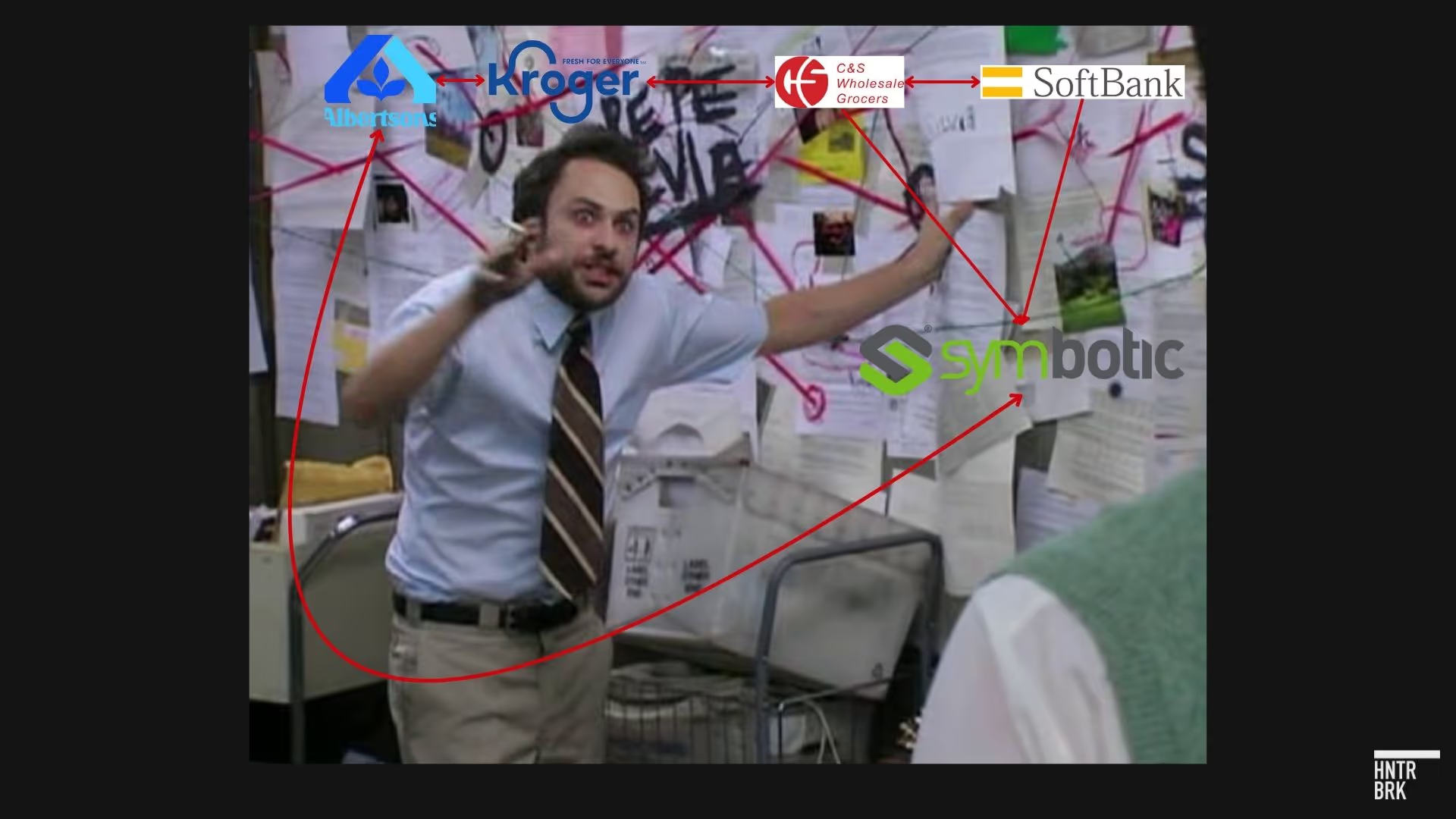
To help the Albertsons-Kroger merger overcome a challenge from the FTC, C&S Wholesale Grocers will need to prove it can be a viable competitor. But are C&S and SoftBank more interested in propping up a $10 billion automation upstart called Symbotic, which also just so happens to be backed by C&S executives and SoftBank, and could really use some customers?

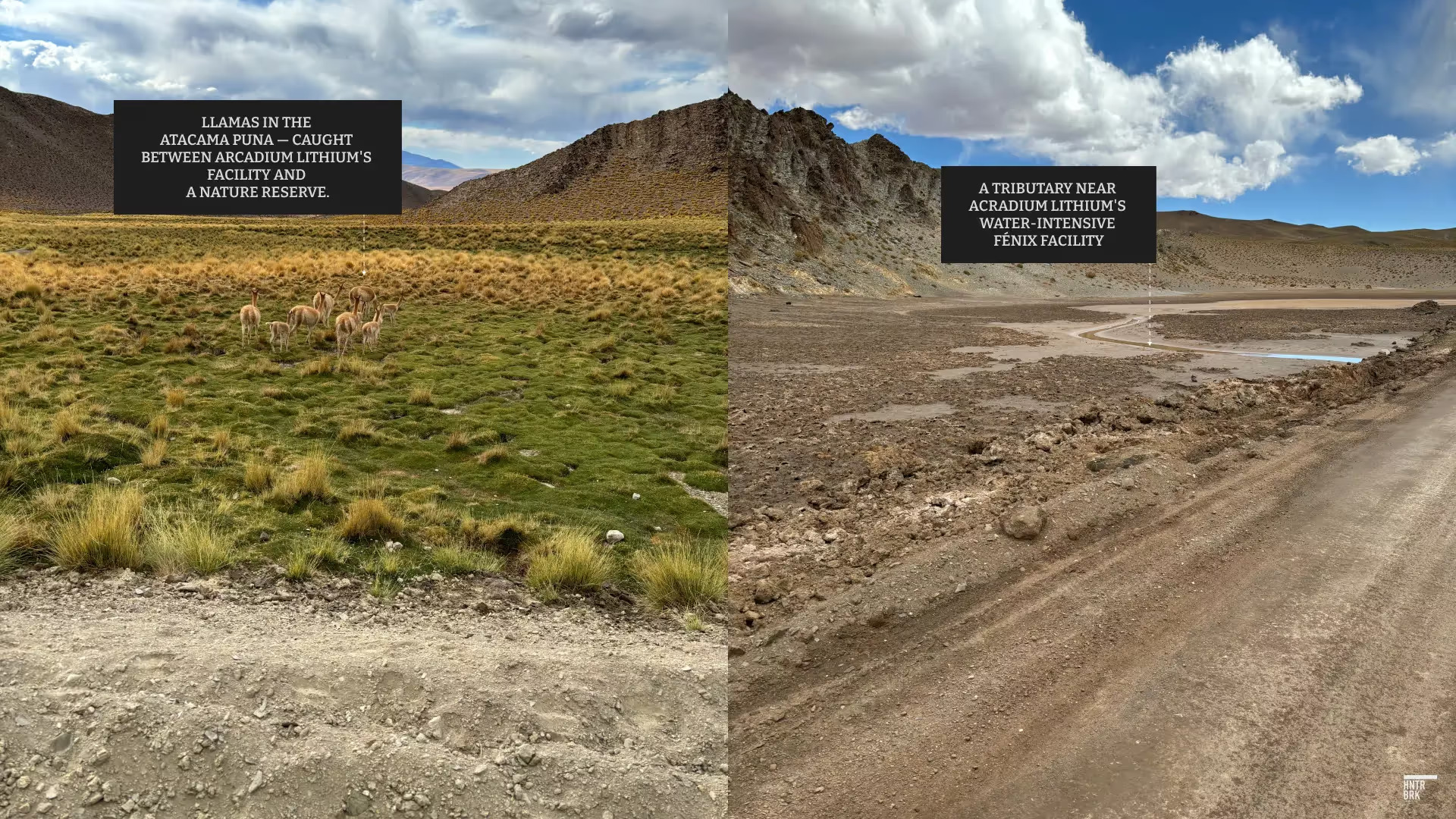
Forensic Report: Arcadium Lithium ($ALTM) Merger Results and Accounting Raise Red Flags
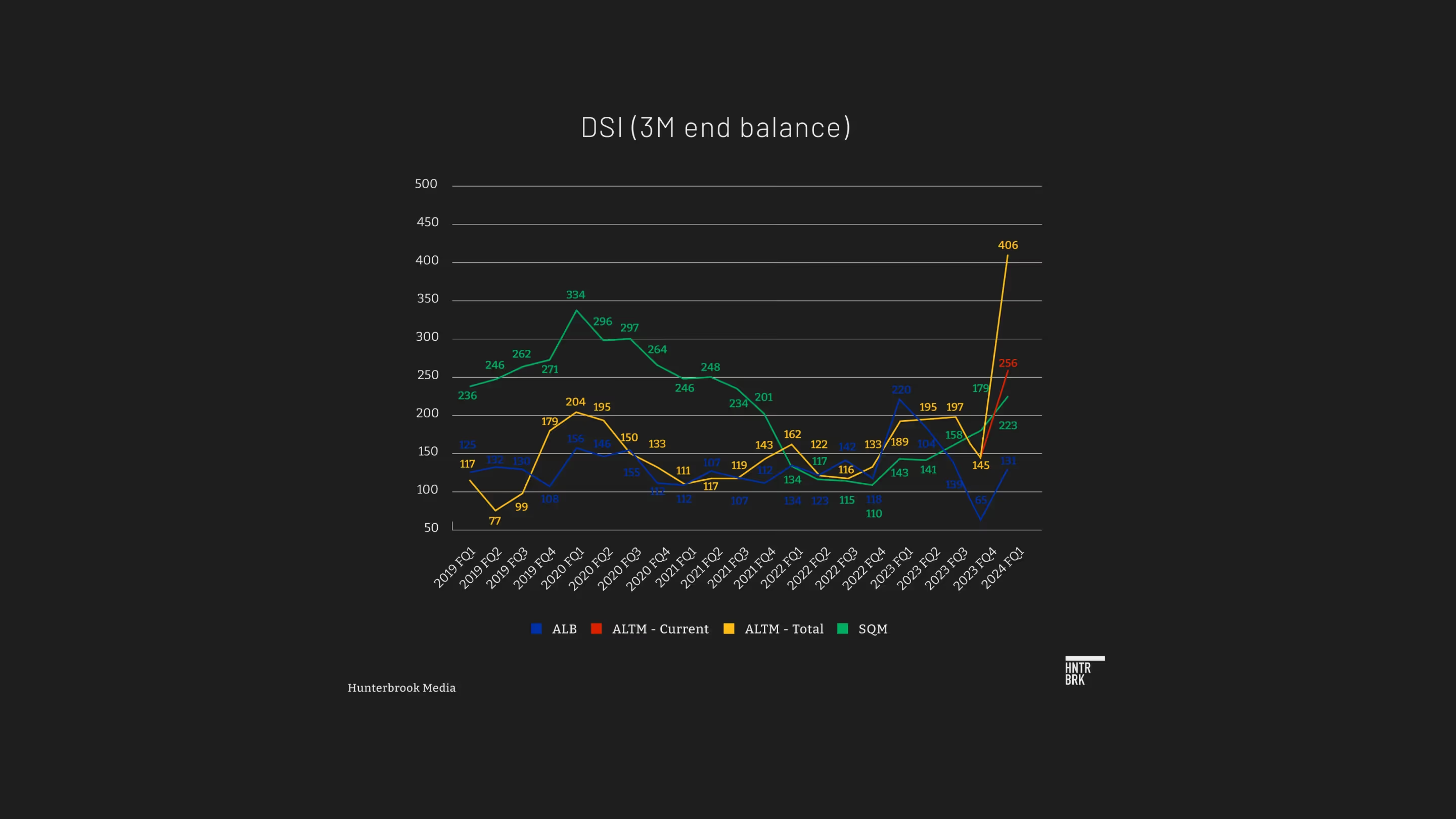
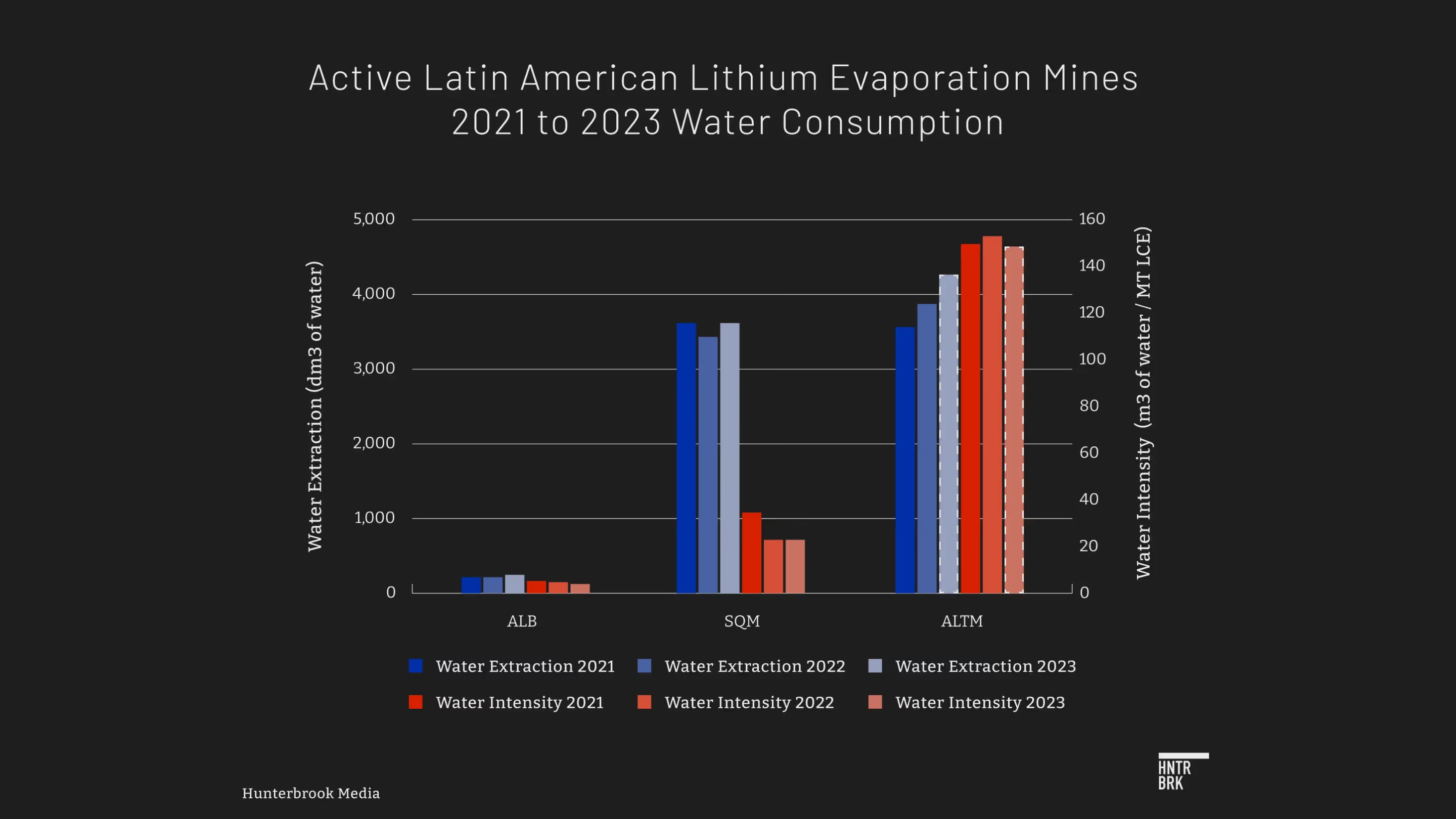
Acquisition masks substantial decline in Livent profitability, potentially supported by aggressive merger and acquisition accounting; surging inventories compared to peers point to unsustainable gross margins; and adjustments to EBITDA, other metrics have boosted executive compensation.
ADM LIED ABOUT PRESENCE IN XINJIANG

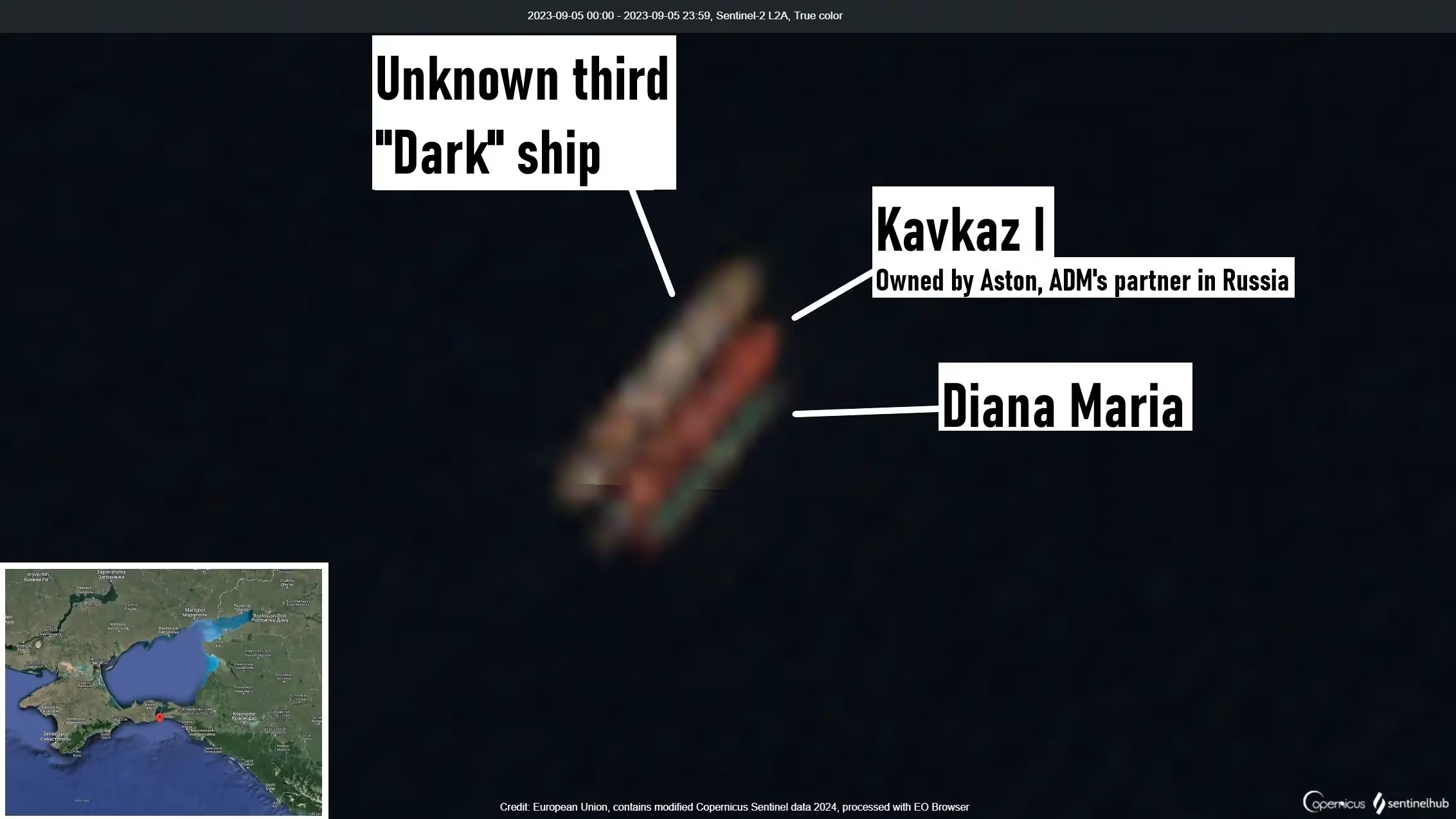
American food giant Archer-Daniels-Midland owns a major stake in two factories in Xinjiang — a Chinese region notorious for state-imposed forced labor — through 22.5% ownership of Wilmar International. Since forced labor campaigns intensified in 2017, the two facilities have quietly expanded their footprint, while other companies left Xinjiang. Gregory Morris, president of ADM's largest division, serves on Wilmar’s board. His seat was previously held by ADM's current CEO, including during Wilmar’s expansion of both facilities. ADM says it has "significant influence" on Wilmar. Both companies have pledged to eliminate forced labor from their supply chain. Yet, ADM has not disclosed these facilities — claiming, instead, that there is "no identifiable direct or indirect connection between ADM and the region" — even though the U.S. government determined state-led forced labor and other human rights violations in Xinjiang amounted to genocide and placed a blanket ban on U.S. import of goods from the region. A partner company of Wilmar's in Xinjiang has denied forced labor occurs at one of the facilities. Nell Minow, co-founder of Institutional Shareholder Services (ISS), told Hunterbrook Media that Morris should step down from the board. This is the latest in a string of governance problems at ADM, which experts say risk ADM's access to environmental, social, and governance funding and customer relationships with companies opposed to slave labor.
Safety Shot Doesn’t Work — And Tastes “Nasty,” According to Hunterbrook Media Unscientific Study
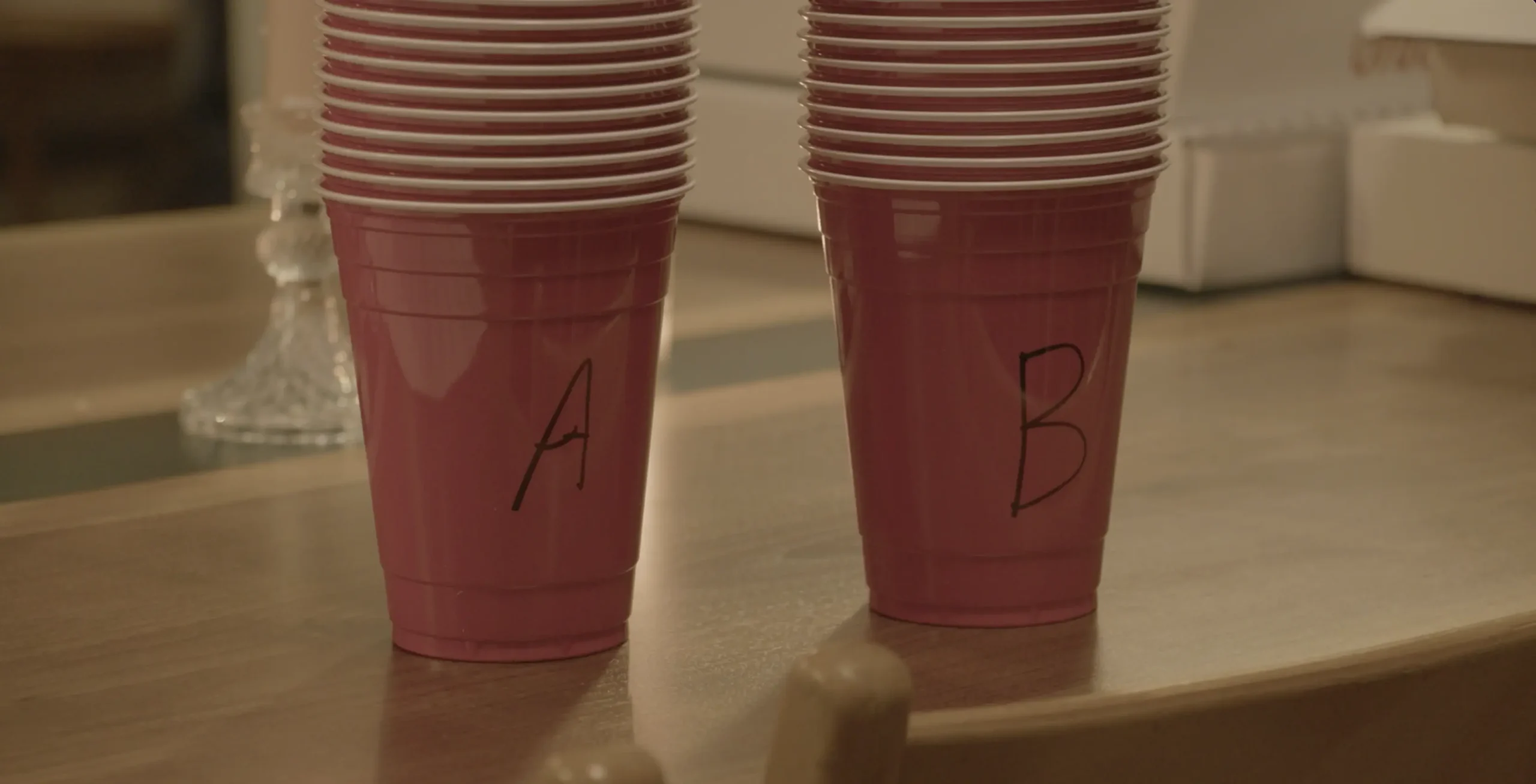
Safety Shot’s claims are “too good to be true” and its drink includes an ingredient known for smelling like rotten eggs, according to Johns Hopkins director of addiction medicine. A personal injury attorney said he believes Safety Shot (NASDAQ: $SHOT) could be held liable for drunk driving accidents. A customer who spoke to Hunterbrook Media said Safety Shot made her “as sick as I have ever been,” leading her to sell shares of the company’s stock.
Namibians Demand Accountability From Dundee Precious Metals
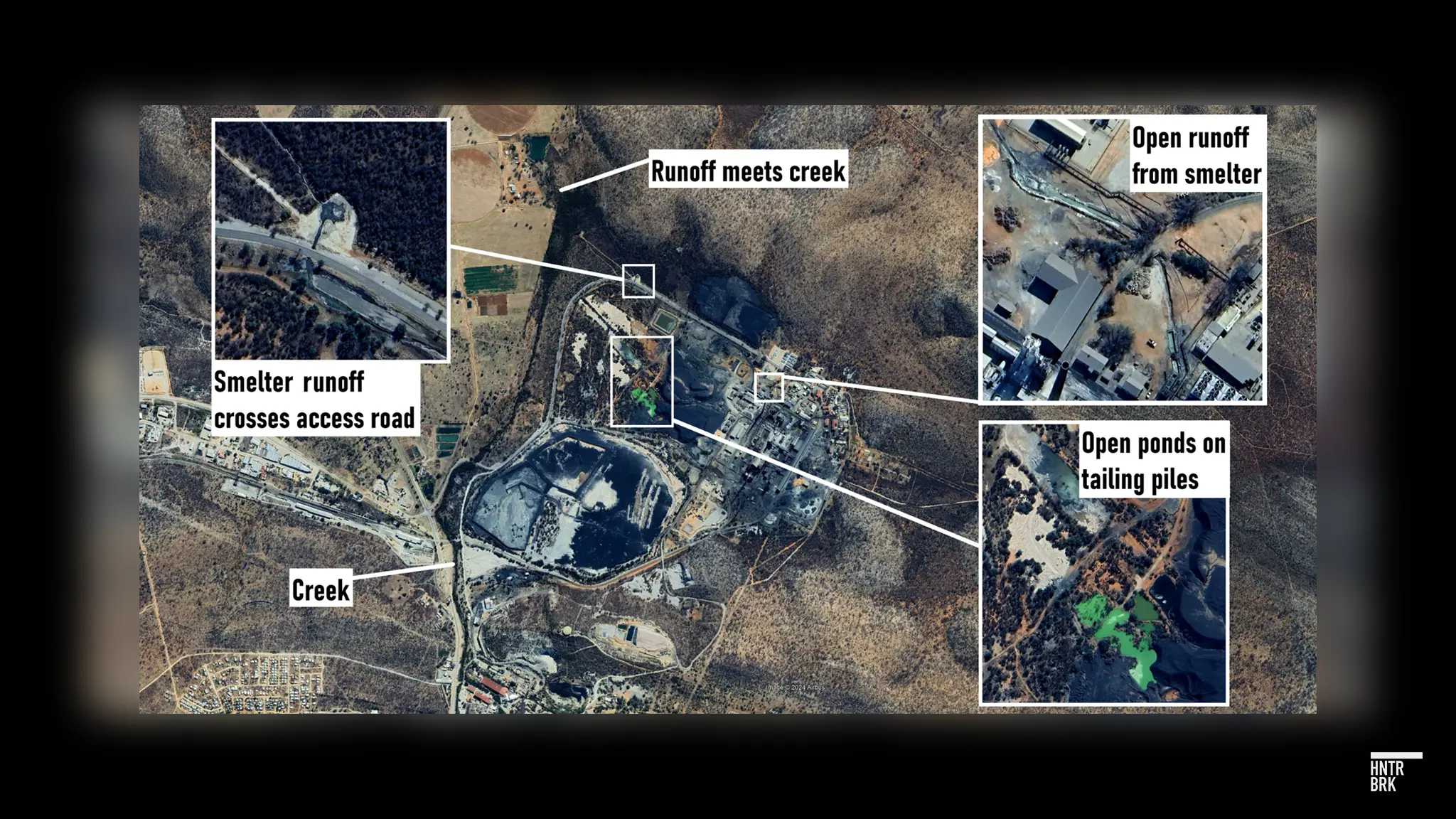
Locals say the miner’s copper smelter — set to be sold to the Chinese Sinomine Resource Group later this year — has brought significant environmental and health damage to the surrounding community. Their claims are bolstered by satellite imagery and company documents revealing arsenic and sulfur dioxide exposure.
Sable Offshore’s Oil Restart May Be Pipe Dream
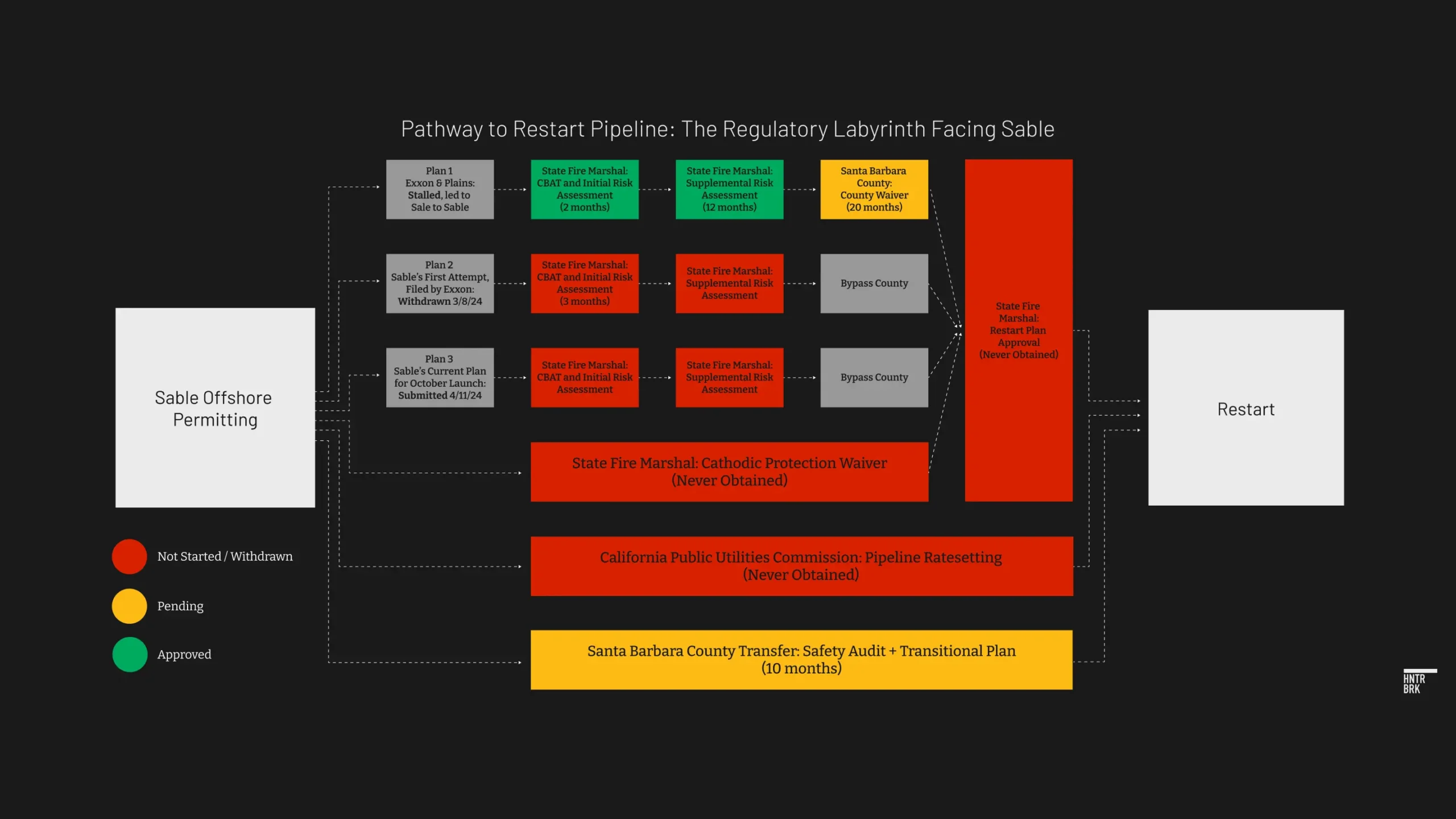
Sable Offshore (NYSE: $SOC) is racing against the clock to relaunch an idle fossil fuel complex it bought from Exxon (NYSE: $XOM) in February. Three oil and natural gas platforms, called the Santa Ynez Unit, have not produced fossil fuels since one of the pipelines carrying its oil ruptured in 2015. It was the biggest spill in California since 1990. After seven years, Exxon gave up trying to overcome the legal hurdles required to get Santa Ynez and the pipeline back online. Now, despite facing similar obstacles, Sable is telling shareholders it can restart production before October. Since Hunterbrook Media began reporting, Sable withdrew and refiled a key plan, likely increasing the risk of delays.
Posco International: Operating a gas project with Myanmar’s sanctioned, murderous regime
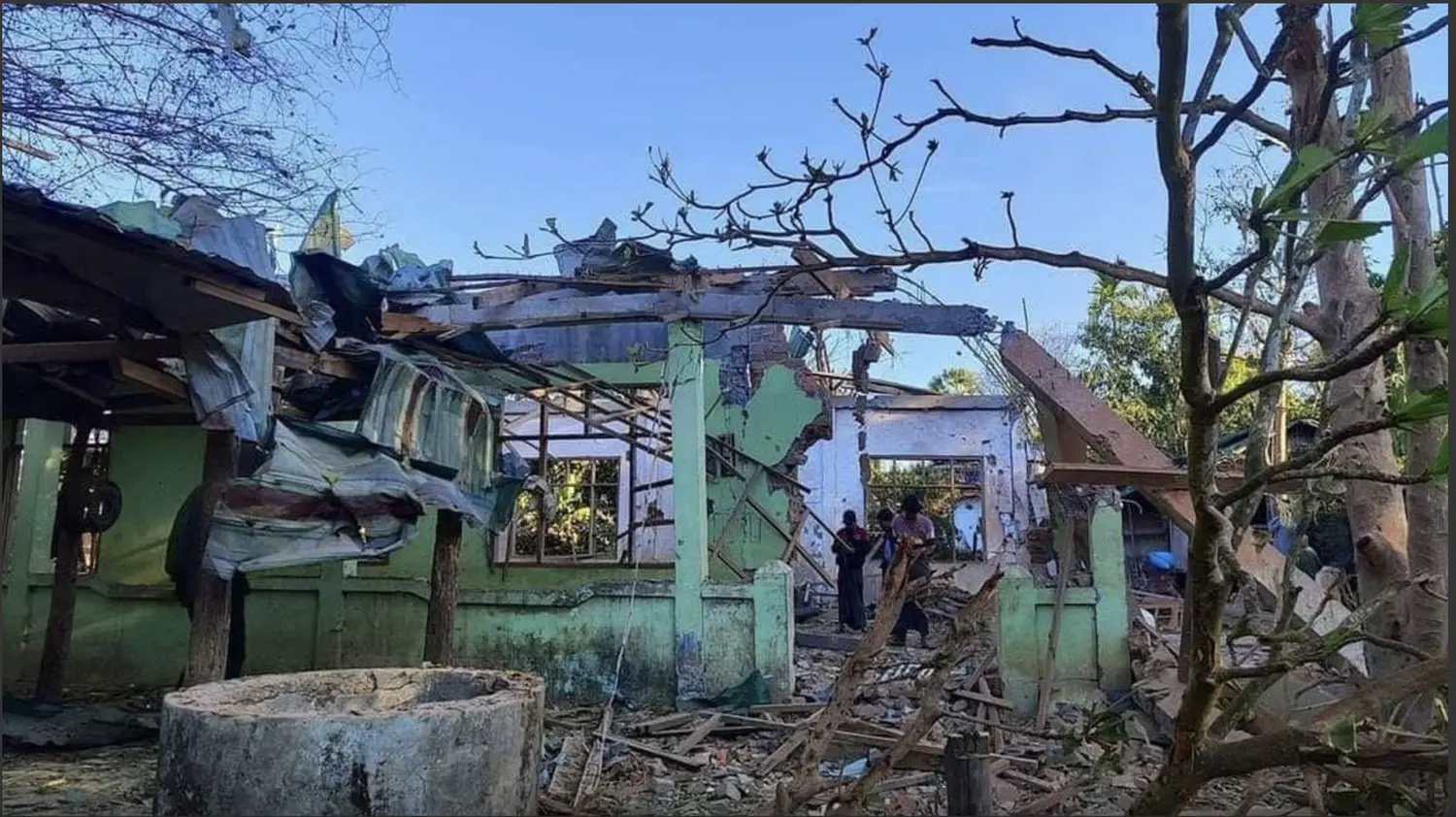
While other OECD energy companies left Myanmar after the 2021 coup, Posco — one of the 250 largest companies in the world by revenue — not only stayed but invested hundreds of millions of dollars to expand the Shwe gas project, despite claiming to follow OECD and other standards on human rights. Posco says its gas serves the people of Myanmar by fueling power plants to provide electricity. But a growing amount of gas appears set to imminently flow to junta steel mills linked to arms manufacturing — while electricity shortages have worsened since the coup amid widespread shutdown of gas-fired power plants once supplied by Shwe gas. The pipeline that transports Shwe gas to its primary customer in China faces risk of damage from intensifying fighting between the junta and resistance forces in northern Myanmar. Posco also runs a luxury hotel on land leased from the regime, and the company is currently awaiting a trial in South Korea on claims it illegally sold a warship to the military.
The Lie That Helped Make UWM America’s Largest Mortgage Lender

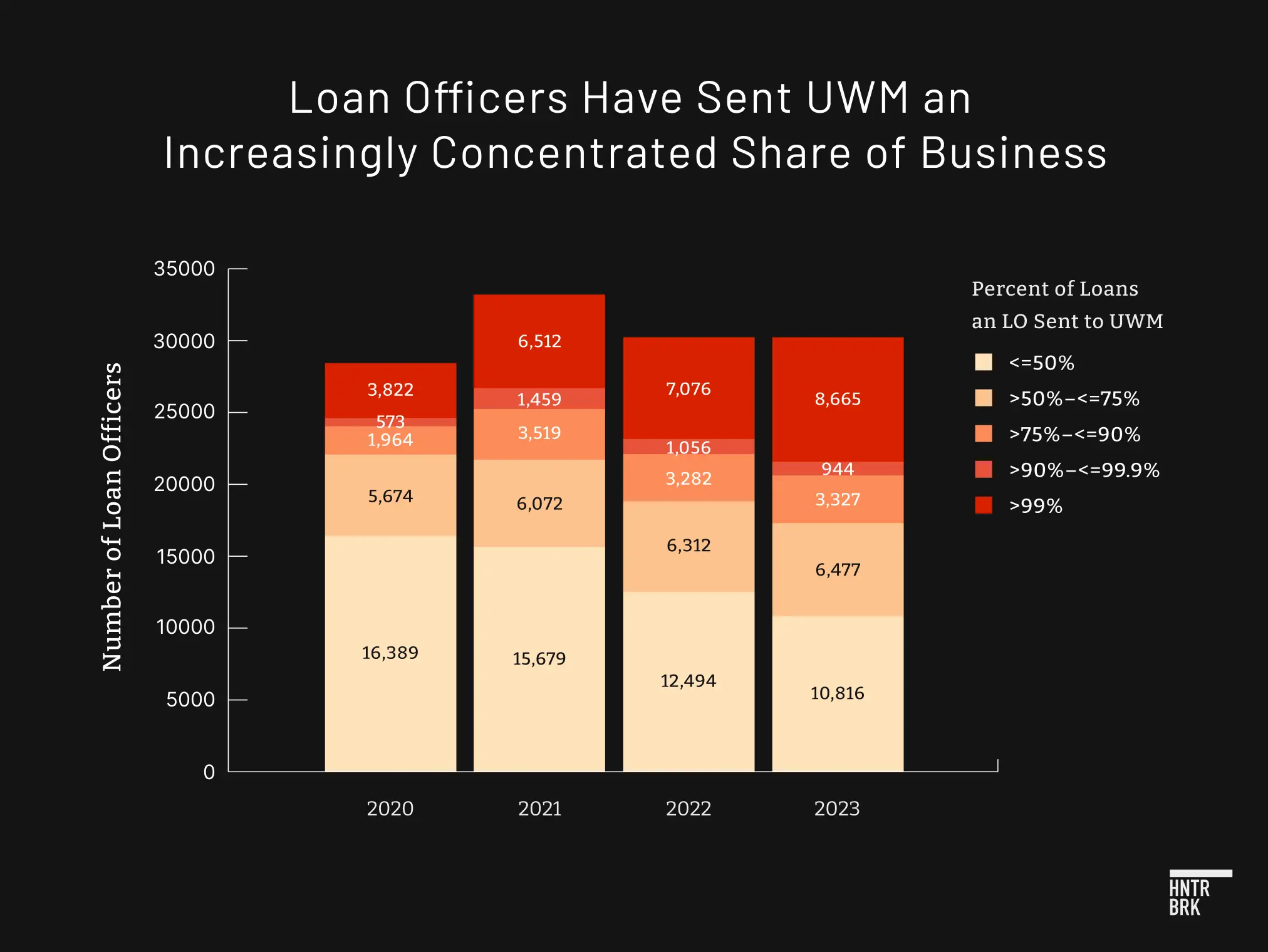
UWM says independent mortgage brokers "shop dozens of lenders" to find the "best deal." But the nation's biggest lender pressures those brokers to push deals its way. Hunterbrook found $39 billion in mortgages came from brokers who sent UWM more than 99% of their business. In all, borrowers paid UWM between hundreds of millions and billions more in closing costs than people whose brokers found them typical loans — controlling for interest rates, transaction type, and other variables — Hunterbrook’s data analysis estimates. Litigators and mortgage experts say UWM’s conduct could constitute fraud and run afoul of laws passed after 2008 to protect borrowers. UWM has removed investor presentations from its website and made critical changes between its 2022 and 2023 filings — including removing language about how brokers shop for the best deal.