breaking news

POISONED USA: Medical Sterilizer Exposed Thousands to Cancer-Causing Chemical
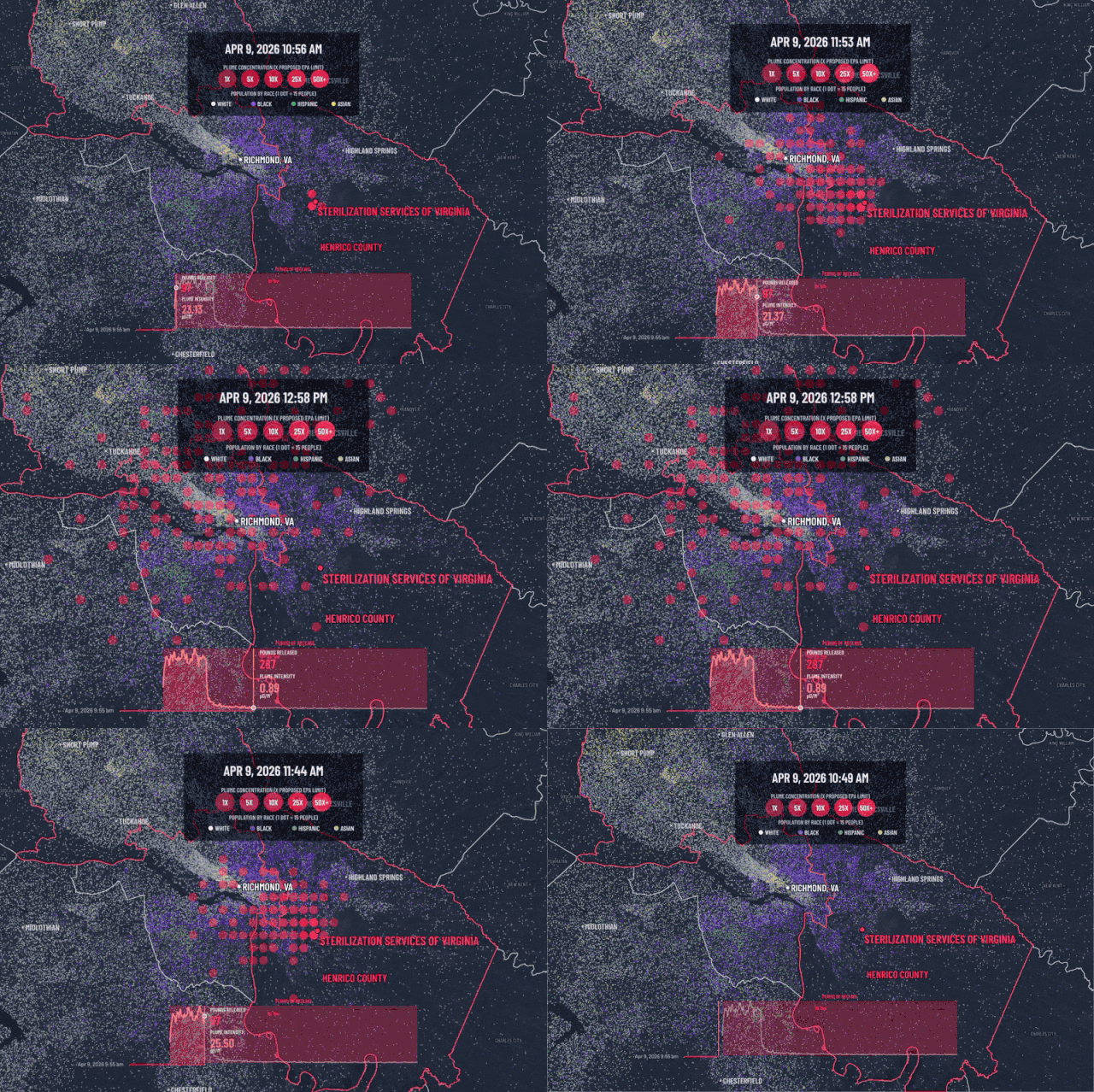
Sterilization Services of Virginia last year received a presidential exemption from EPA rules that would have required the company to update its equipment and use a continuous emissions monitoring system. In April, a faulty valve on the roof of its facility in Henrico County emitted more than 500 pounds of carcinogenic ethylene oxide. Residents say they weren’t notified of the release.
Datadog’s Big New Customer: Anthropic

Datadog told Wall Street it had landed an eight-figure deal with "one of the largest AI foundational model companies" — but didn't say which one. Hunterbrook found Datadog's monitoring software embedded across Claude sessions and products, with public bug reports dating back to January and a leaked source map suggesting a much deeper rollout may be ahead. If the biggest new logo in Datadog's history is who we think it is, the consumption-priced contract could scale directly with Anthropic's growth.

BREAKING: Meta Secretly Behind $1B Ohio Data Center Facing Community Pushback

A mysterious data center company has drawn the ire of local residents in Ohio. They voice concerns about the impact on their water supply, noise pollution, and rising energy costs — and criticize the secrecy around the 600-acre project. The shadowy developer, a Delaware-registered LLC, appears to be a front for one of the largest tech companies on earth: Meta.

Demining Hormuz: How the U.S. Navy Arrived at Worst-Case Scenario Unprepared

With old, reliable minesweepers sitting in Philadelphia, the U.S. stares down the barrel of a bleak scenario: new, flawed ships responsible for keeping open a global shipping artery that carries one-fifth of the world’s oil supply.



Buried in Stargate’s Permits: A Generator Engine Almost No One Sells. Except Generac.
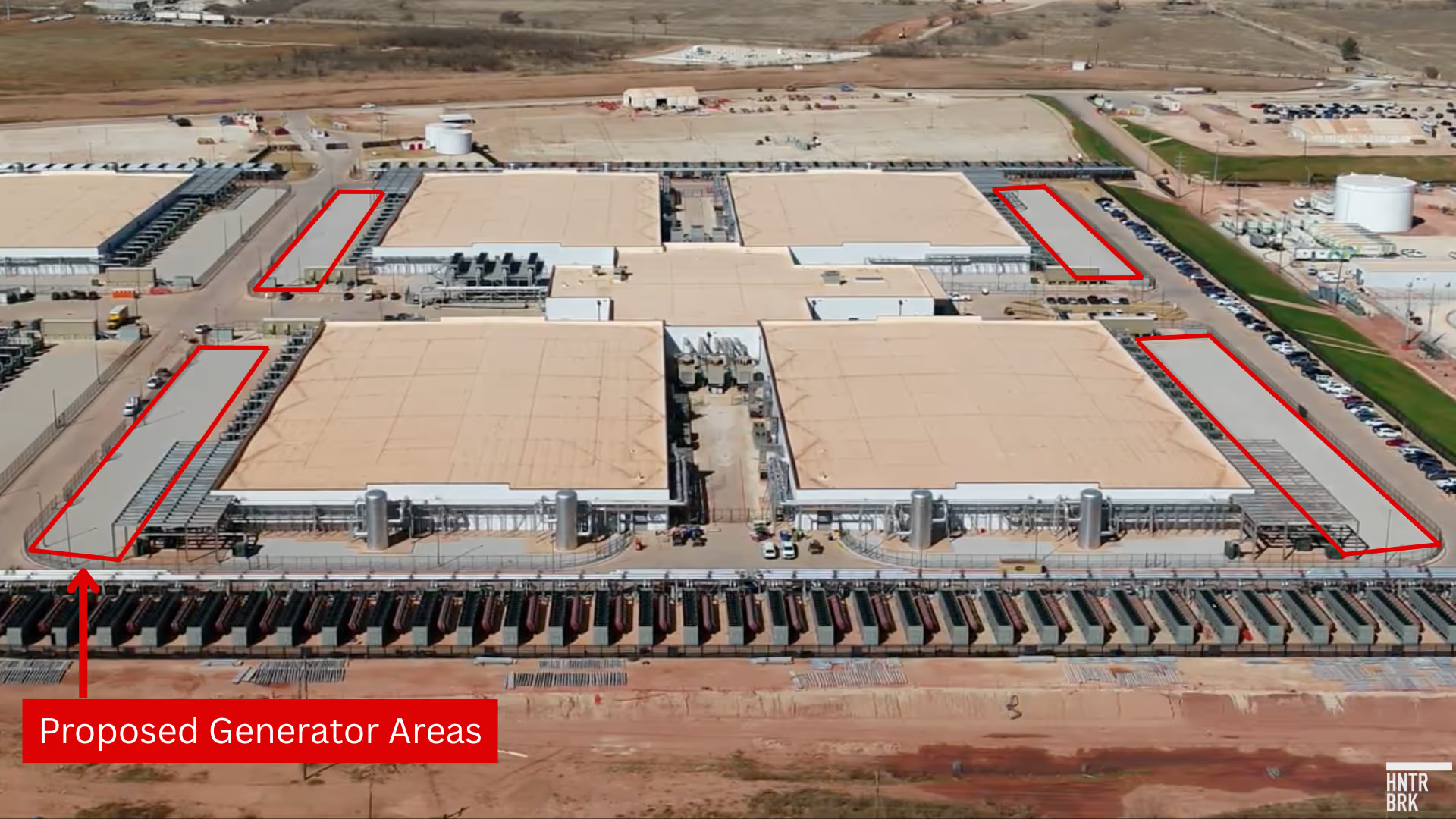
As AI data centers race to come online, lead times for backup generators stretch past two years. Permitting documents reveal that OpenAI's flagship project has turned to Baudouin — a French engine brand whose U.S. distribution network barely exists, save for one major player: Generac.
Did The Pentagon-OpenAI Deal Kill BigBear?
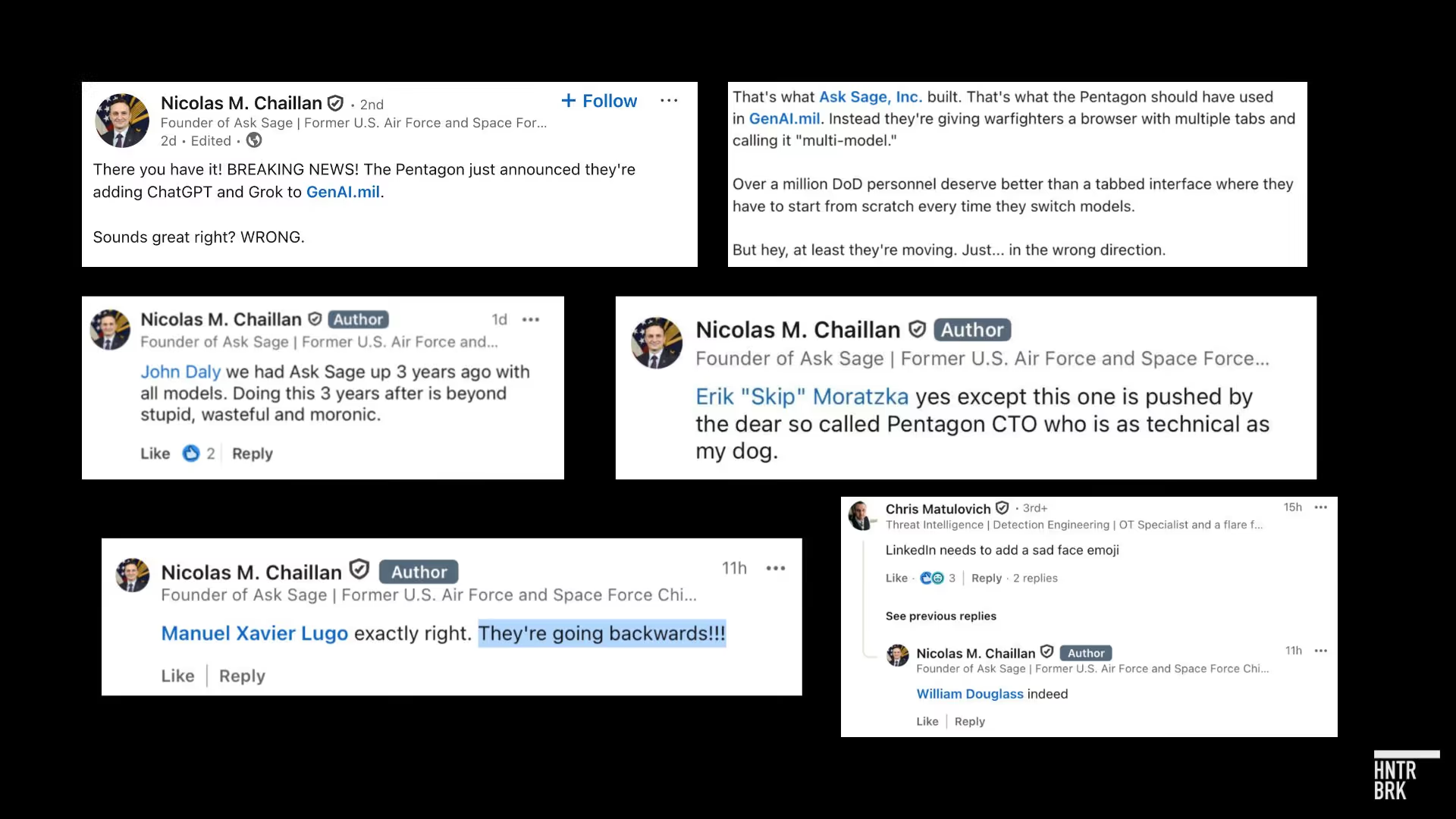
Five military branches just adopted an internal Pentagon AI product partnered with Google and OpenAI. Who lost out? BigBear, which had just spent the equivalent of over half its cash acquiring a military AI tool offering a very similar product. BigBear’s newly named CTO took to LinkedIn to call the Pentagon’s move “stupid, wasteful and moronic.”

BREAKING: Microsoft Denies Partnership with Richtech Robotics
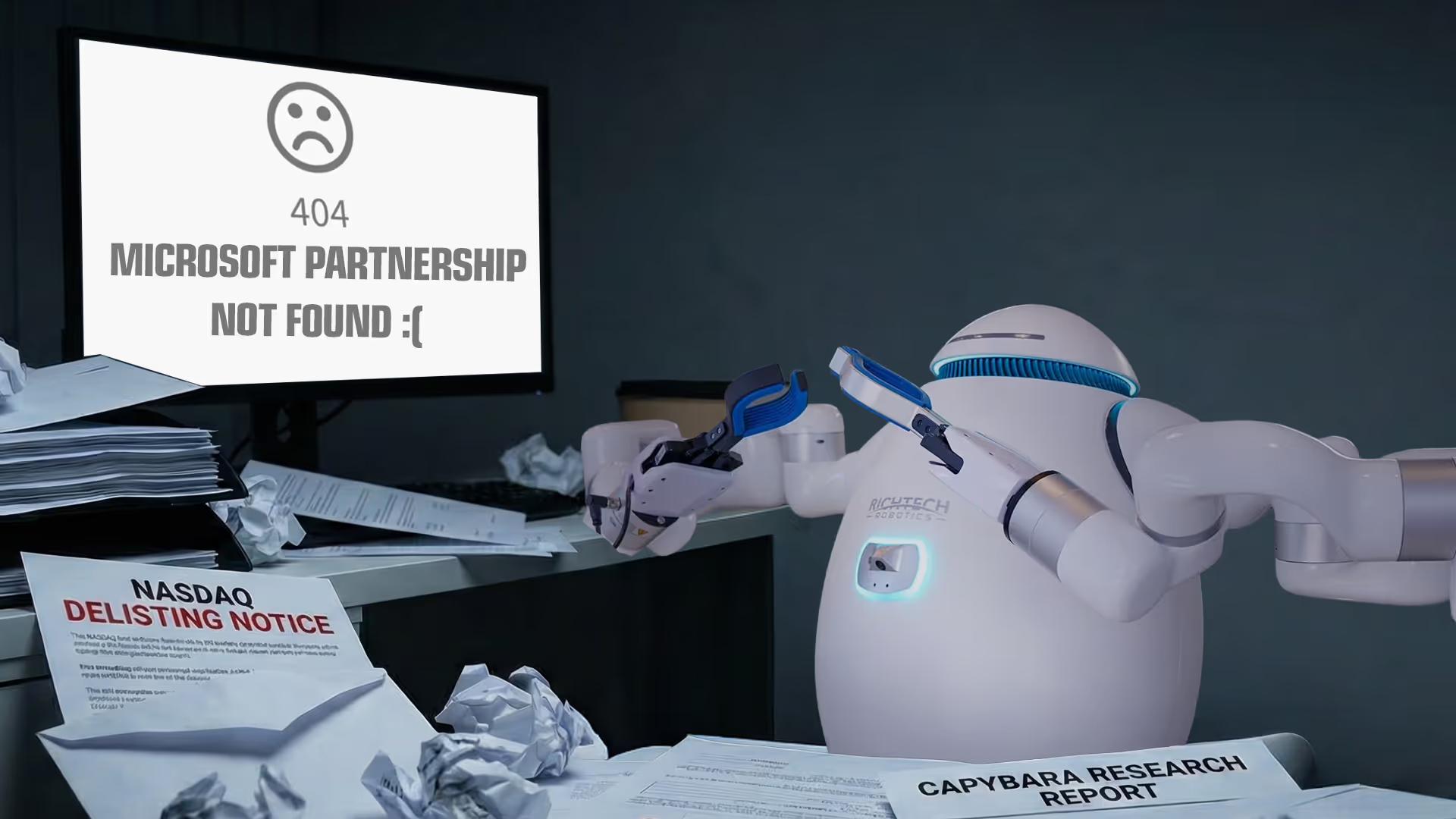
After Richtech ($RR) stock added more than $370 million in market cap on the announcement of a "collaboration" Tuesday, the company announced a dilutive fundraise the next morning. Microsoft tells Hunterbrook Media the engagement was a "standard" customer program with "no commercial element." This comes after Richtech missed its 10-K deadline, hampering its ability to raise money through at-the-market offerings.
Zombie Pipeline: Why Sable is Still a Pipe Dream

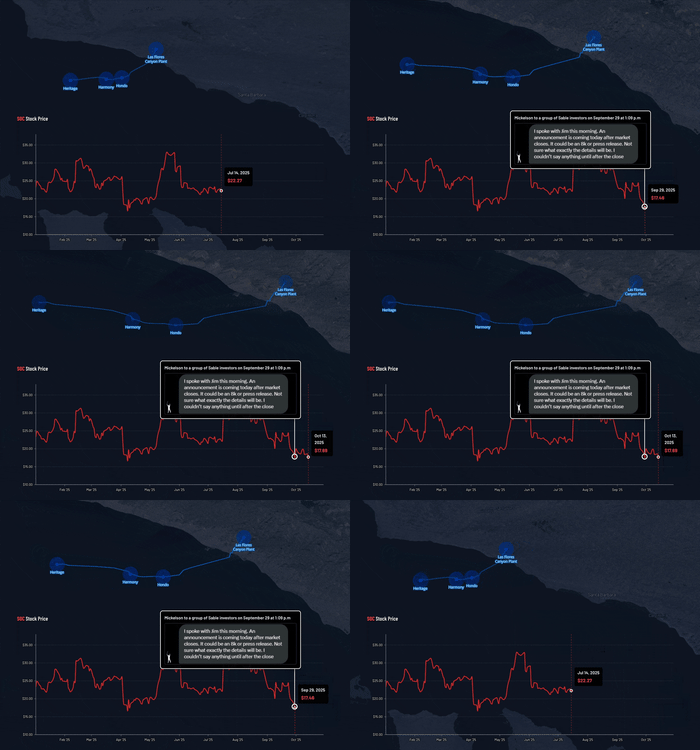
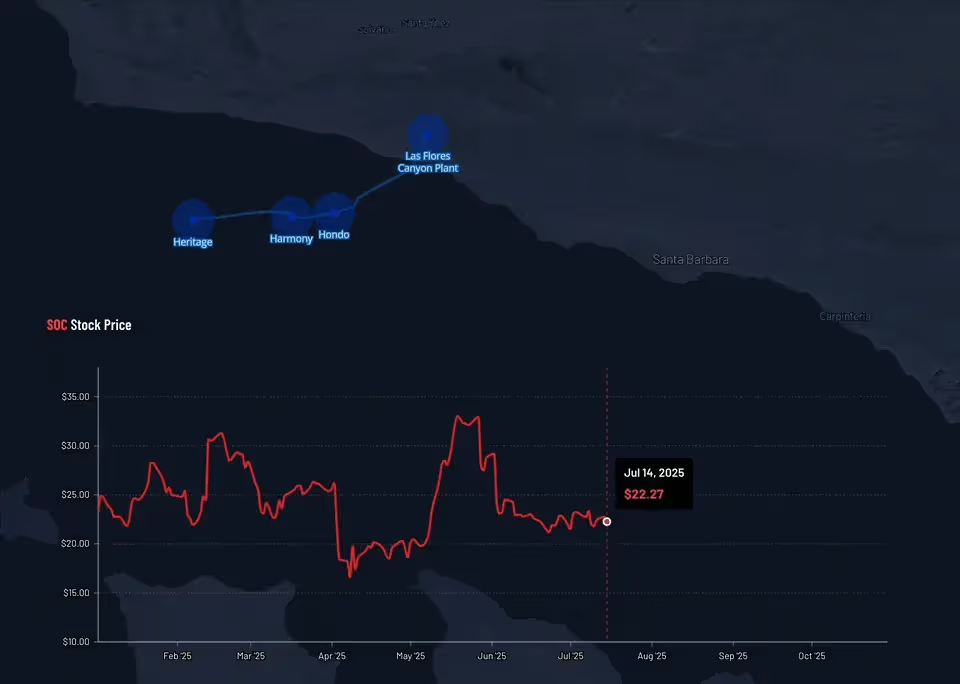
Exxon spinoff Sable Offshore faces seven barriers to restarting its pipeline, idled since a major oil spill in 2015. One of those approvals needs to come from the California Coastal Commission, which Sable CEO Jim Flores criticized for its “Teflon" “eco-Nazi attitude” in a leaked call recording newly obtained by Hunterbrook. Because of these barriers — and despite Trump Administration intervention — Sable’s project, originally scheduled to go online in Jan 2024, may never sell oil. At least not under the ownership of Sable ($SOC), which is quickly running out of cash.

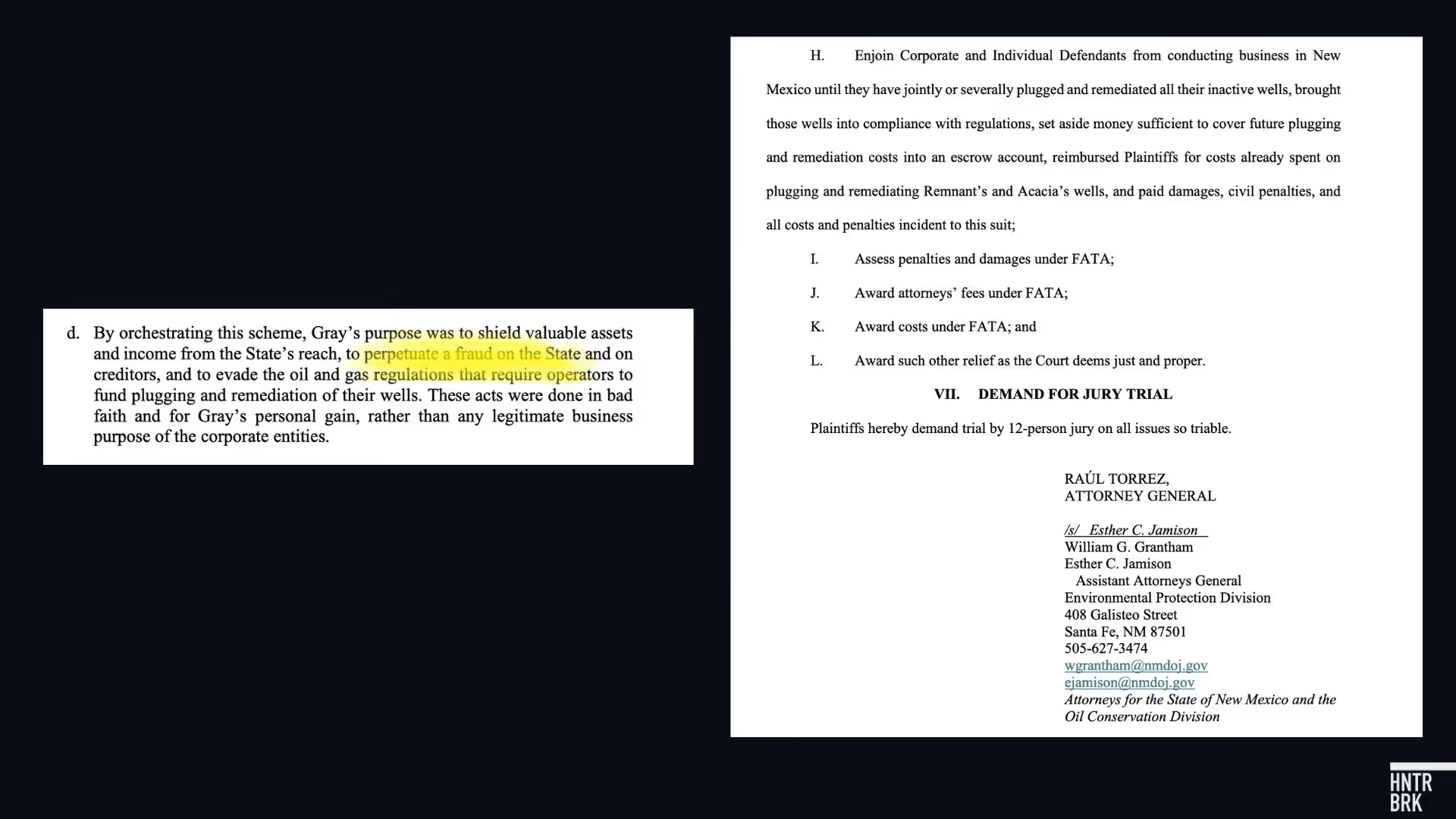
NEW: Permian Confirms Methane Release After Hunterbrook Investigation
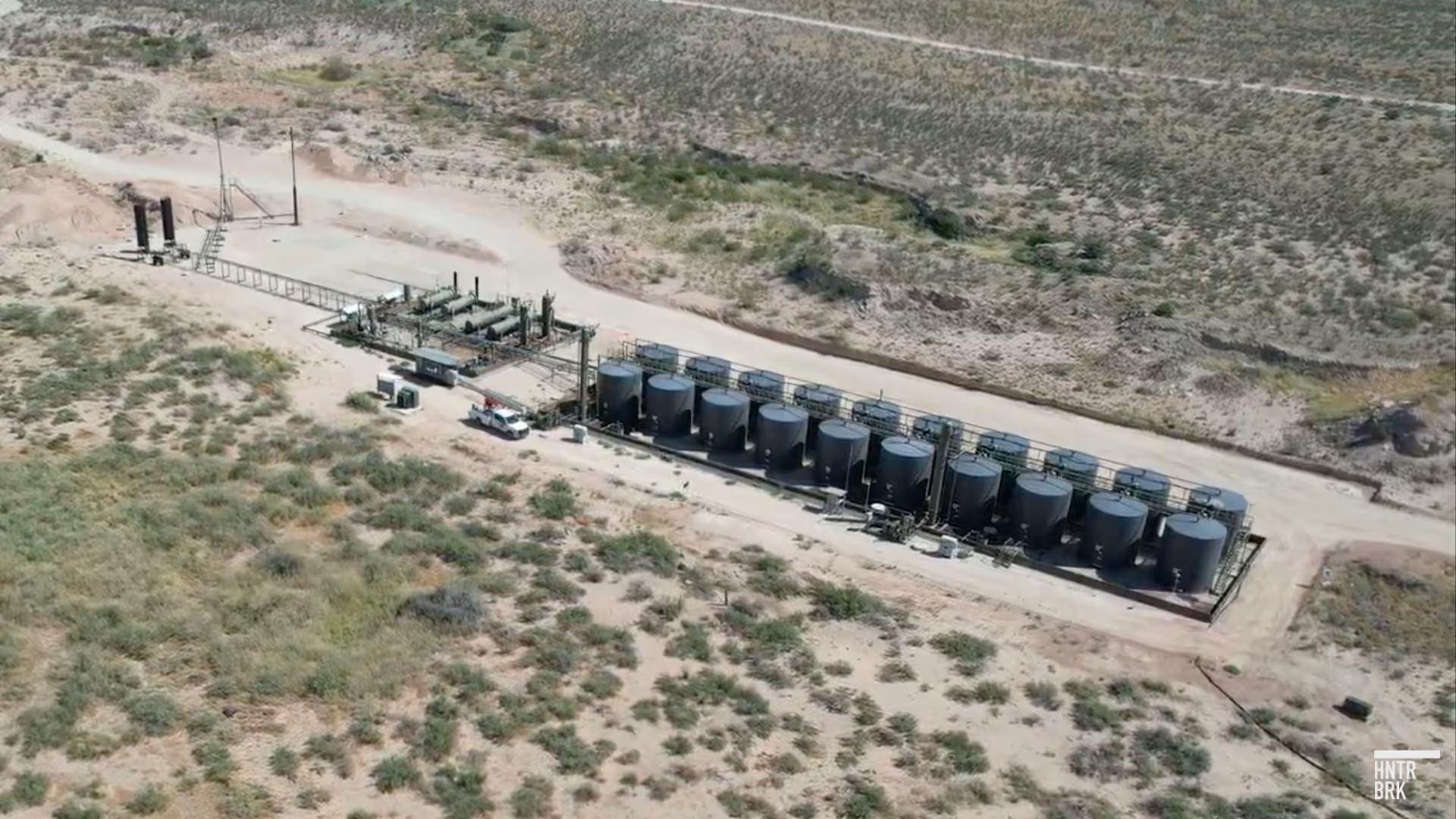
Hunterbrook Media reported that a release at Permian Resources’ gas storage tanks right outside of Carlsbad, New Mexico, likely exposed more than 30,000 people to carcinogenic benzene in February. The company has now admitted in regulatory filings that there was indeed a gas release at its tanks — and that it went on for over a month.
Jumia Resurrected: The Local Playbook Beating Global Giants Across Africa This Holiday Season
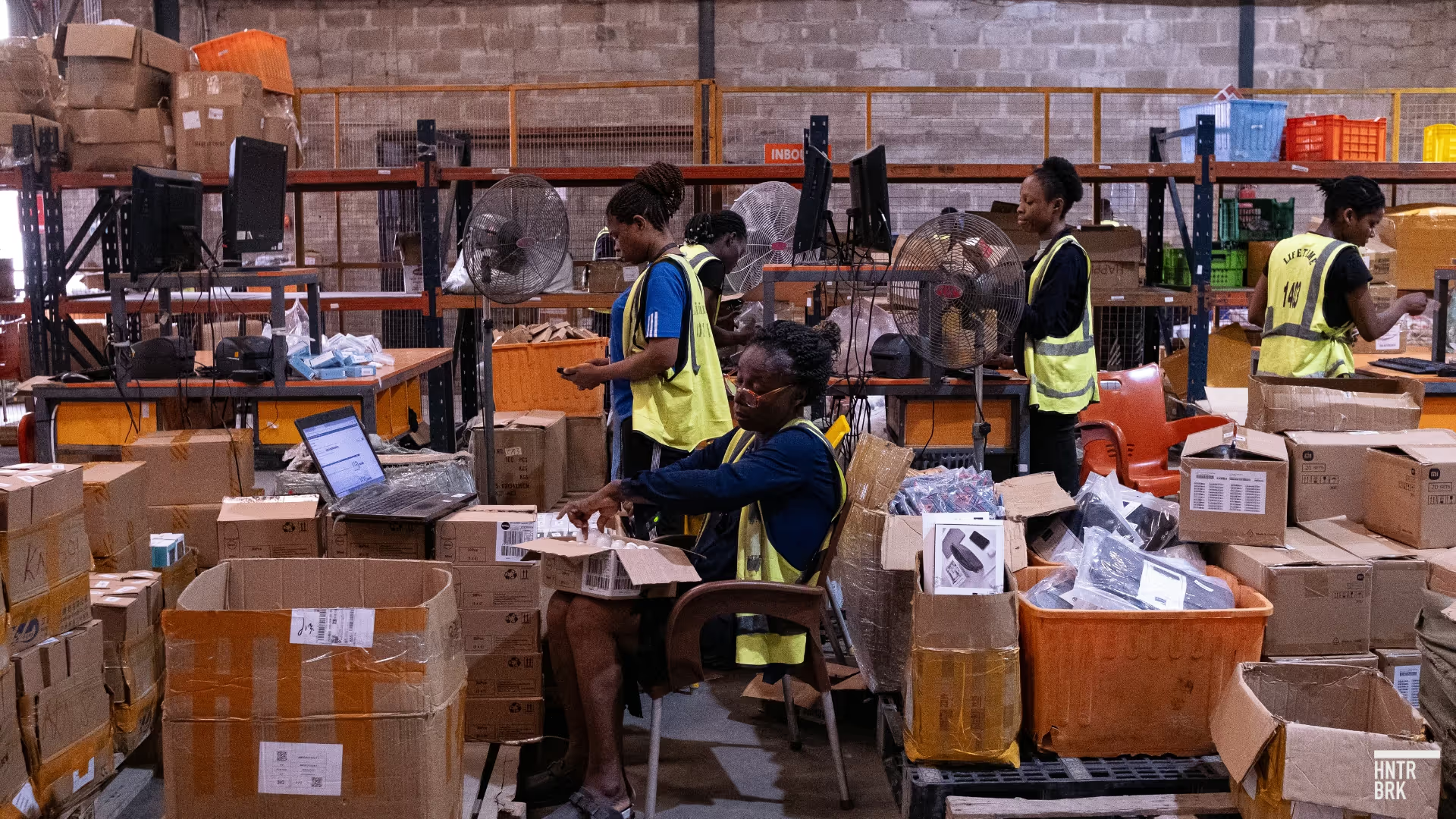
“This company was as good as dead,” Jumia Technologies ($JMIA) CEO Francis Dufay told Hunterbrook Media. Now, the e-commerce upstart once known as the failed “Amazon of Africa” is mounting a quiet comeback, beating Goliaths like Shein and Temu in Nigeria with pickup stations and support tailored to the local communities it serves. This Black Friday, will Jumia prove it has won its home turf?


$PZZA Gate, Part 2: The Network Behind Fake Papa Johns News
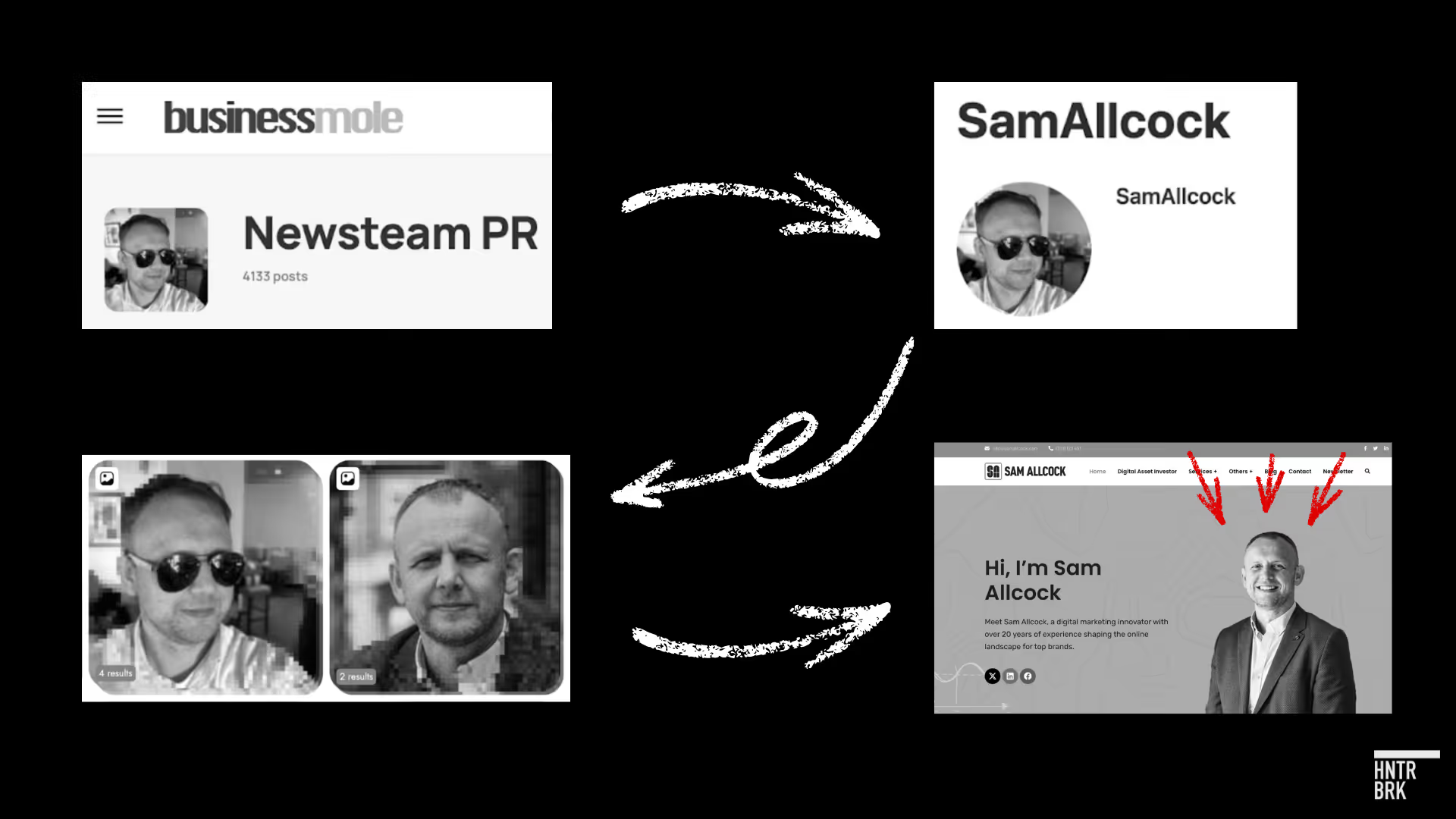
On Monday, Hunterbrook broke the news of a scheme using fake news distribution websites to spread false reports of a Papa Johns acquisition, which sent the share price flying. After our investigation was published, outlets that had picked up the spoofed report — including Bloomberg and Barron’s — walked back their reporting. A source close to Papa Johns also confirmed the rumors were indeed a hoax, with $PZZA’s share price giving up most of its gains. Now, with website data, IP addresses, and social media accounts, Hunterbrook has tied the apparent market disinformation scheme to a website network operated out of Dubai by U.K. nationals. What is still unknown: Who profited from the pump?
$PZZA Gate: Papa Johns Stock Soars On Fake Buyout News

Papa Johns International ($PZZA) stock surged more than 18% today on what appears to be a market manipulation scheme using fake news distribution websites to spread false reports of a $65-per-share acquisition offer from private equity firm TriArtisan Capital Advisors.


NEW: EPA Echoes Whistleblower, Plans to File Complaint Against Naval Base
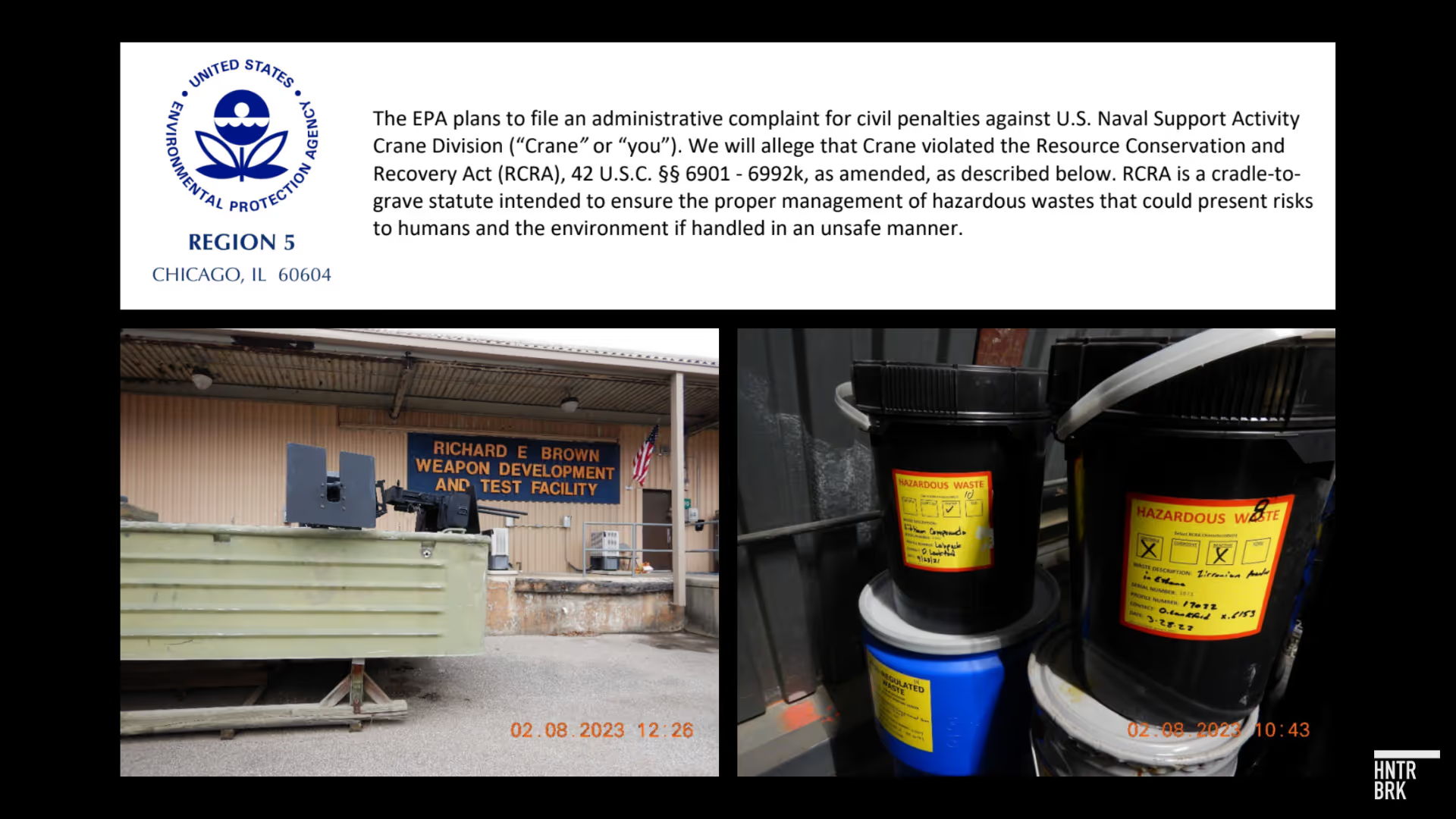
The EPA plans to file a complaint against a U.S. Navy base in Indiana for hazardous waste violations and improper storage of explosives, according to a letter published by the Indiana Department of Environmental Management. The document echoes a whistleblower account about safety issues at the base — and appears to contradict a Navy assessment that found the Explosives Safety Program "satisfactory" in 2023.
NEW: Permian Resources Exposed Thousands to Cancer-Causing Chemical in New Mexico, According to New Tracking Tool
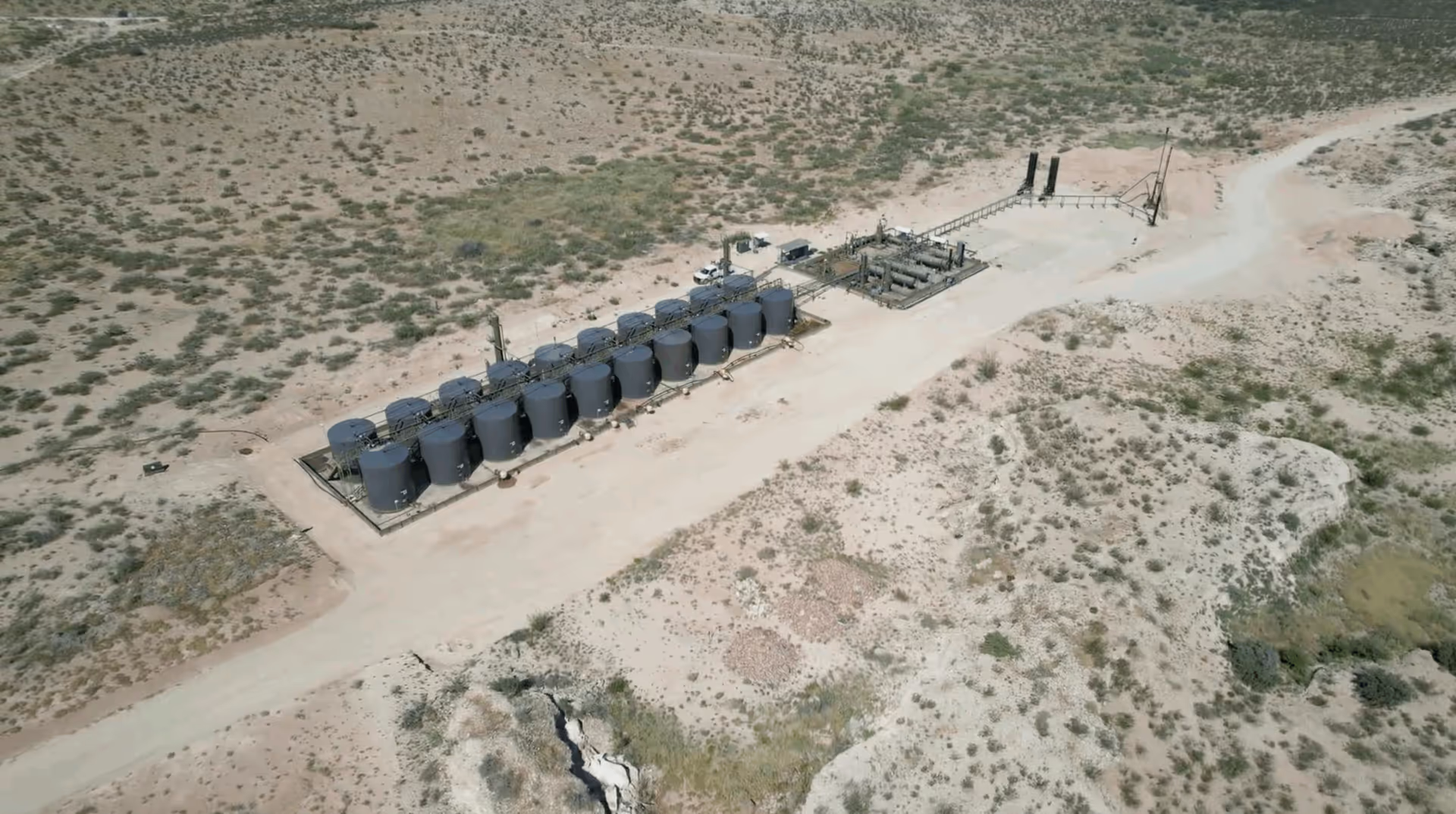
A release at Permian Resources’ gas storage tanks right outside of Carlsbad, New Mexico, in February likely exposed more than 30,000 people to carcinogenic benzene, researchers said. The company never reported the toxic discharge to New Mexico’s Environment Department. Permian now wants to drill 10 new wells within the Carlsbad city limits by this fall, despite community pushback.

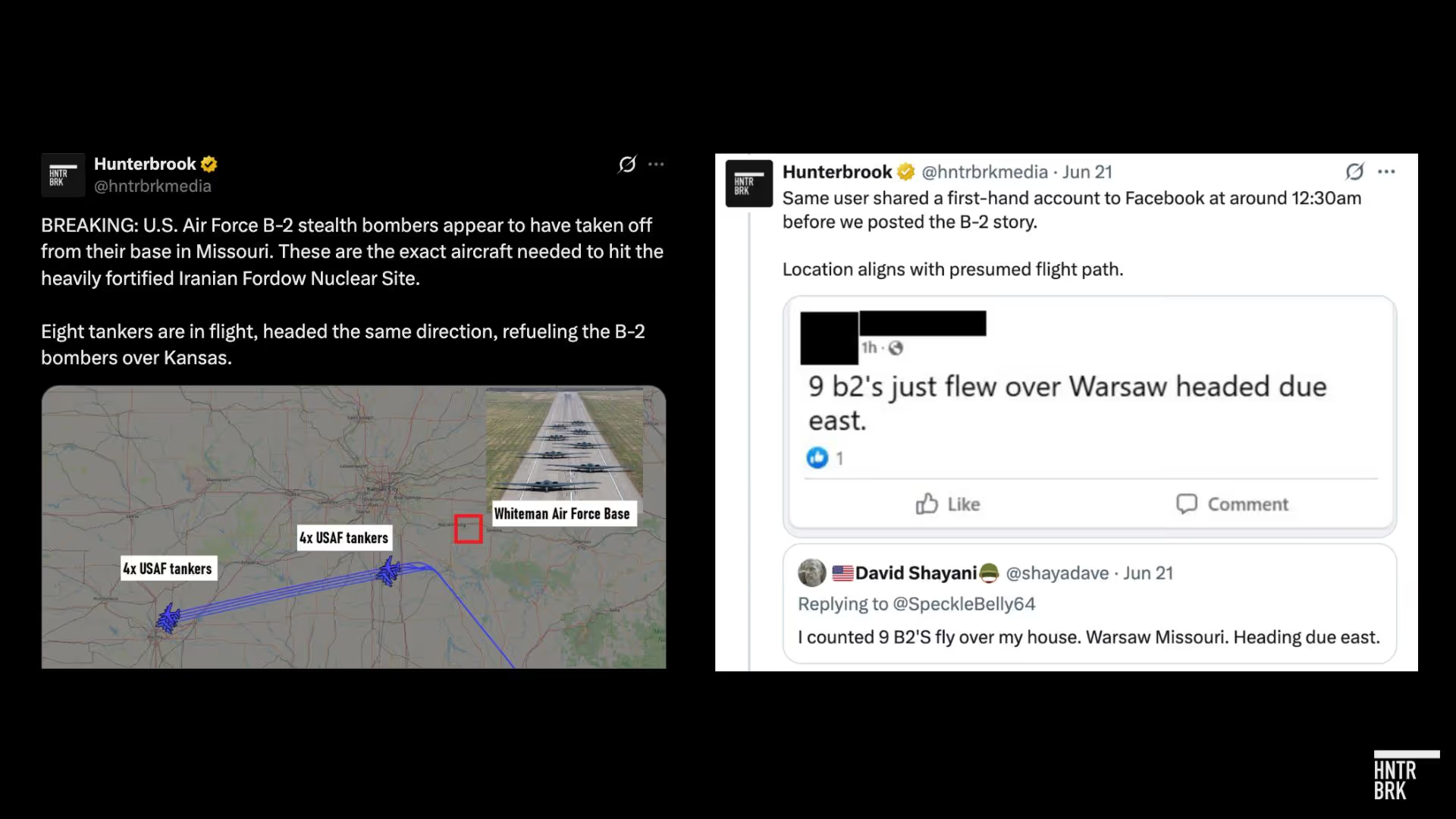
Liquidia Drug Approved As Rival United Throws Hail Mary To Delay Actual Launch
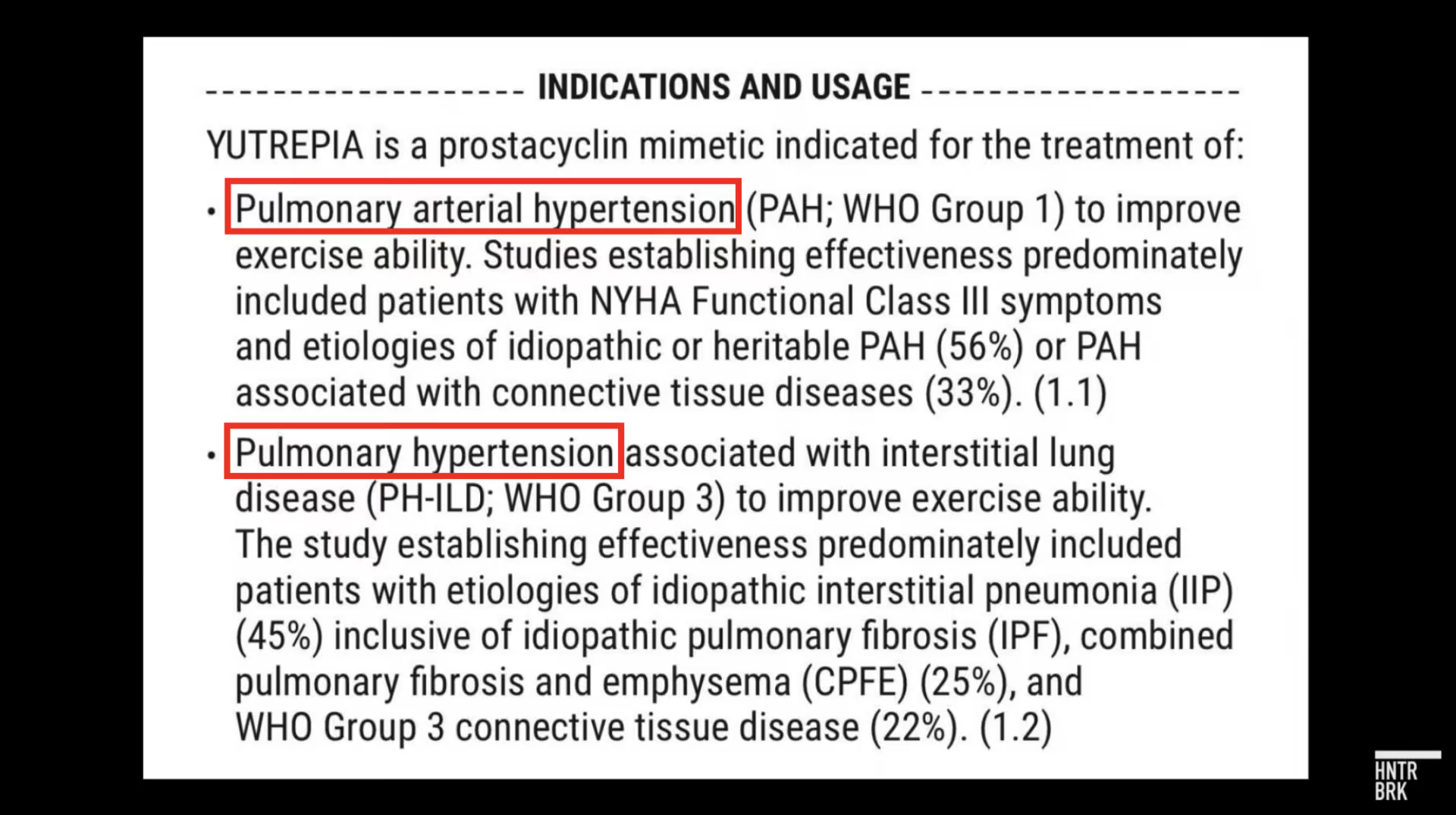
Amid a vicious legal dispute, Liquidia ($LQDA) finally won FDA approval on May 23 for its medicine Yutrepia to treat two deadly lung diseases: PAH and PH-ILD. But a federal judge could still block Yutrepia from actually launching on time, due to new litigation filed by United Therapeutics ($UTHR) to delay competition against its incumbent drug Tyvaso.

EU Restricts Public Access to Satellite Imagery Over Red Sea
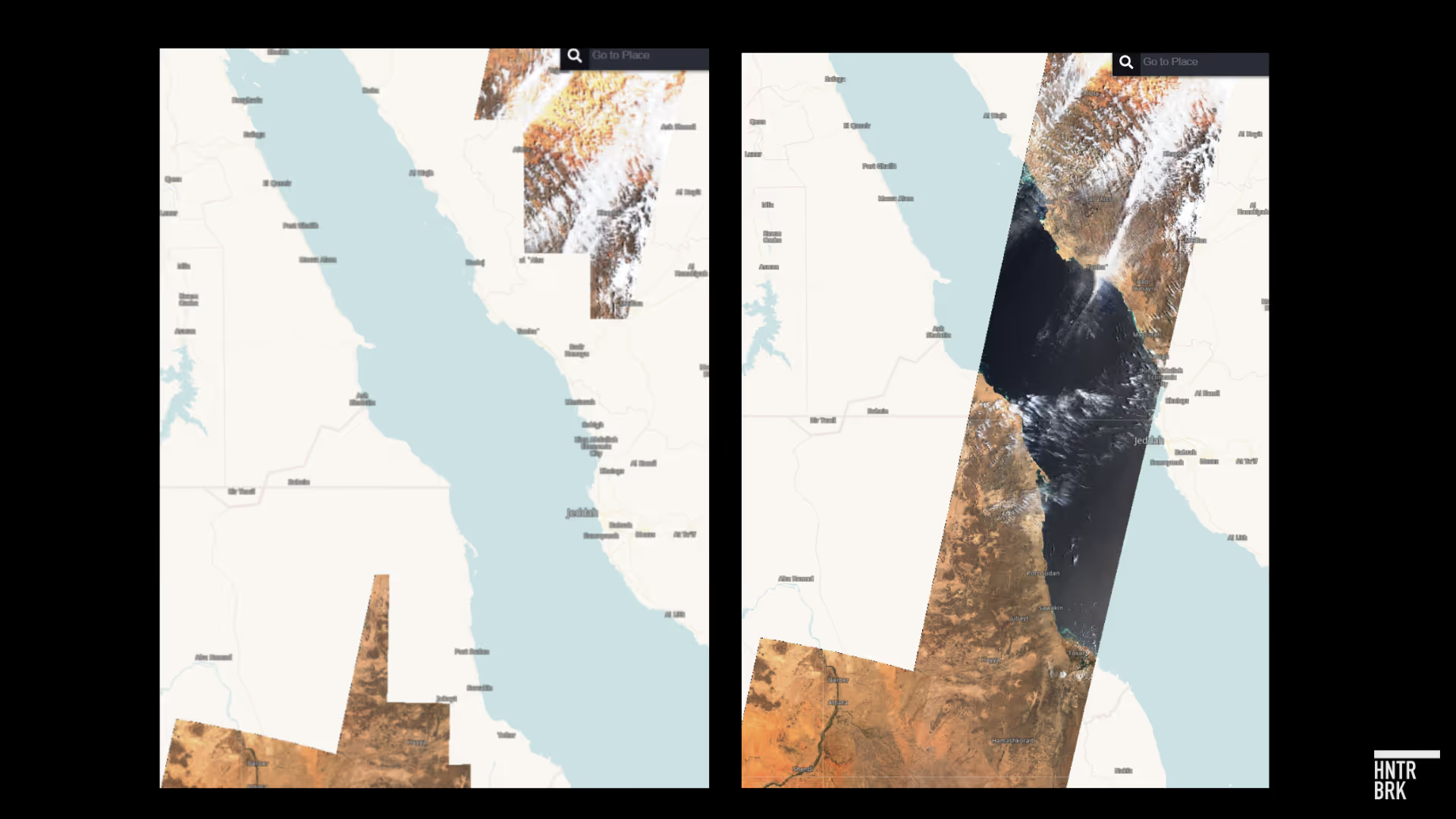
Sentinel-2 satellite imagery coverage degraded over the Red Sea — as the U.S. and EU continue strikes on Houthis. European Commission tells Hunterbrook Media that service disruptions may be in line with “applicable regulations and operational considerations.” The U.S. recently accused a Chinese company of providing satellite imagery that is helping Houthis target American warships. An expert tells Hunterbrook that EU coverage gaps may be designed to prevent similar attacks.
Debris and Missing Wildlife in Nature Reserve After Vistra Battery Fire
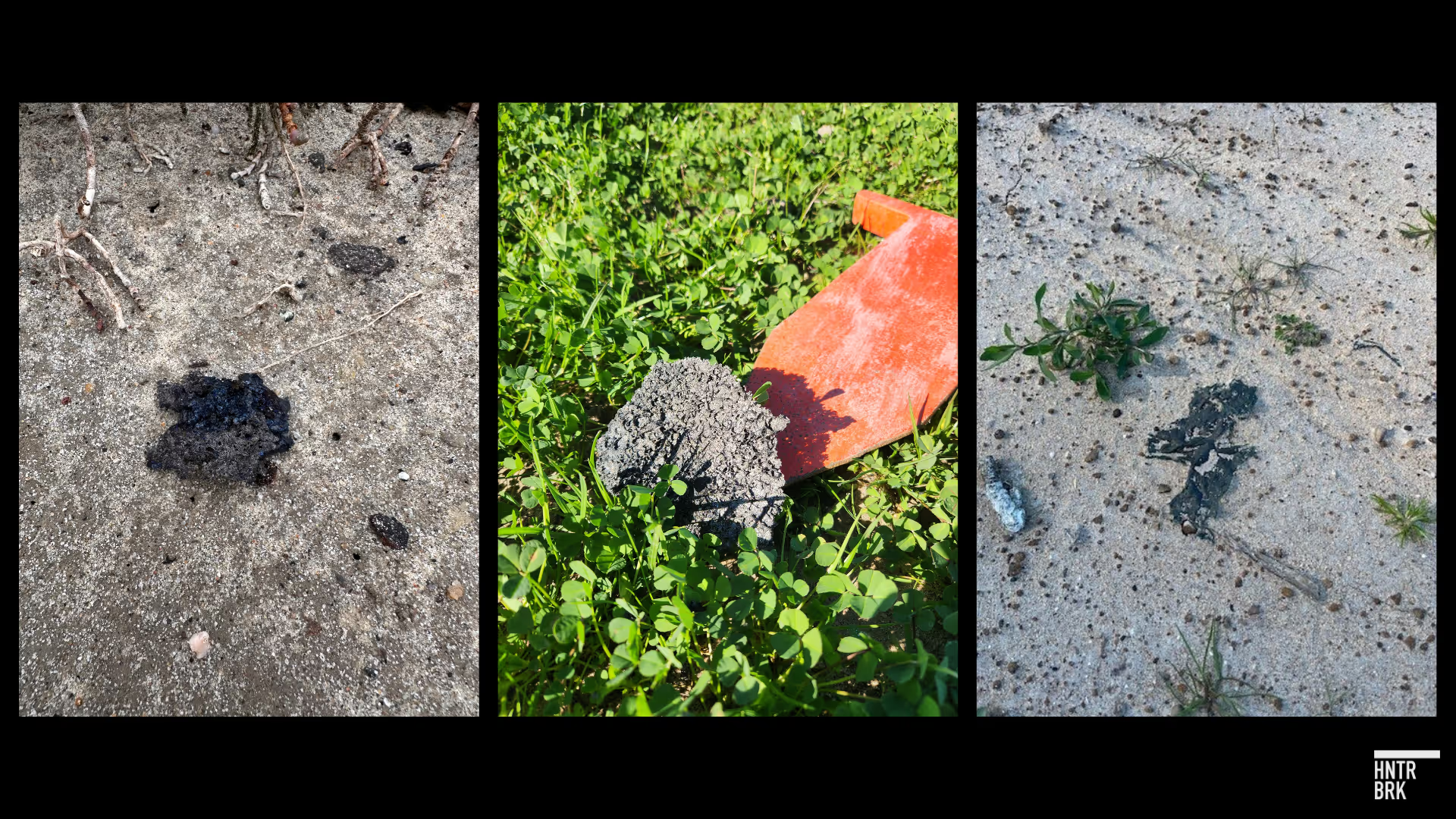
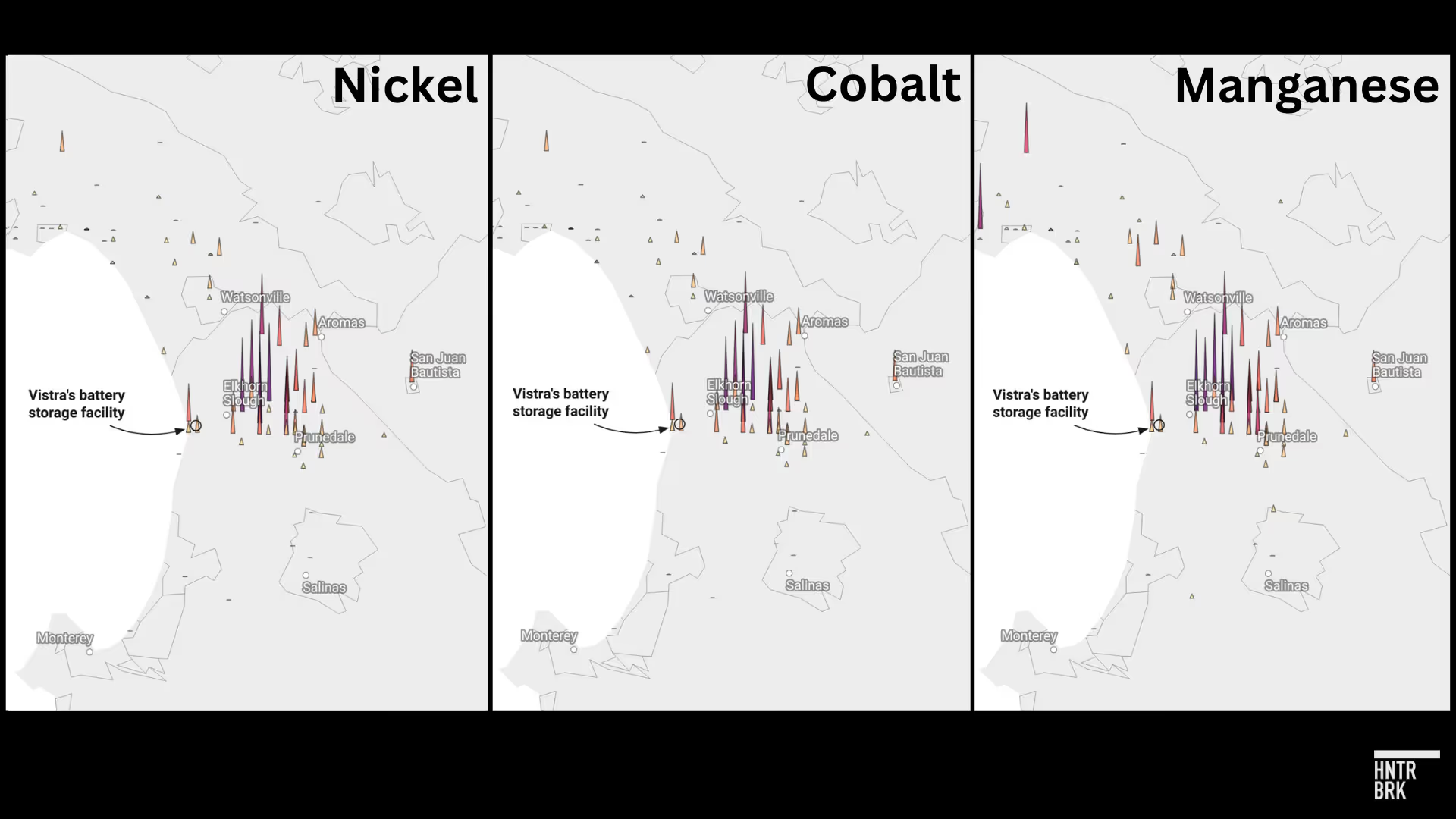
Images and an observational report reveal how a fire at Vistra Corp.’s (NYSE: $VST) Moss Landing battery storage facility in California may have impacted a nearby nature reserve where scientists had already detected unusually high concentrations of heavy metals in January.


Cartel Crackdown Could Hit Remitly and Western Union
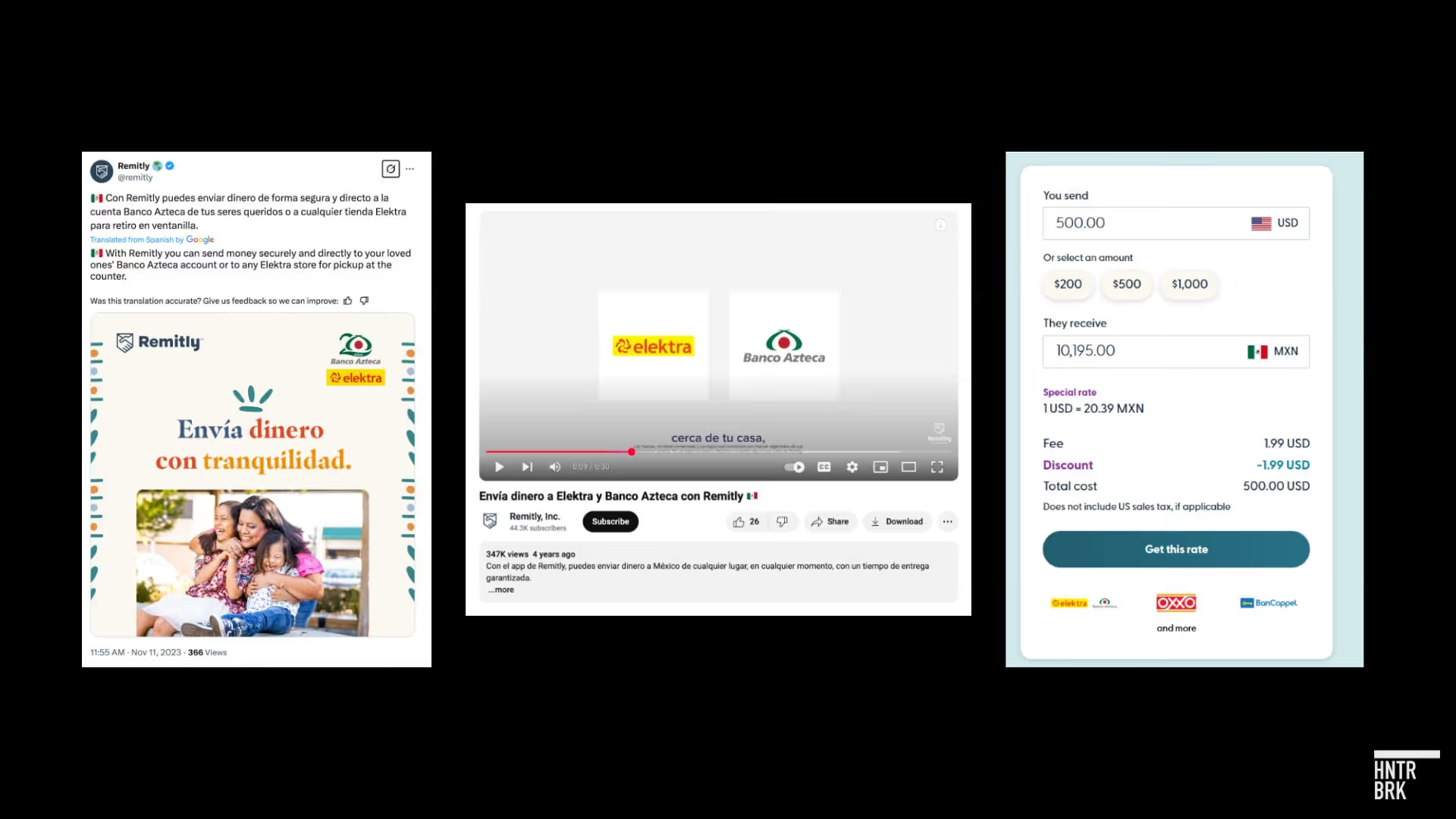
Remittance companies Remitly ($RELY) and Western Union ($WU) face a trifecta of risk: slowing growth in key markets; more affordable competition from peer-to-peer apps, cryptocurrency, or card-to-card options; and now, federal scrutiny of cross-border transfers tied to cartels that the United States designated terrorist groups in February. Remittances have been linked to the fentanyl trade by federal agencies and academics. The Trump administration’s crackdown began with new Financial Crimes Enforcement Network (FinCEN) restrictions issued March 11, which lower the reporting threshold for remittance companies in specific regions to $200 from $10,000 — the start of an “all government effort” to fight cartels, according to Treasury Secretary Scott Bessent. Vice President JD Vance introduced a bill to tax remittances as a senator. Secretary of State Marco Rubio restricted remittances to Cuba his first week in office. Several states are also imposing costs on remittances. In February, Congress unanimously advanced the Stop Fentanyl Money Laundering Act of 2025 from committee with bipartisan support. The Act mandates the Treasury Department to strengthen regulations on financial institutions including remittance companies. Policies targeting remittance platforms could also impact immigrants sending money back home to loved ones. “People who barely scrape by and try to send money home, if they have to show IDs, and companies take their commissions, then it is extra punitive to add more taxes, more tariffs, in the supposed effort to fight the cartels and fentanyl,” a former kindergarten teacher and U.S. Navy veteran who has sent remittances to Mexico for 30 years told Hunterbrook Media. “These people are not the culprit.” Growth in remittances has already decelerated, according to the Bank of Mexico, from 25.9% in 2021 to just 2.3% in 2024. Western Union’s CEO told investors on March 11 that the remittance company has seen a “slowdown in our Latin America business” and guided lower for Q1 2025, blaming “anxiety in the marketplace post-election.” Remitly initially launched with the promise of charging users less to send money home, then hiked fees and cut website comparisons to incumbents like Western Union and MoneyGram, which now charge similar amounts. A study by the government of Mexico found Remitly to be the most expensive option for remittances — with the company obfuscating charges through a worse exchange rate. Remittance companies are fighting a wave of competition from more affordable options: 1) card-to-card programs like Visa Direct; 2) cryptocurrency, from apps like Coinbase and Robinhood to stablecoins like Tether and Circle; and 3) peer-to-peer transfers like Venmo, Zelle, and Cash App. Remitly’s CFO, chief accounting officer, and other executives departed within the past year, following material weaknesses in SEC filings. The CEO, CBO, and former COO have each rapidly sold Remitly stock in recent months. Remitly, Western Union, and MoneyGram did not reply to repeated requests for comment. They did not deny cartel activity on their platforms or respond regarding any efforts to limit cartel transfers. In 2017, Remitly’s CEO argued to Congress: “Digital remittance providers like Remitly provide an additional layer of security against consumer fraud and money laundering risks by not accepting cash and by providing services directly to the end customer without relying upon the use of an agent network or other intermediary.”
County Silences Reporters as Vistra Dodges Questions About Surface Testing; Later Reverses Course
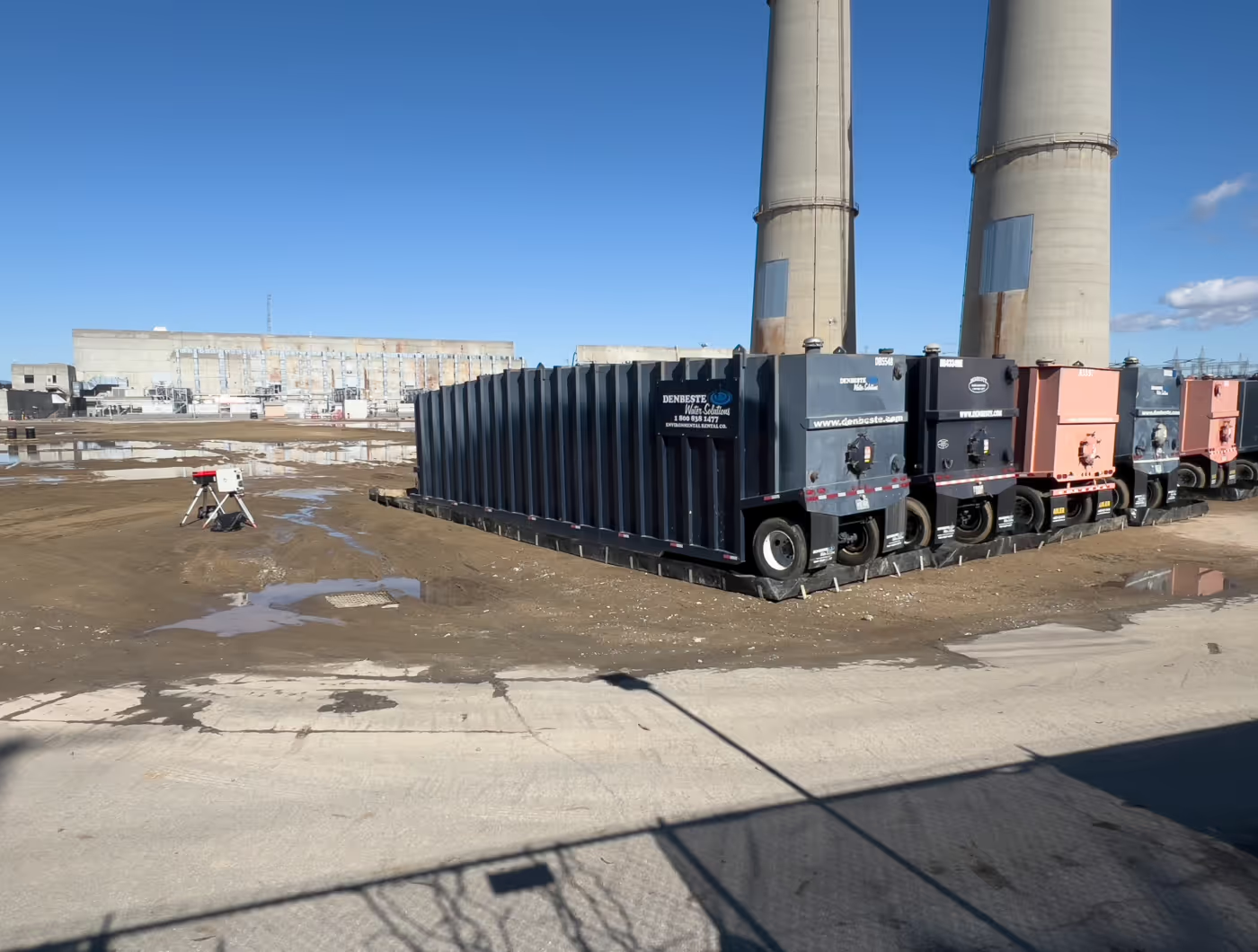
The Monterey County Communications Bureau said it would ignore Hunterbrook Media questions for Vistra (NYSE: $VST) at its weekly news briefing after Vistra representatives told County officials they would not answer them moving forward. A Hunterbrook reporter had asked a Vistra spokesperson about surface sampling test information related to a fire at its Moss Landing battery facility that the company had promised to make public but has yet to produce. UPDATE: Monterey County has reversed course and said it will ask Hunterbrook questions at the weekly news briefing and leave it up to Vistra representatives to decline to answer. In an email on March 11, a County spokesperson wrote: "The County will not restrict questions posed to any of the participants. Please note, it is up to each participant how to respond to inquiries made."
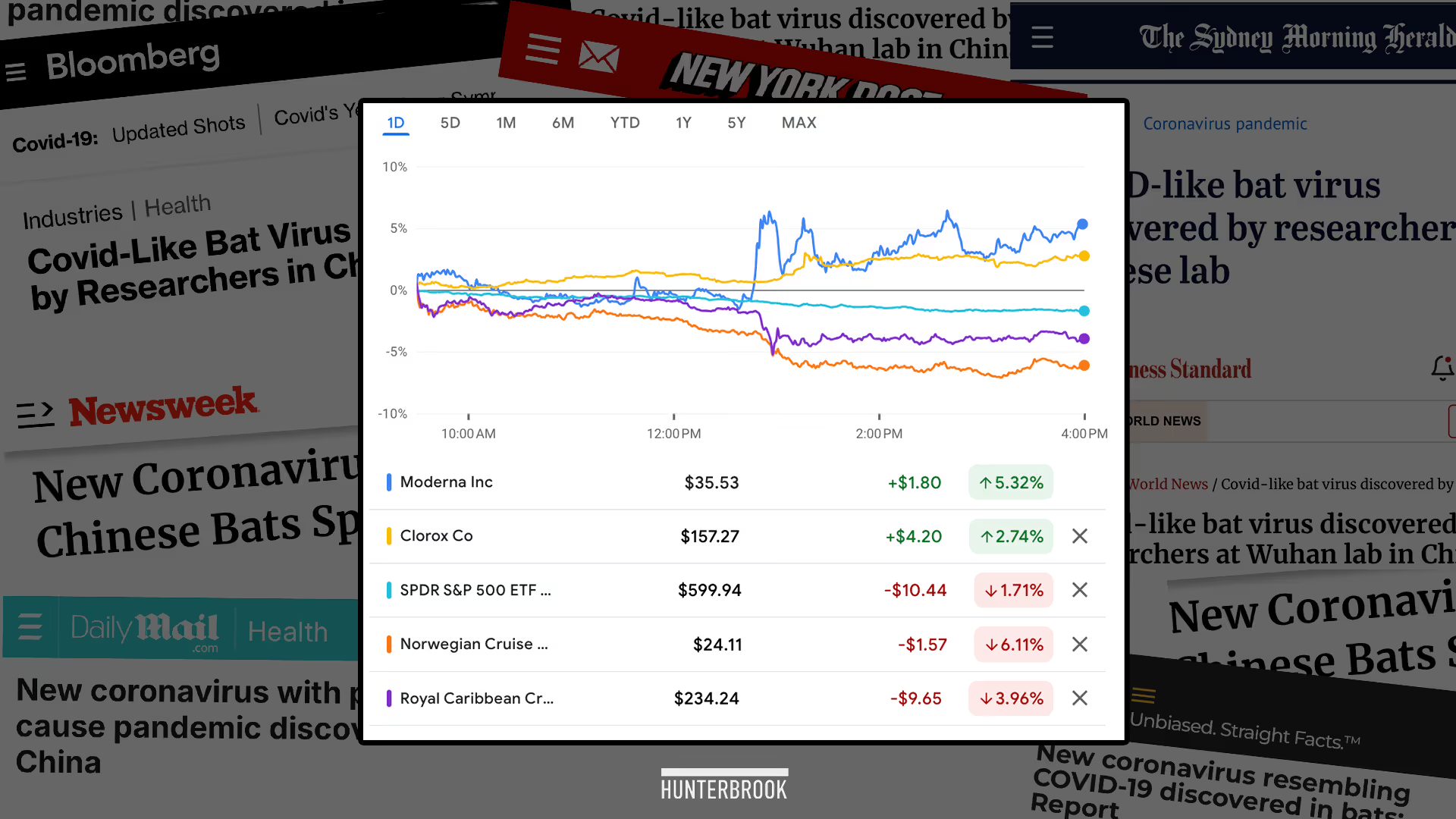
Vistra Fire Reignites, No Evacuation Ordered
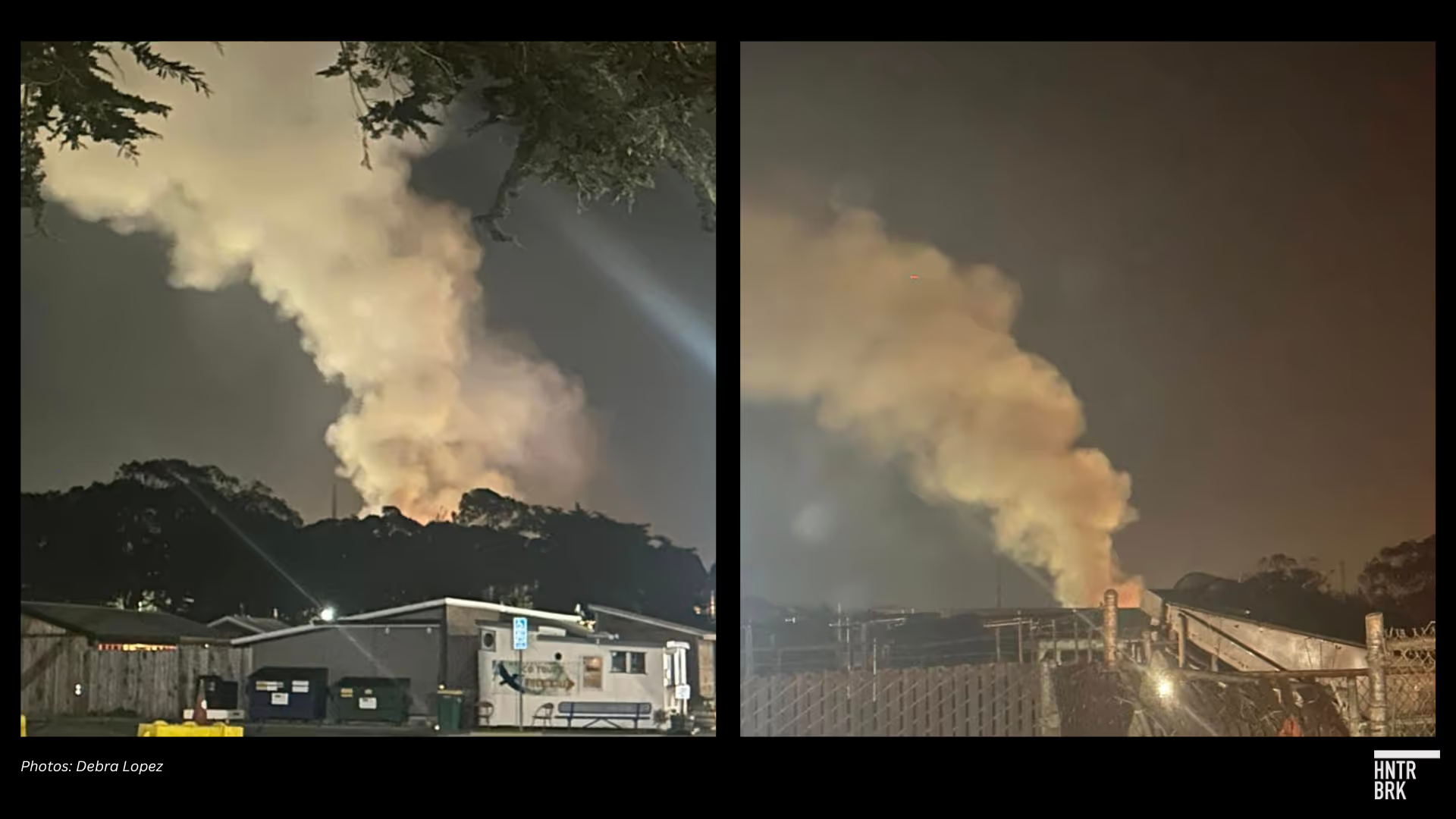
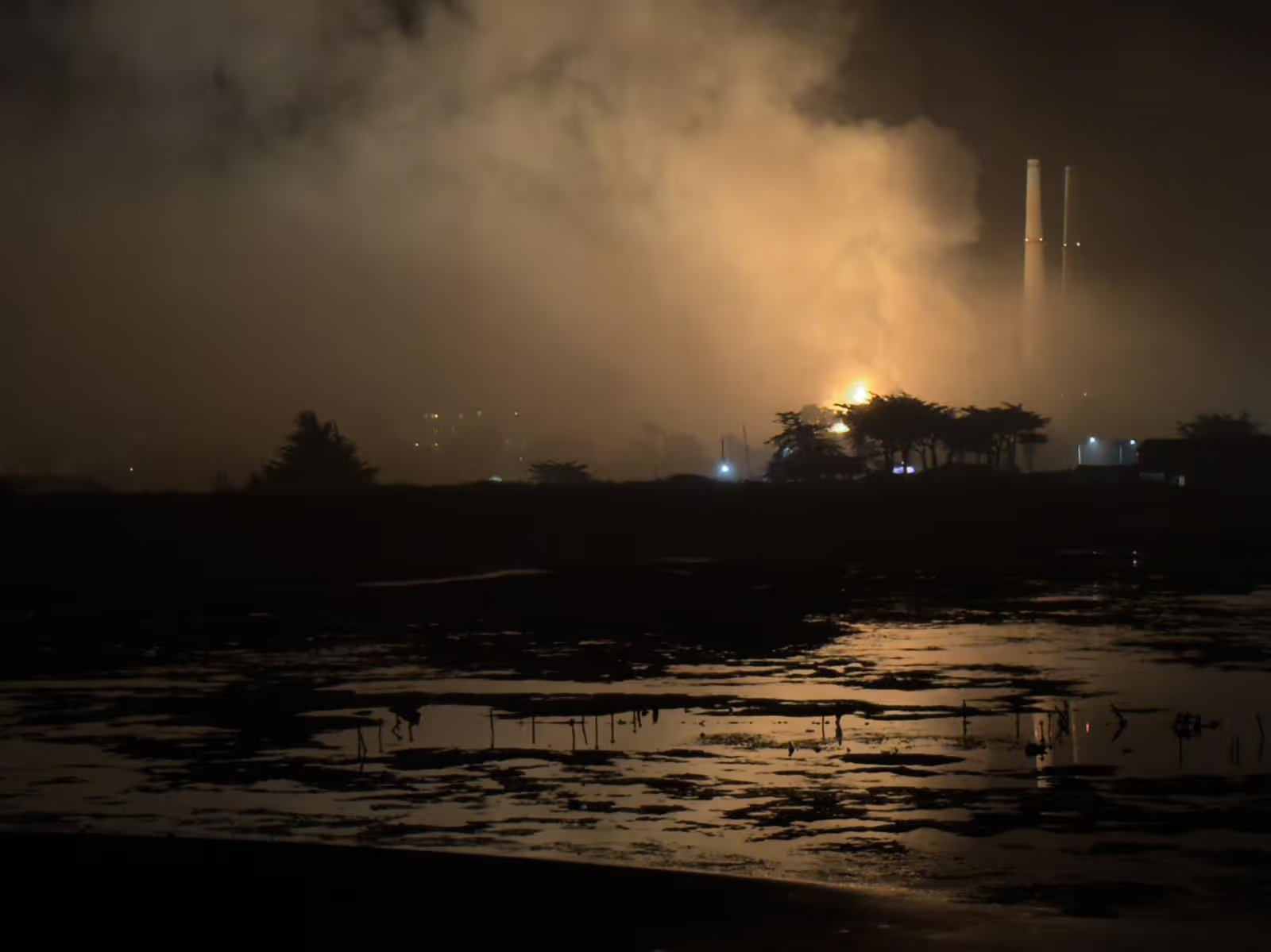
The smoke plume rose more than 500 feet over Vistra’s battery facility in videos and images posted by people in Monterey County. Residents received a text alert telling them to close windows and doors overnight, as local officials continue to monitor the fire.

As PDD Hit by Tariffs, Companies Enabling Chinese Surveillance Remain Nasdaq Listed
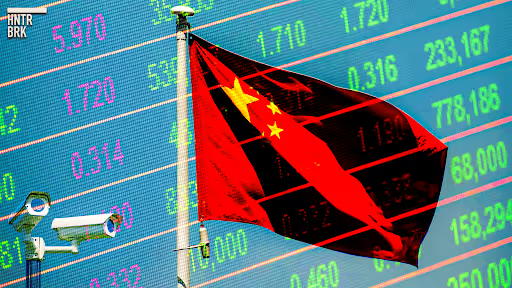
Temu’s parent company PDD (NASDAQ: $PDD) is also the focus of a federal class action lawsuit alleging surveillance malware and the sale of banned products using forced labor. A Hunterbrook investigation reveals that other Nasdaq-listed Chinese companies — Datasea (NASDAQ: $DTSS), Taoping (NASDAQ: $TAOP), and Luokung (NASDAQ: $LKCO) — appear to support Chinese surveillance. Their market caps have each plummeted below $15 million. How much longer will the Nasdaq let these microcaps access U.S. capital?

Hims: Why The Semaglutide Shortage May End Imminently
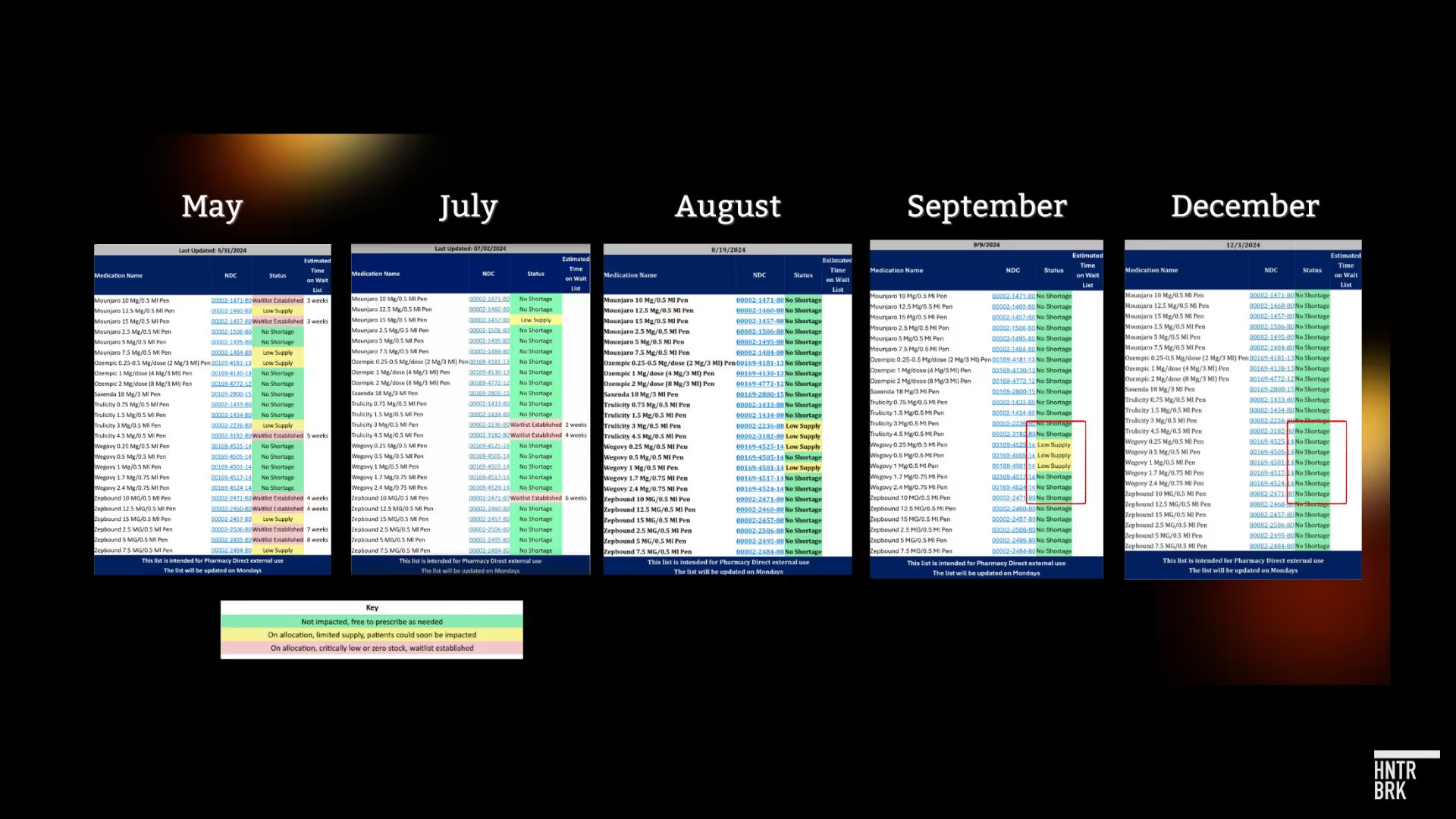
Throughout the year, Hims & Hers Health (NYSE: $HIMS) has capitalized on the shortage of GLP-1 drugs like semaglutide by offering compounded versions. These have provided an alternative for patients unable to access branded weight-loss drugs like Wegovy and Ozempic. That semaglutide shortage could now be lifted any day, based on a data analysis of past shortages from archived FDA webpages, interviews with industry lawyers and former FDA officials, and an examination of distribution channels. Novo Nordisk, the manufacturer of Ozempic and Wegovy, told Hunterbrook in a statement that all doses of its semaglutide drugs are available — which has been reflected on the FDA’s website since October. The FDA shortage of the other major GLP-1 drug, tirzepatide, was resolved two months after all doses were listed as available.
BioAge: Too Young To Die?

Following the catastrophic failure of its sole clinical program, BioAge Labs (NASDAQ: $BIOA) fell to around $150 million market cap despite over $300 million in cash and a potentially valuable preclinical asset. That new lead program is a drug for the inflammation protein NLRP3, a popular target: Analogous NLRP3 programs have scored deals worth hundreds of millions from pharma giants Novartis and Novo Nordisk to treat a wide range of inflammatory diseases. “I believe that NLRP3 is among the greatest immunology targets of our time,” the CEO of Novo Nordisk’s development partner, a BioAge competitor, told Hunterbrook Media. This week, BioAge announced a partnership with Novartis for other programs to target age-related diseases, building on BioAge's founding mission to fight aging. The deal includes a $20 million upfront payment and up to $530 million in future payments. The day before the partnership, $BIOA had traded under $4, with about $10 in cash per share. In similar cases, companies have been dissolved to return cash to shareholders or used as shells for reverse mergers to take other companies public. But now, with the Novartis partnership and a massive war chest, could BioAge live a second life with its new lead program?
Hims: Is Tomorrow the End of the GLP-1 Shortage?
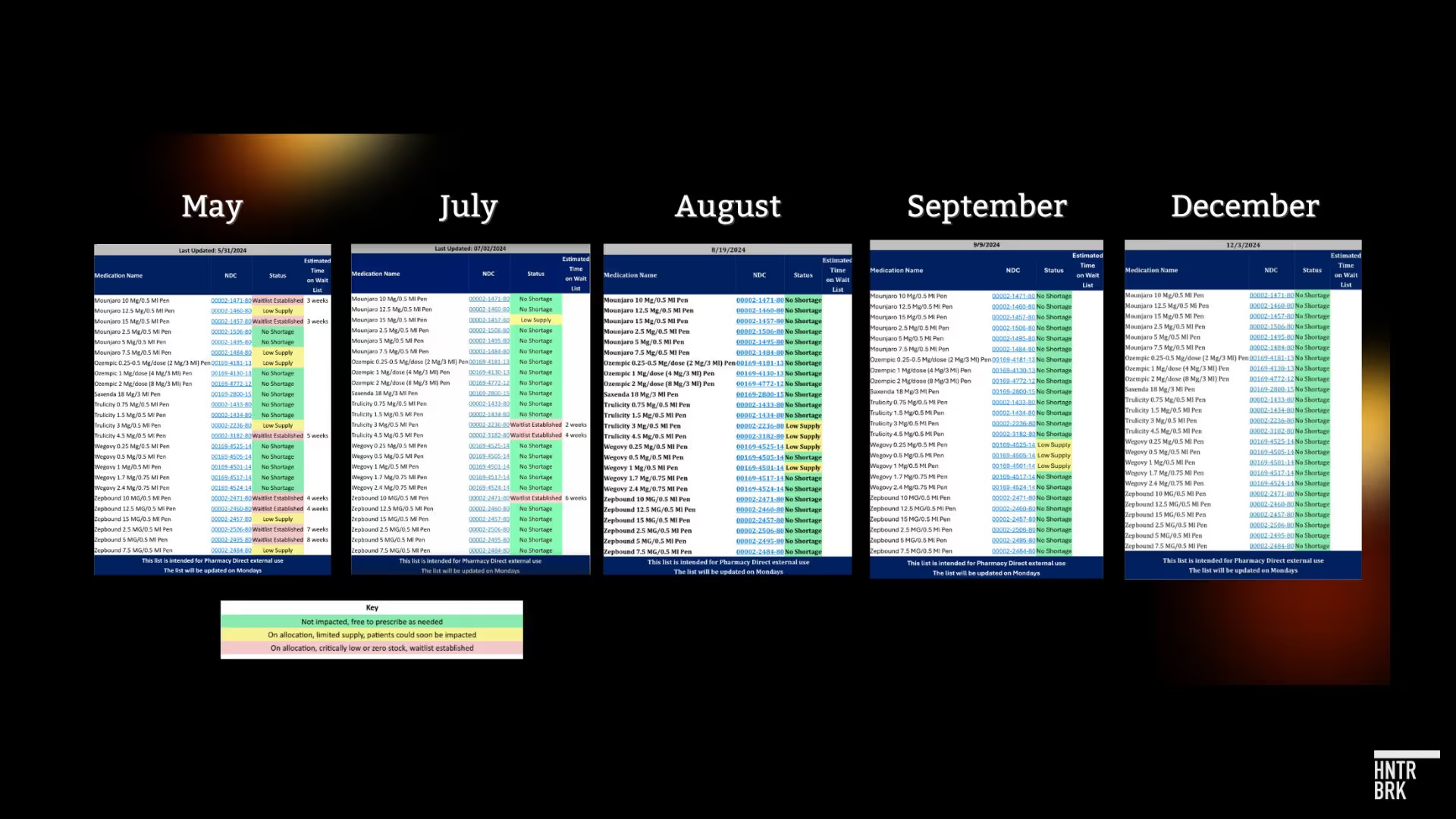
A doctor, pharmacy technician, and former FDA official tell Hunterbrook the shortage is over. Eli Lilly is prescribing directly to consumers via telehealth through a Hims rival. The FDA is expected to update a judge on one of the two major types of GLP-1 on Thursday, and make a decision on the other soon. Both are available from the healthcare capital of Boston to the Walgreens of rural Minnesota, according to Hunterbrook interviews. "Tirzepatide is not in shortage. That's not a question. The manufacturer is pushing out inventory,” said Ricki Chase, former director of an FDA Investigations Branch. Novo Nordisk tells Hunterbrook semaglutide is available across the country as well. But this doesn’t necessarily mean the end of the GLP-1 business for Hims — which may continue prescribing the drugs, shortage or not.
App Responsible For 89% of Joyy ($YY) Revenue Removed By Apple and Google After Child Abuse Investigation
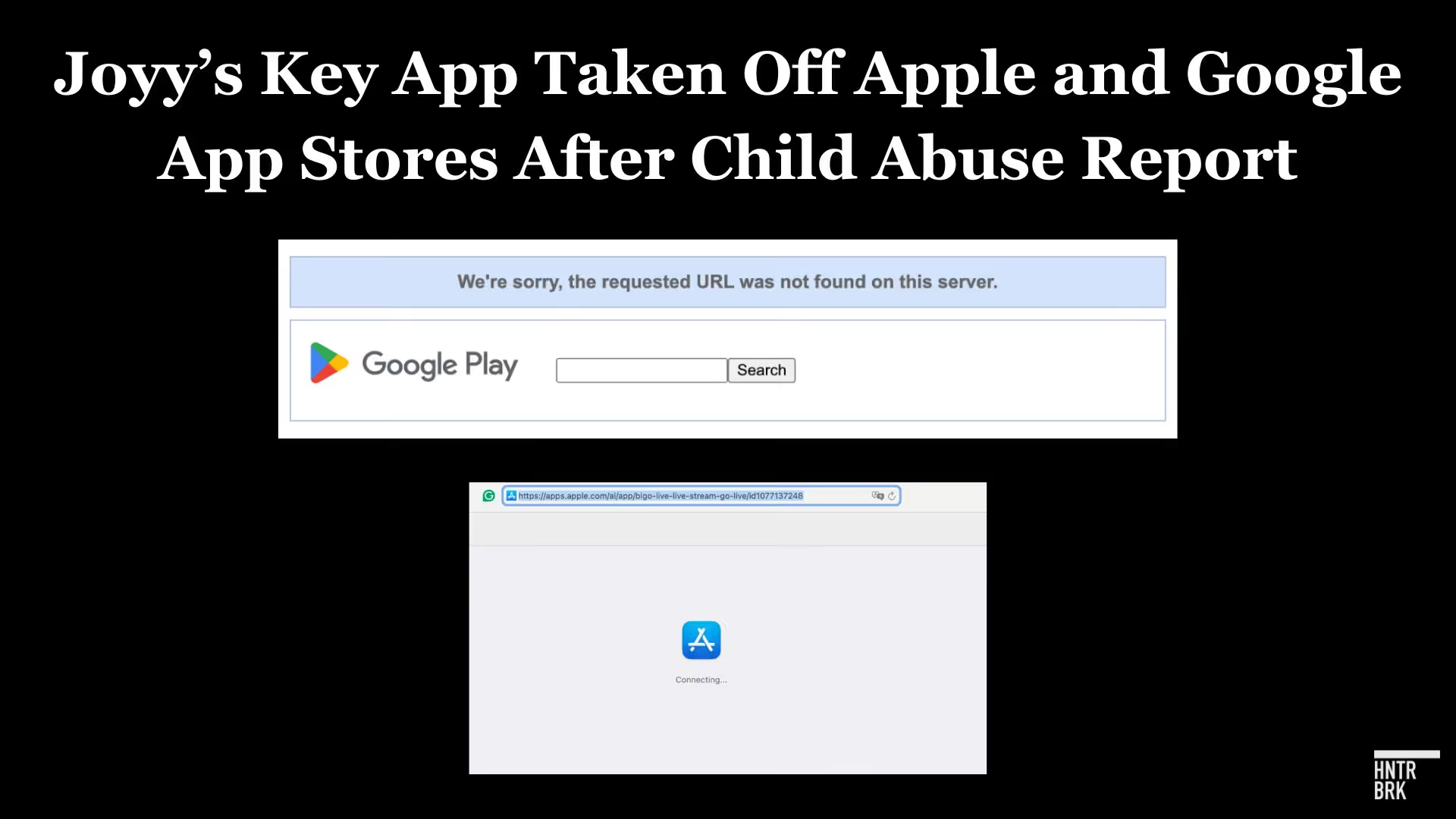
Almost two weeks after first being removed, Bigo Live is still off app stores. The company told Hunterbrook it is “actively collaborating with relevant authorities,” but could not confirm if or when the app would be reinstated.
Schools Stick With Evolv After FTC Action As Weapons Detection Company Hopes To Rebuild Trust With New CEO

It was a brutal autumn for the weapons detection company Evolv. An estimated $4-6 million accounting error cost it $300 million in market cap. Its CEO and CFO were forced out, just weeks before a settlement with the FTC over allegations of misleading marketing. An SEC probe appears to be ongoing. And they even got caught up in the drama surrounding New York City Mayor Eric Adams. But the crazy thing about Evolv? Its customers — who use the technology to protect high-stakes venues like NBA arenas, NFL stadiums, Disney theme parks, and schools — seem to love it, no matter the headlines. “This is about saving kids,” said one director of safety for a school system, who told Hunterbrook he confiscated multiple firearms on his first day using Evolv. He says he will not ditch the platform. In fact, he says, he’s hoping to buy more systems. With a new CEO named this morning, is this the start of a vibe shift for Evolv?
SYMBOTIC DELAYED 10-K REVEALS SEC INVESTIGATION INTO WHISTLEBLOWER INTERFERENCE, NEW MATERIAL WEAKNESSES, ADVERSE AUDITOR OPINION, AND A CAP ON COSTS WALMART WILL PAY
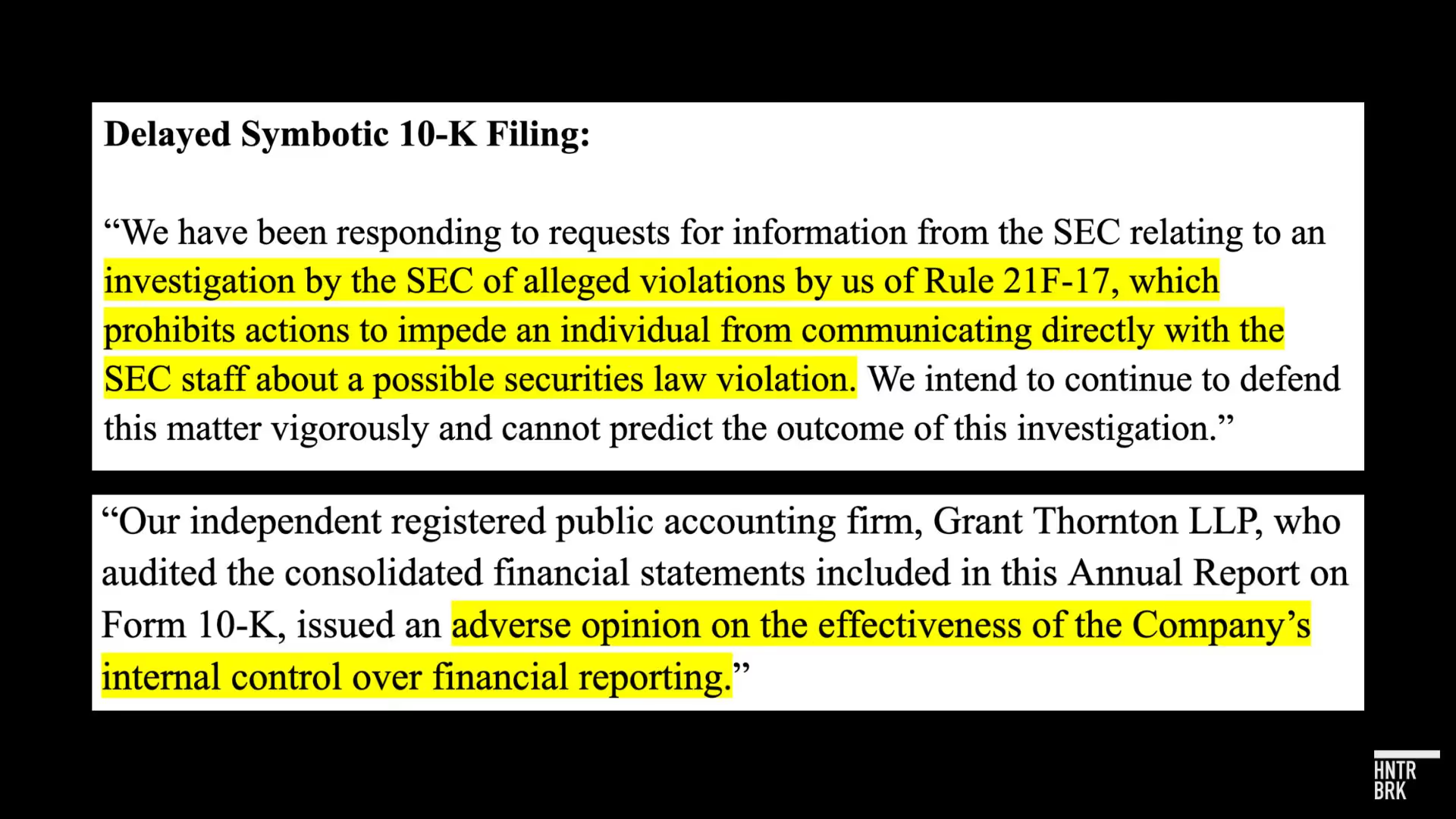
Forensic Accountant Flags 7 Separate Issues With Financials — Including Questions on Backlog From Walmart Contract and Future Cost Overruns That We Really Wish We Could Ask The SEC Whistleblower Who Symbotic Allegedly Attempted to Silence Hunterbrook Media previously investigated Symbotic (NASDAQ: $SYM) for problems with Walmart, turnover, and governance — including its role in FTC drama over the Albertsons-Kroger merger. “Symbotic is starting to show signs of financial stress in its SEC filings, including a massive unbilled receivables balance and aging inventory,” Hunterbrook reported in September. Symbotic then delayed its 10-K, restated financials (including halving profit projections), and disclosed an adverse auditor opinion. Symbotic’s most recent filings indicate its latest 2025 projections may still be problematic and that Walmart is capping costs Symbotic can charge. The SEC is also investigating Symbotic for whistleblower interference.

Roblox Faces Undisclosed Probes by SEC Enforcement and FTC Amid Hindenburg Accusations of “Inflated Key Metrics for Wall Street and a Pedophile Hellscape for Kids”
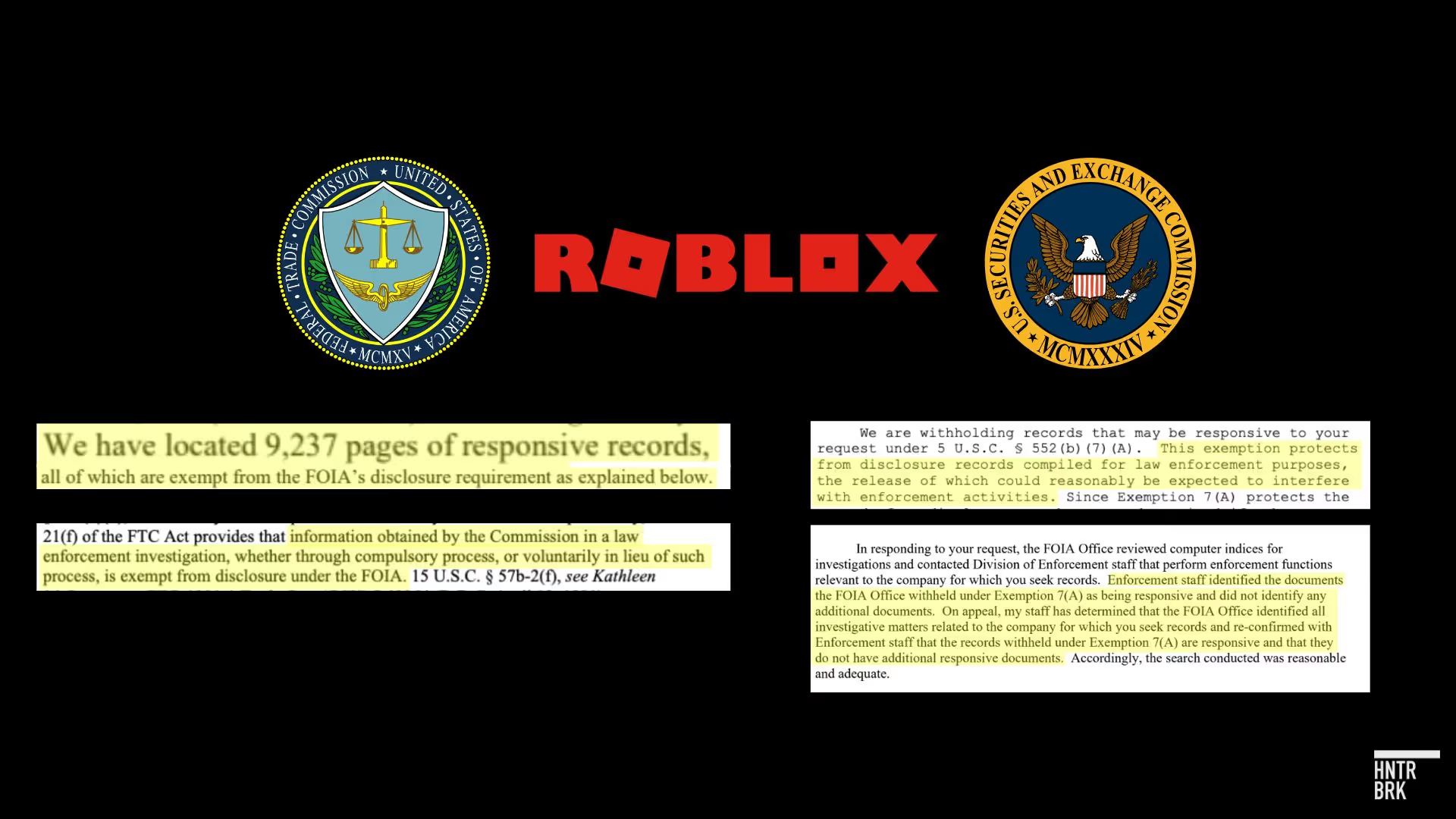
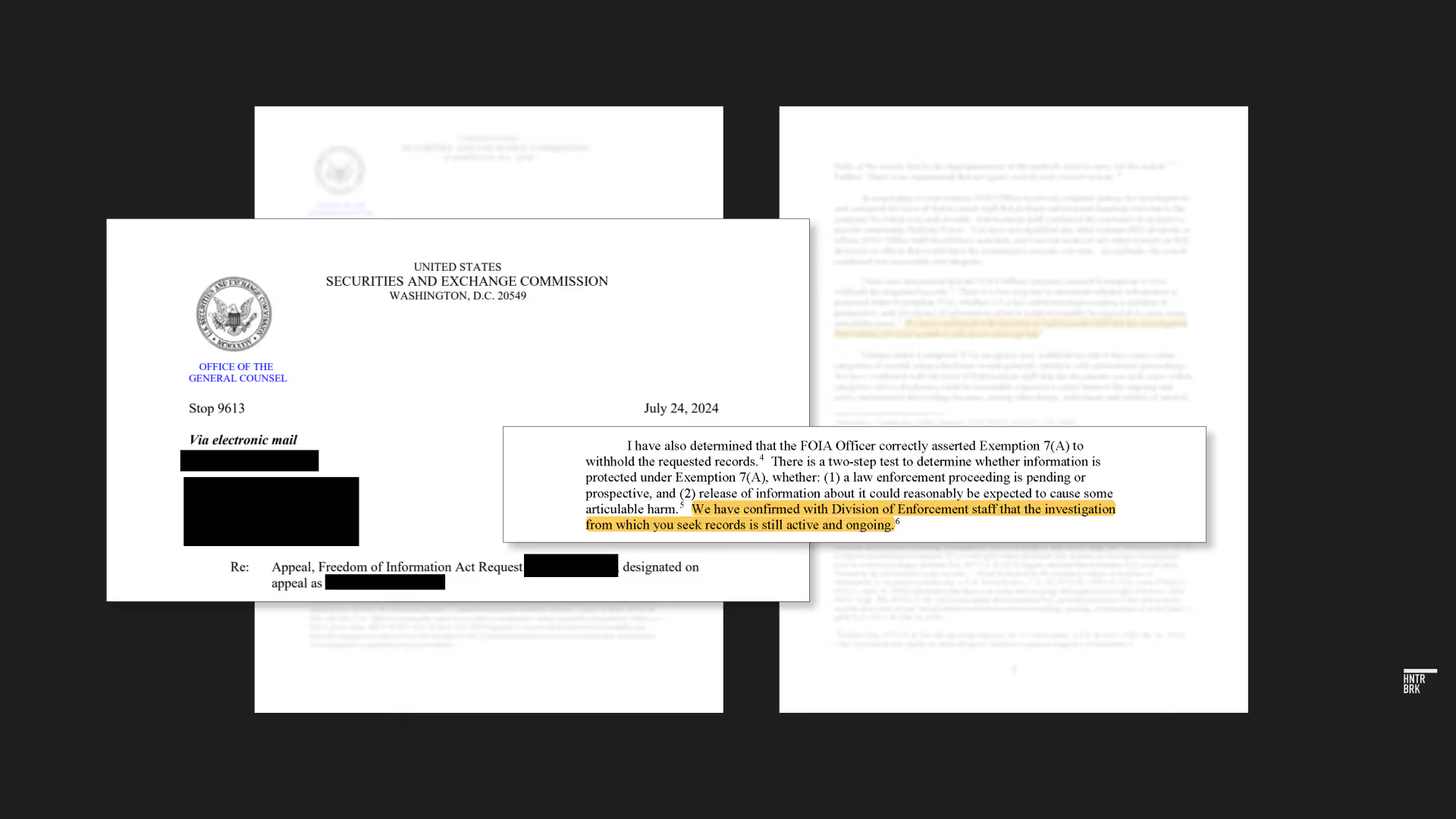
A new FOIA response from the SEC confirmed that its Division of Enforcement has engaged in “investigative matters” related to Roblox Corp. (NYSE: $RBLX). This is a complete reversal from August, when the SEC said it had no records on Roblox in a response to an earlier FOIA request, indicating that the probe is new. The FTC revealed in a response to a FOIA request that it has “9,237 pages of responsive records” related to Roblox, and declined to share additional information by citing a FOIA exemption for disclosures that may interfere with law enforcement investigations. Roblox has not disclosed either probe — and may be unaware of the fact that they were opened. The company declined repeated requests for comment. Roblox’s CFO — who sold more than $2 million worth of shares on Friday — recently resigned. Its CEO sold another $12.25 million on Monday in the latest of a series of sales by company executives totaling more than $1.7 billion since 2021. The company has faced accusations from Hindenburg Research and The Bear Cave of reporting misleading financials that undermine the company’s growth narrative; lying to investors, regulators, and advertisers; and jeopardizing the safety of minors. Roblox called these reports “misleading,” but this week added new parental controls.
U.S. Regulator NHTSA Investigating “Excessive Frame Flex” in Winnebago Grand Design RVs

Investigation launched following Hunterbrook Media reporting on Winnebago’s alleged effort to suppress information about this defect. The CEO had called complaints about frame failure “misinformation.” One of its major investors just sold more than half its stake.


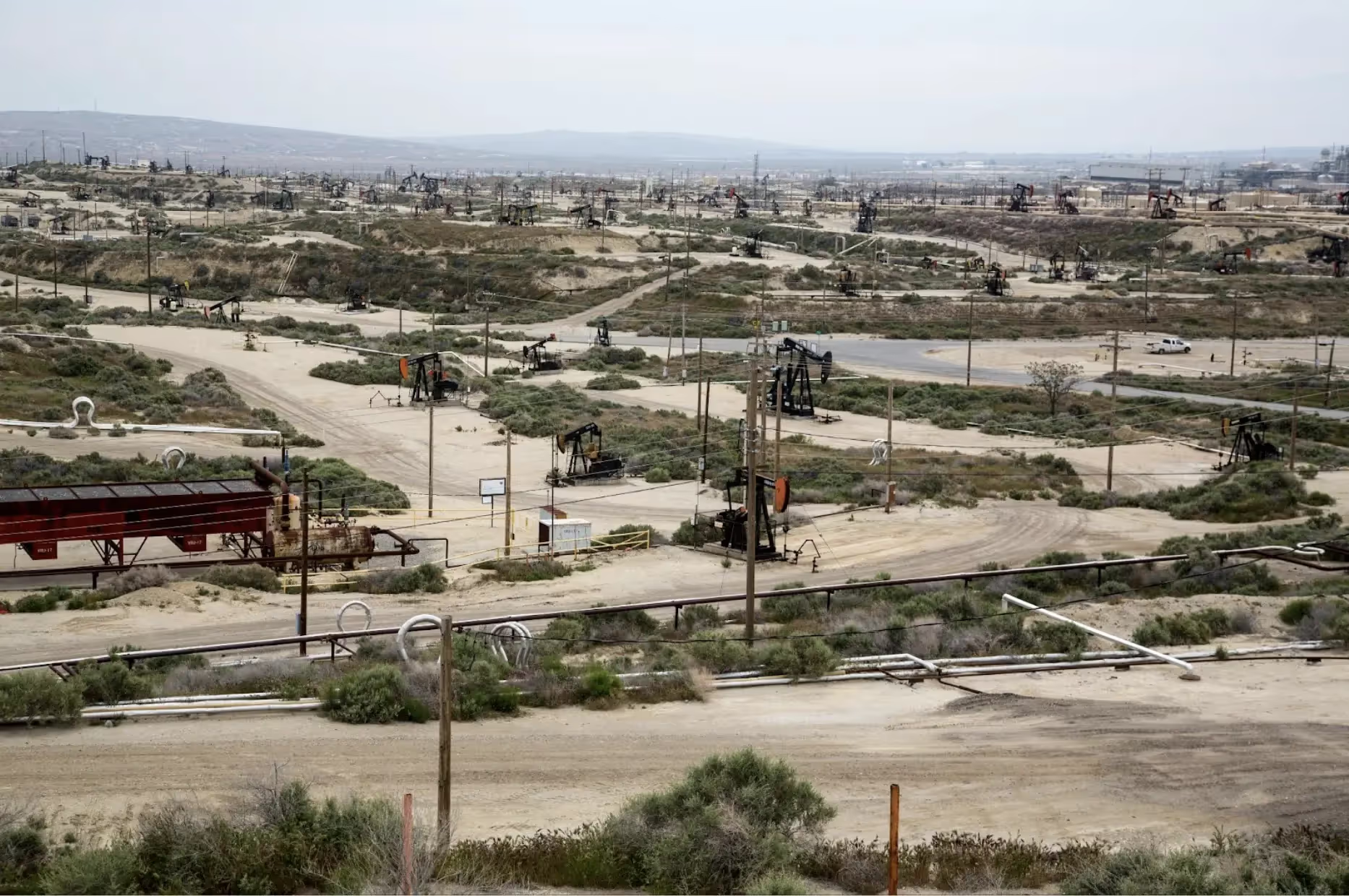
Vietnam Struggles to Attract AI Investment Amid Regional Competition
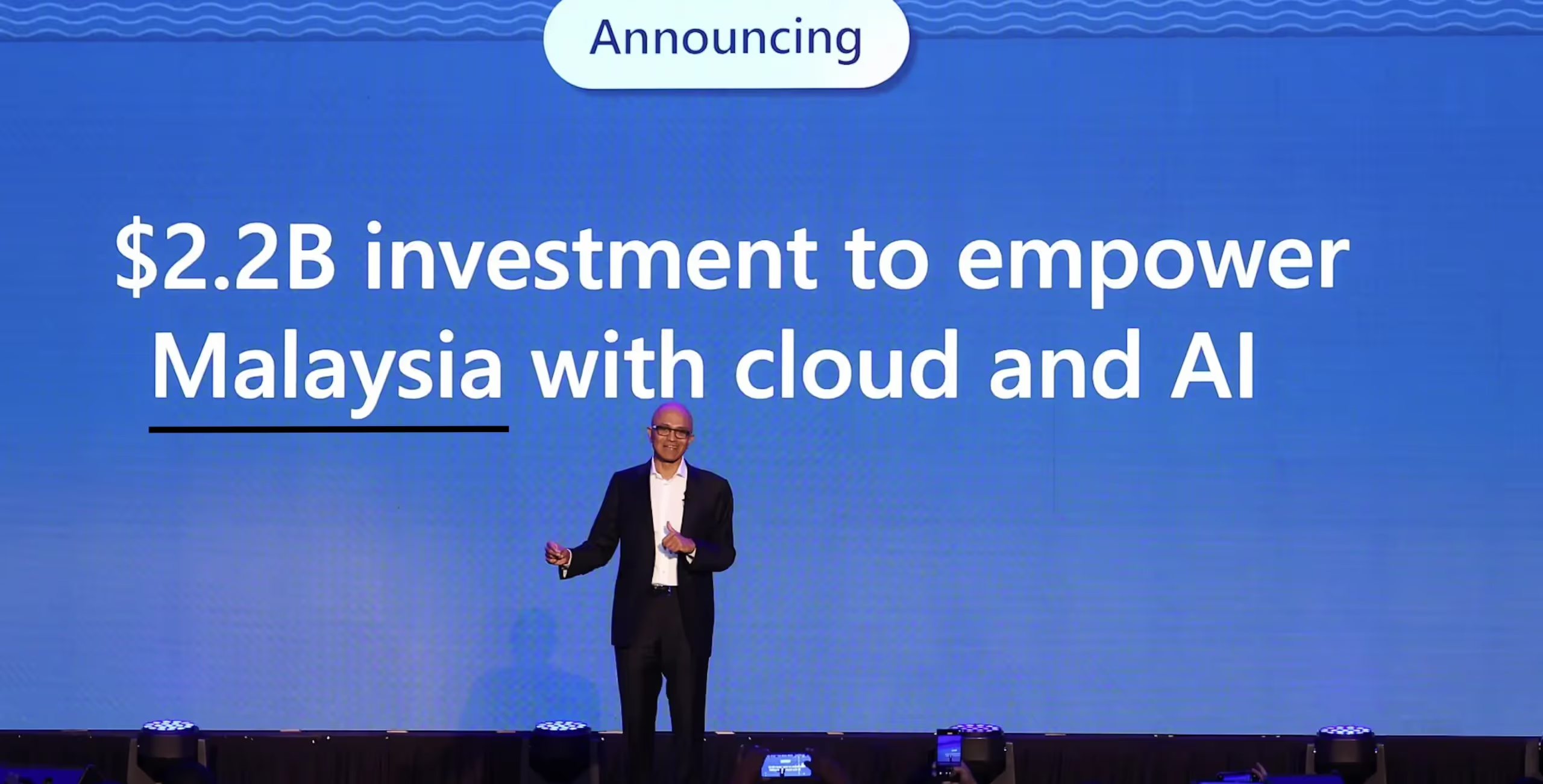
The lack of investment comes as the Vietnamese government fails to meet its goals for public spending — a challenge that has persisted for years despite substantial financing needs for critical infrastructure like new power plants and transmission lines.

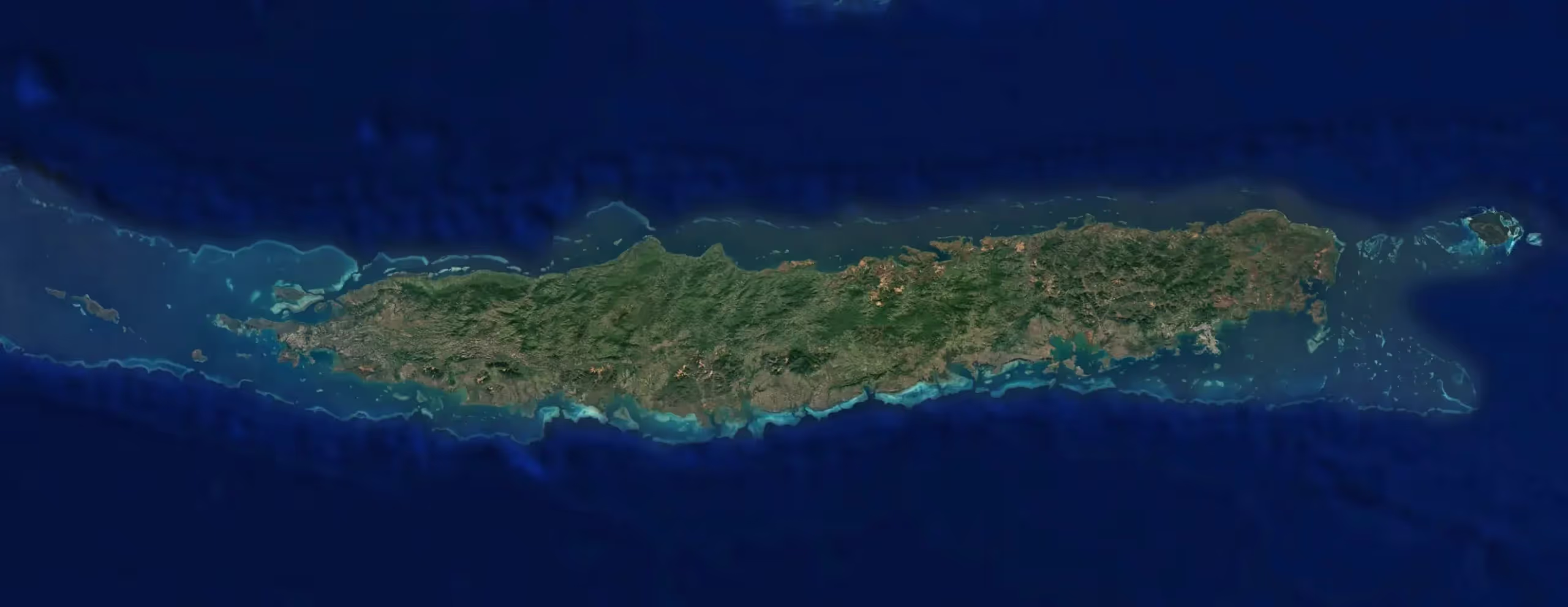
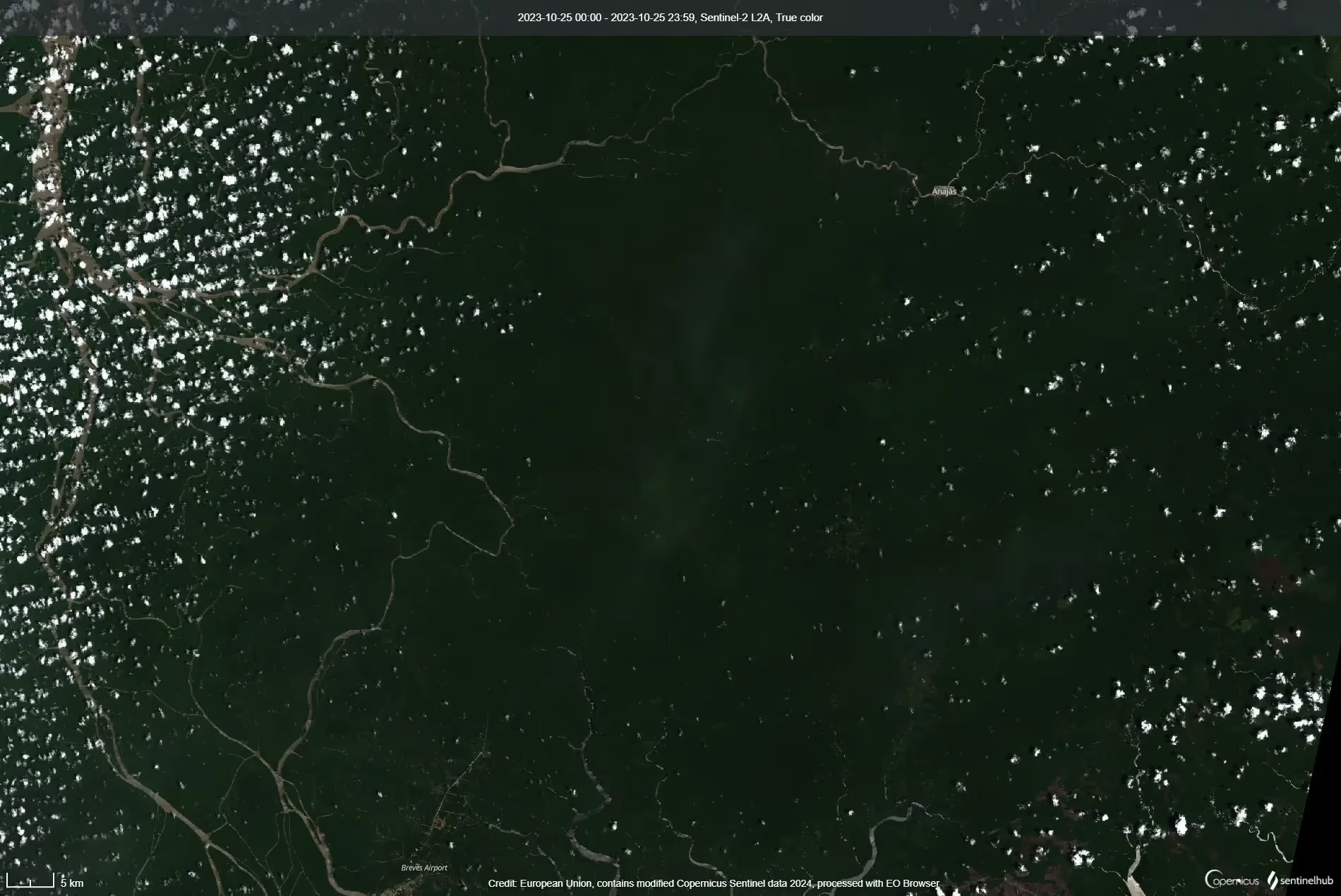





Global News Roundup
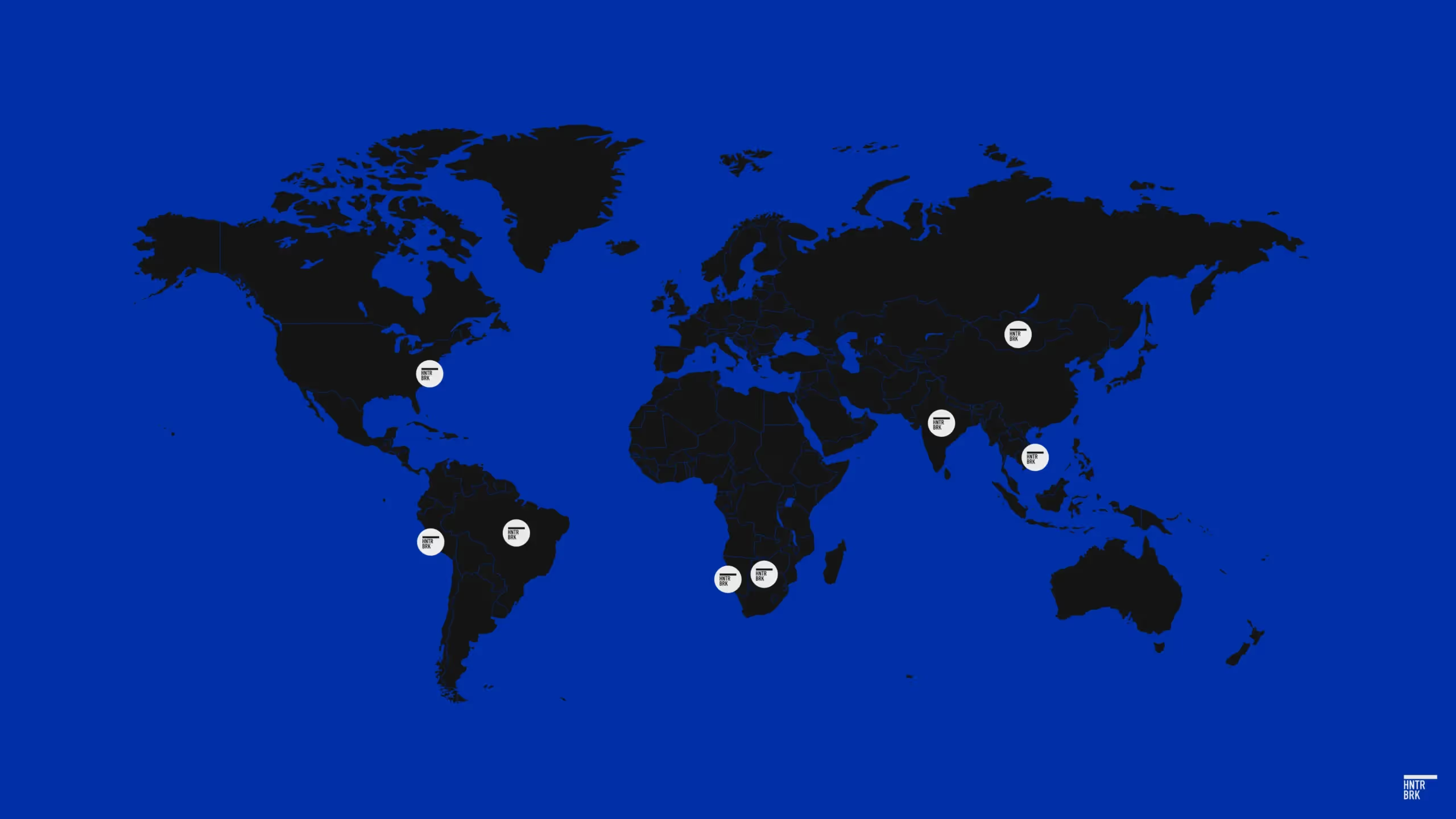
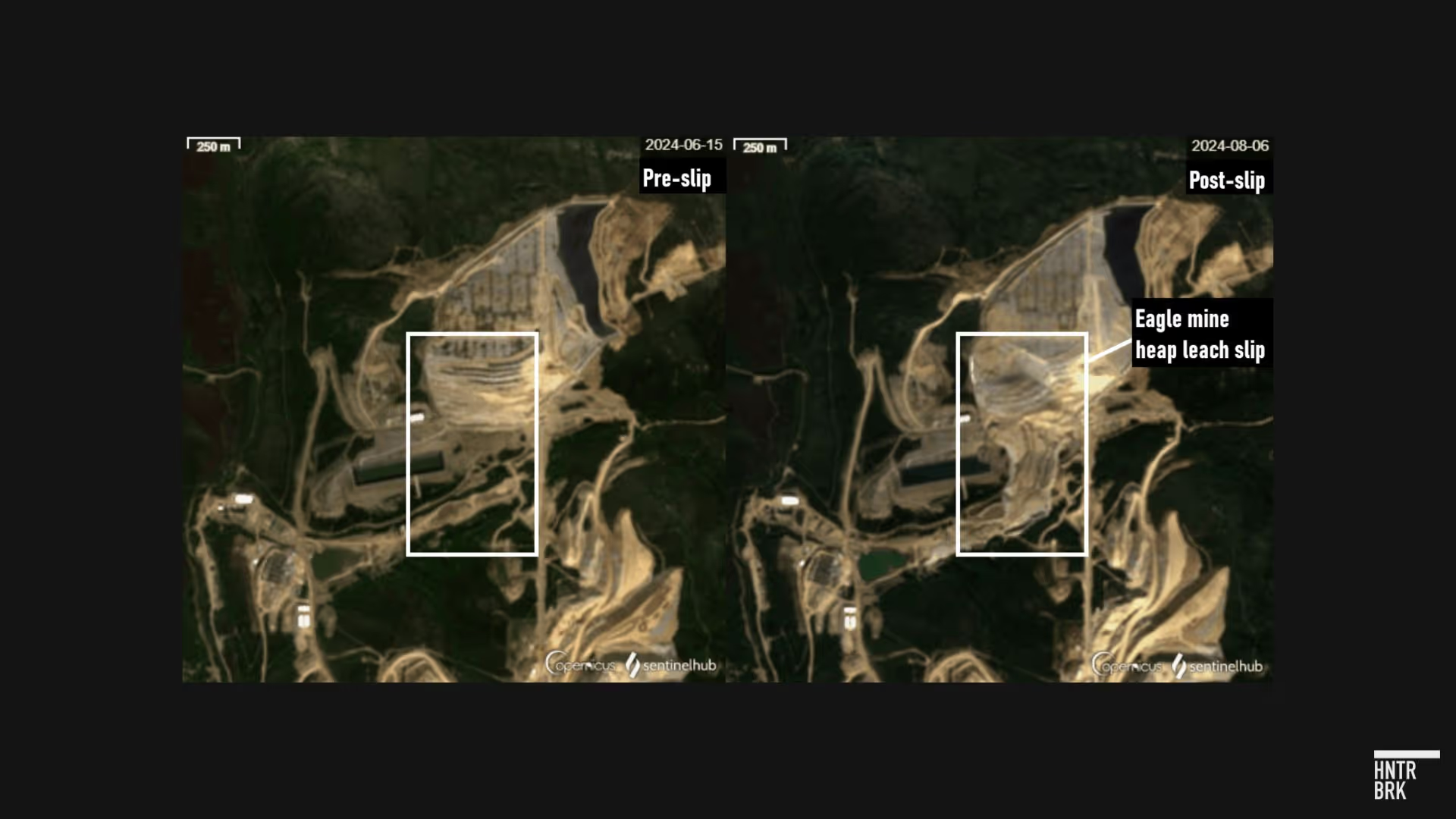
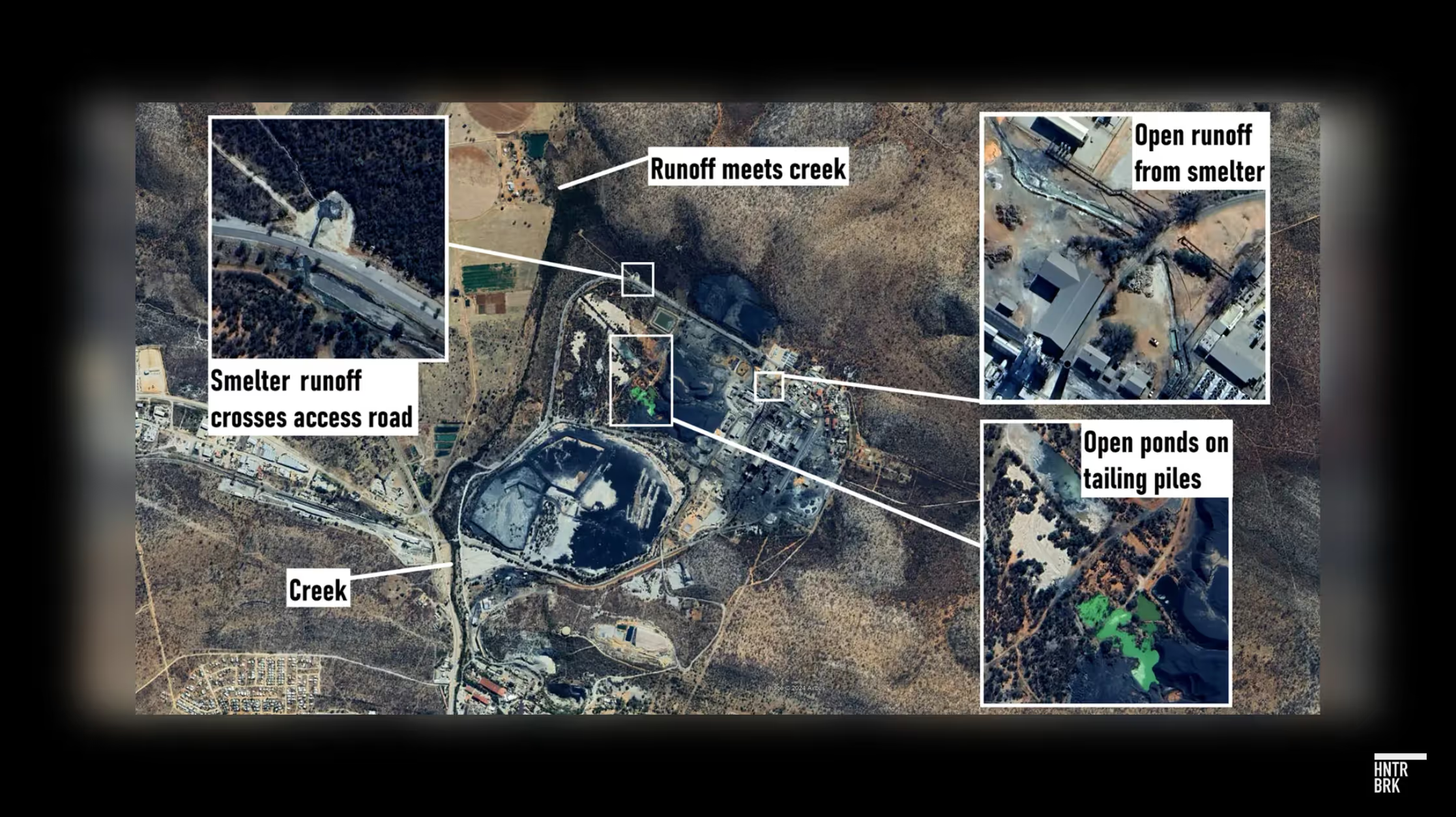
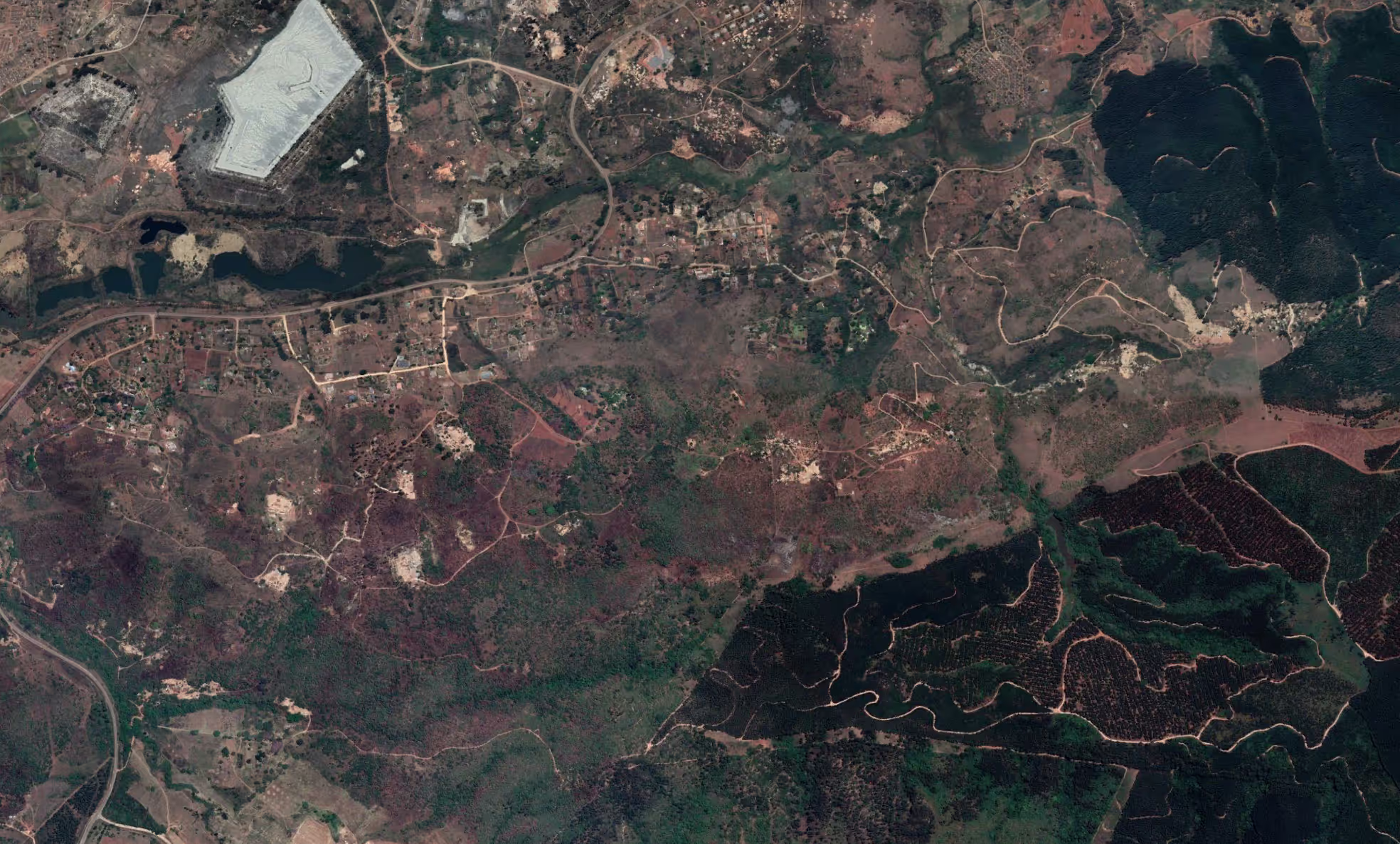
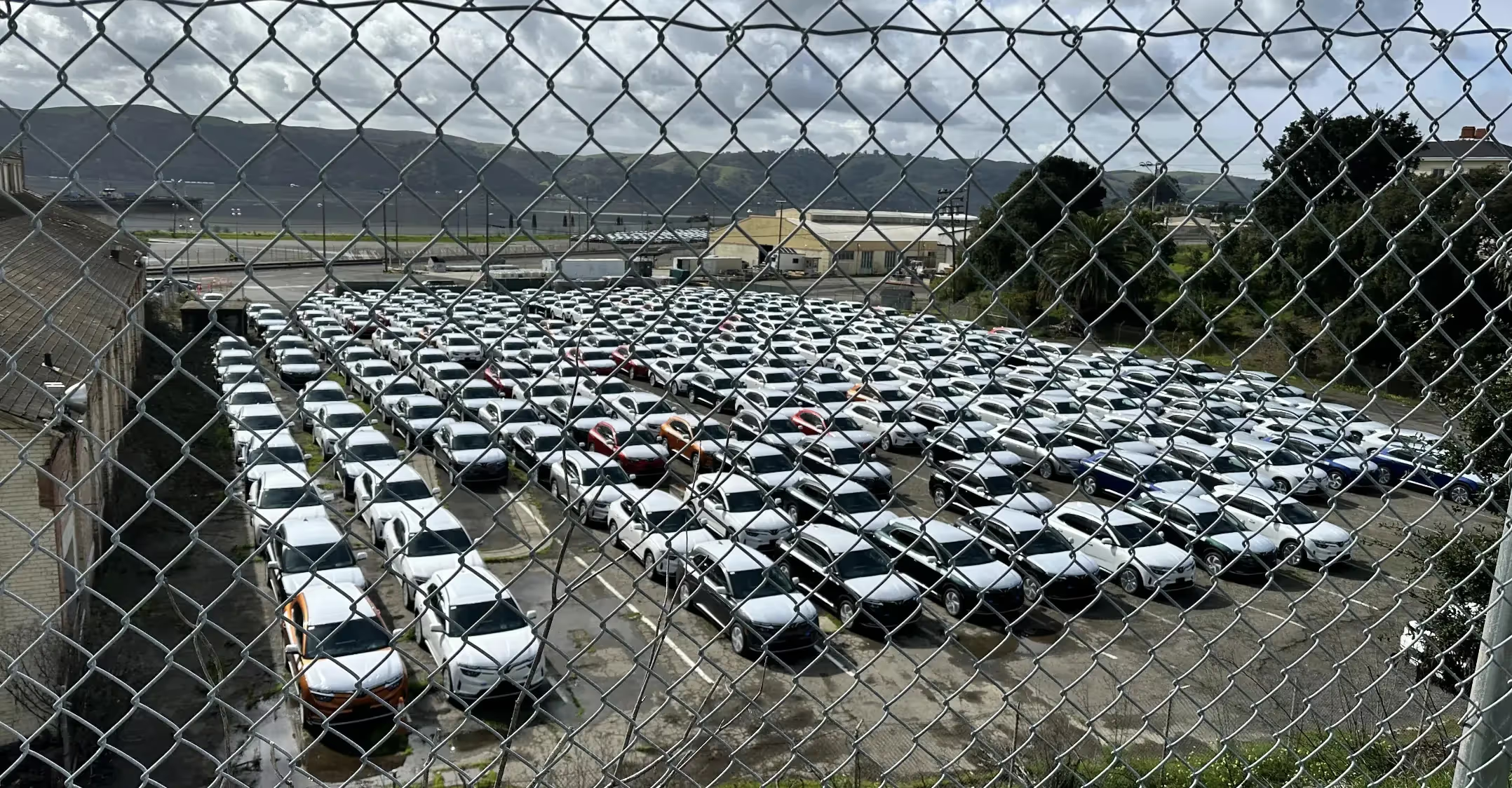
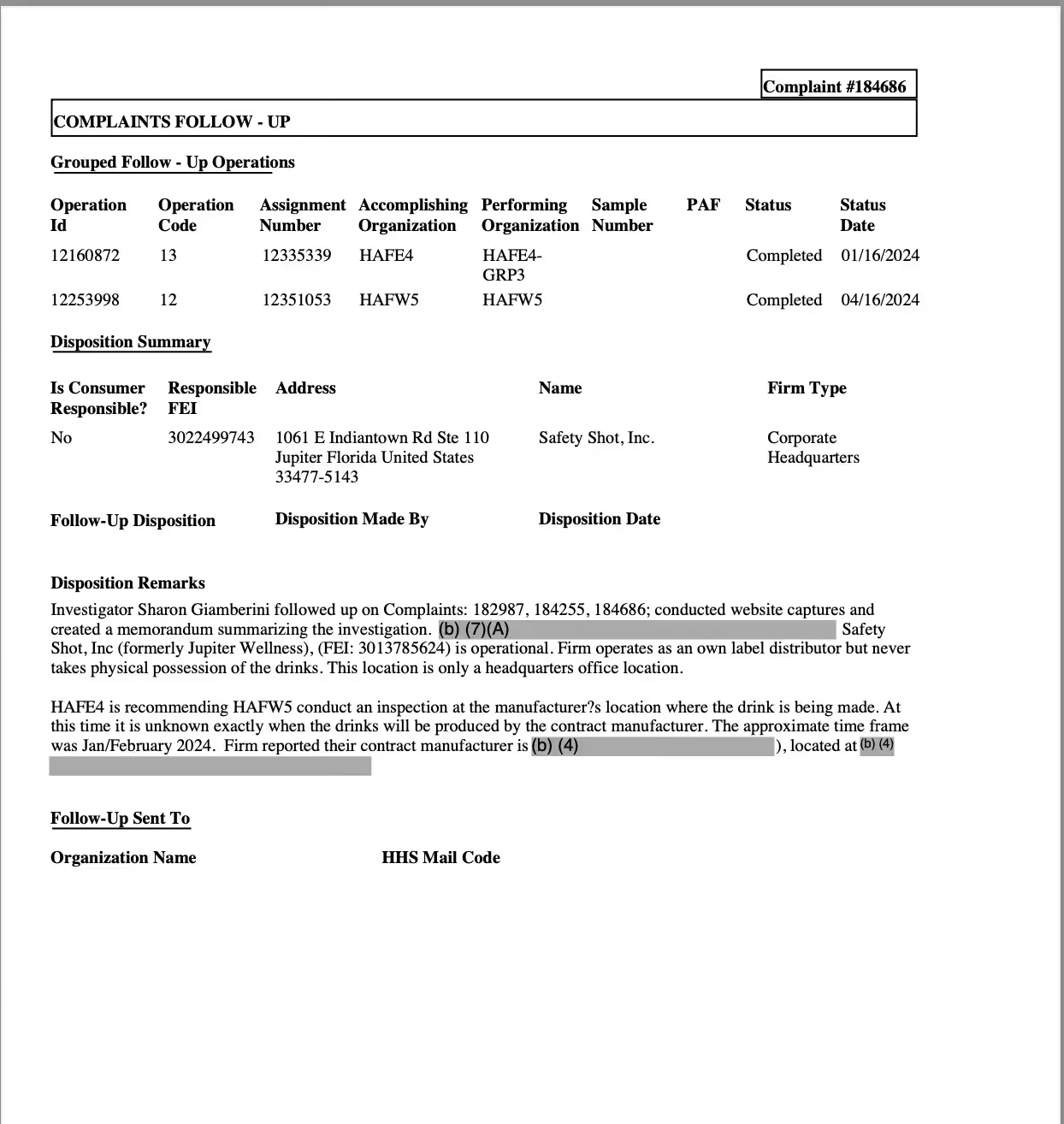
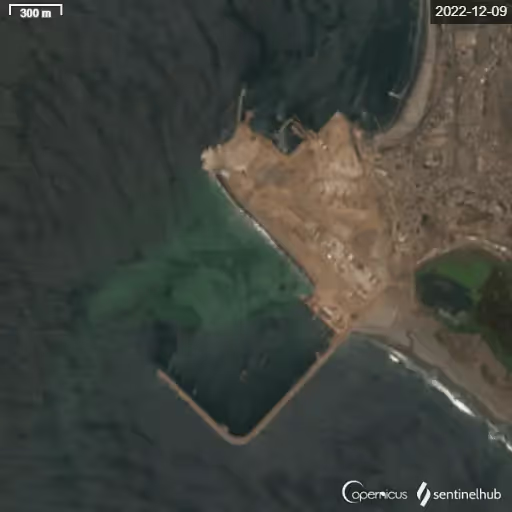
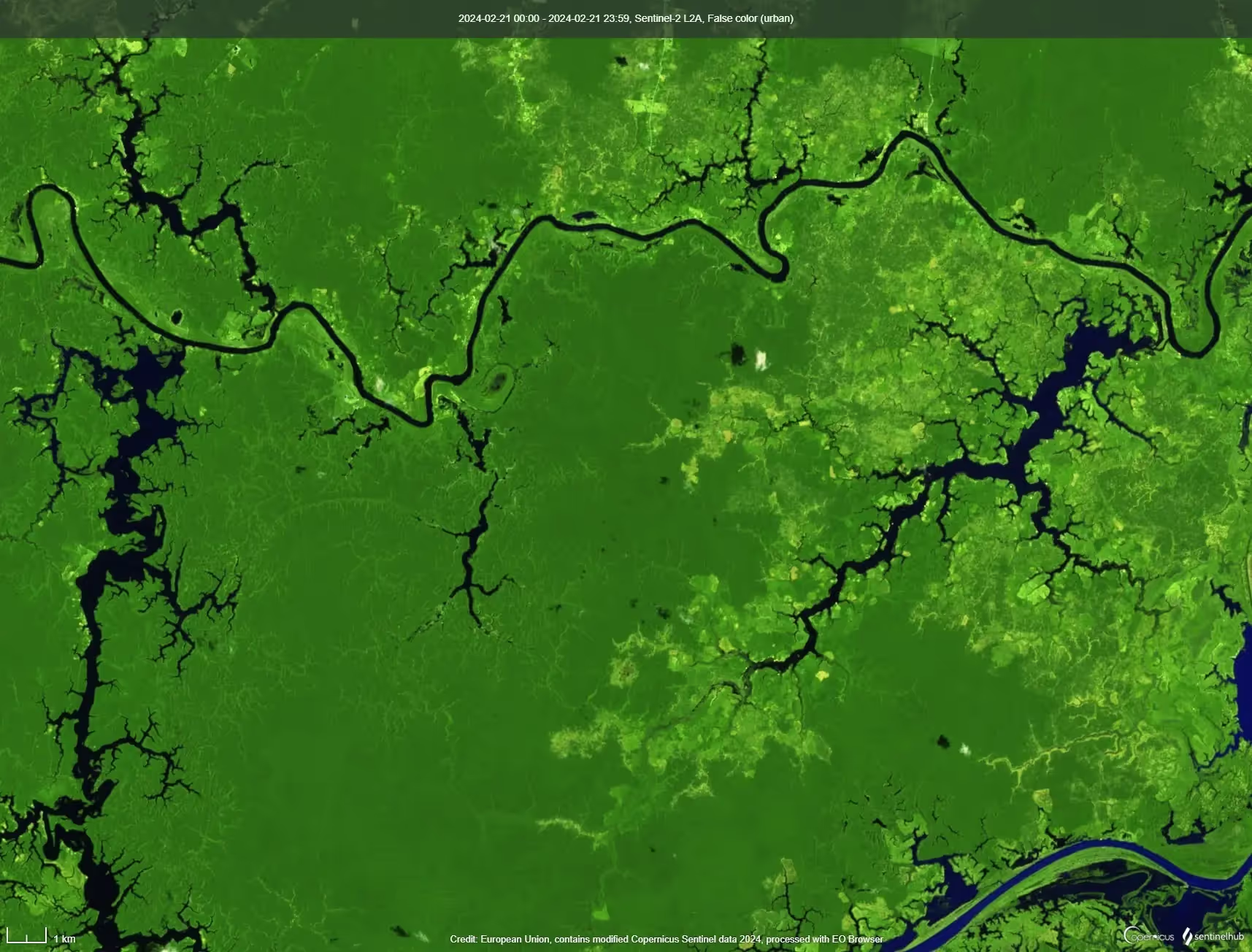
Mongolia, India, Vietnam, Namibia, Botswana, Zambia, Brazil, and Peru. Hunterbrook Media will regularly publish news by reporters on the ground across several countries, supported by our Open-Source Intelligence (OSINT) team in the United States. Our focus is on business, markets, and corporate accountability — especially as related to the environment, crime, and human rights. This first roundup includes news from Mongolia, India, Vietnam, Namibia, Botswana, Zambia, Brazil, and Peru.