Hunterbrook Media’s investment affiliate, Hunterbrook Capital, does not have any positions related to this article at the time of publication. Positions may change at any time. Full disclosures below.
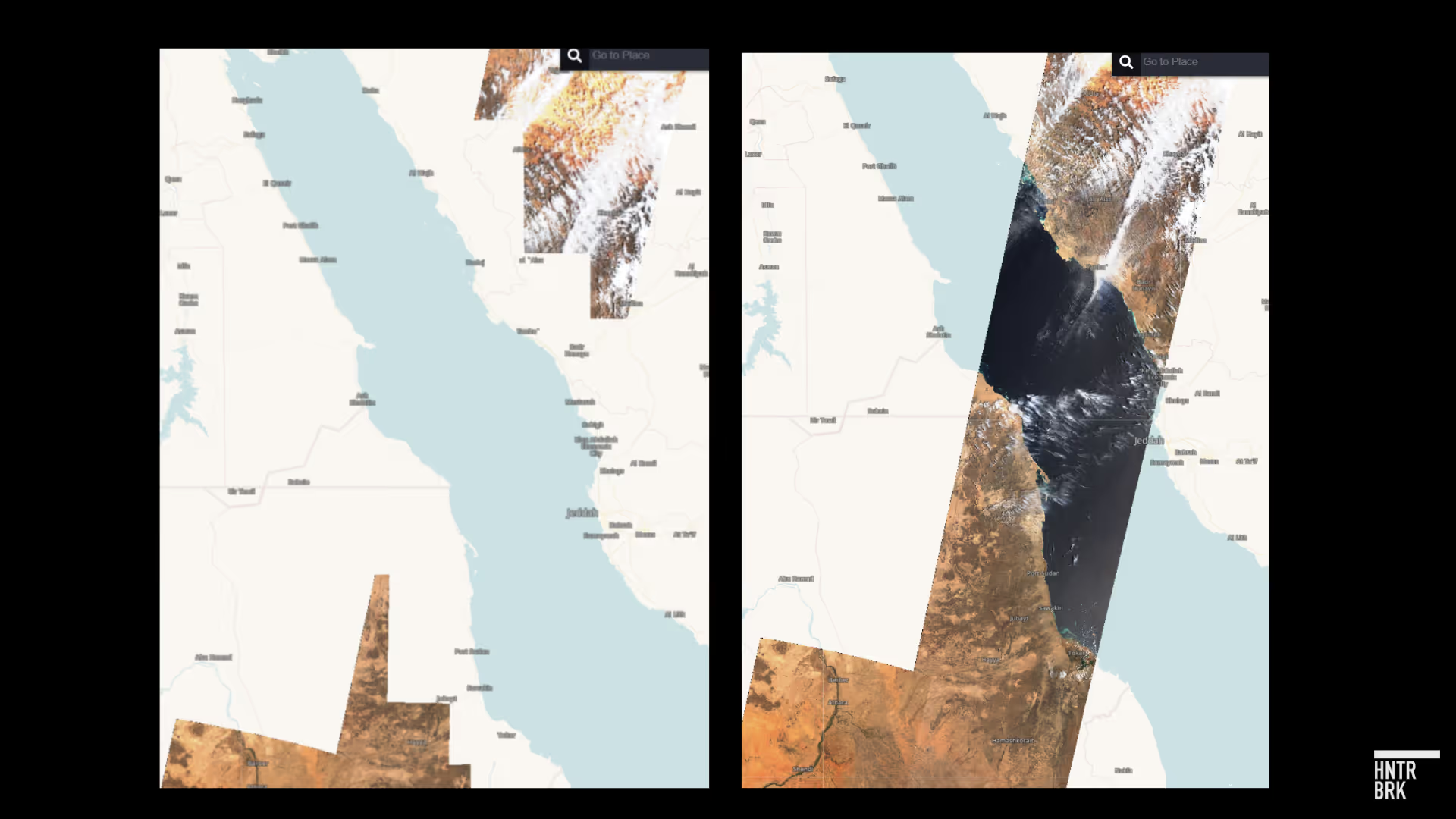
The European Commission and European Space Agency appear to have restricted public access to Sentinel-2 satellite imagery over the Red Sea as they attempt to protect maritime assets in the region.
Sentinel-2 satellites provide high-resolution, multispectral imagery. The imagery is crucial for both civilian and government uses. Over recent weeks, users attempting to access imagery through the Copernicus platform — the European Space Agency’s primary public portal for Earth observation data — encountered abrupt data gaps over large sections of the Red Sea and adjacent coastal regions. There did not appear to be other coverage gaps.
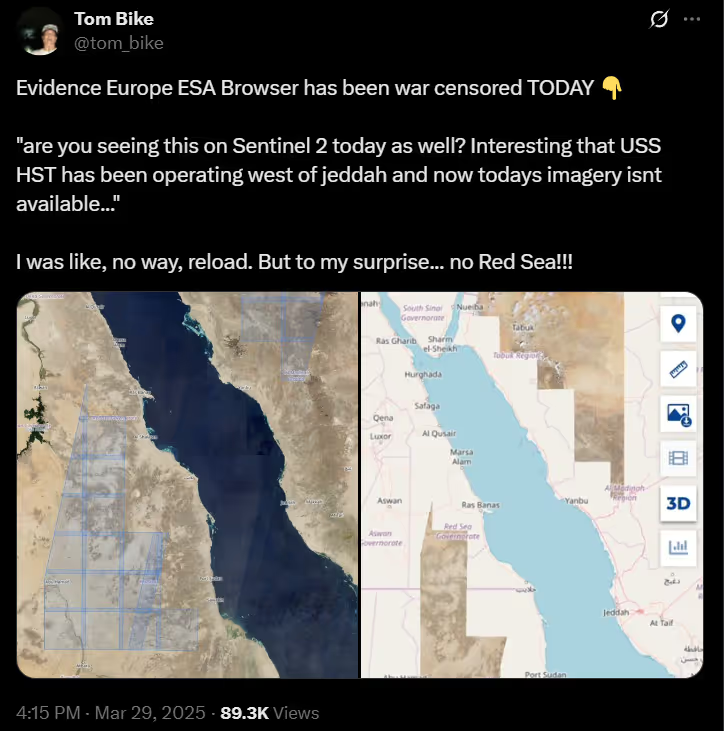
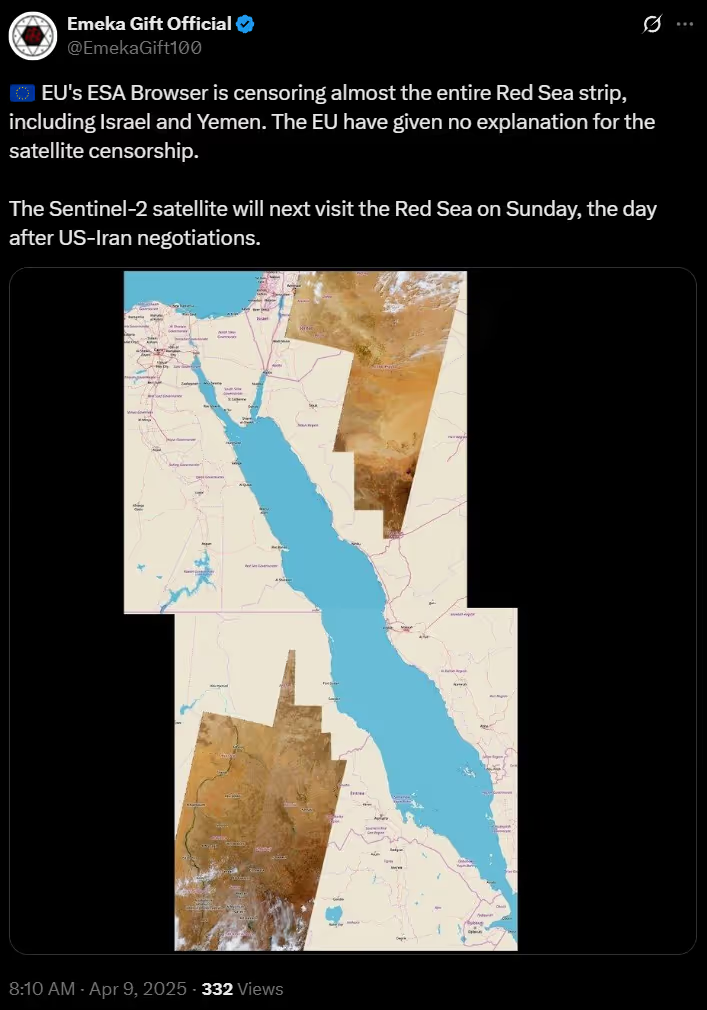
Independent verification by Hunterbrook confirmed sporadic outages across multiple satellite data services.
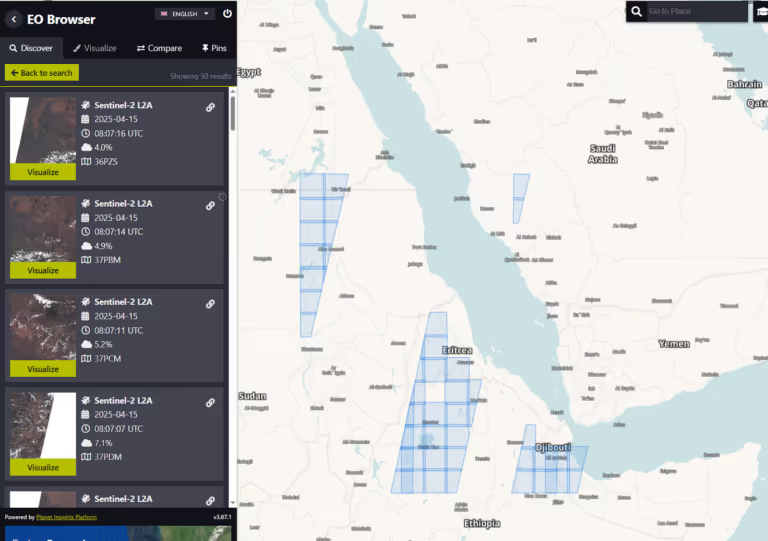
The imagery was also unavailable in the EU’s in-house Copernicus browser.
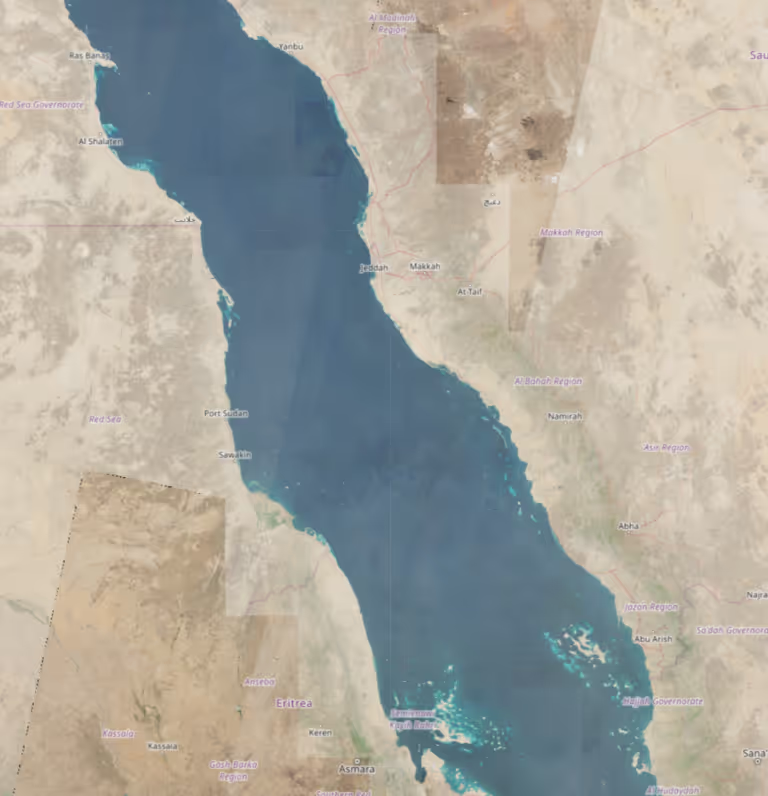
Notably, the imagery does not appear to be completely censored, but rather withheld for 24 to 48 hours at a time. This may be intended to make targeting more difficult for the Houthis, by offering only degraded and inaccurate ship positions.
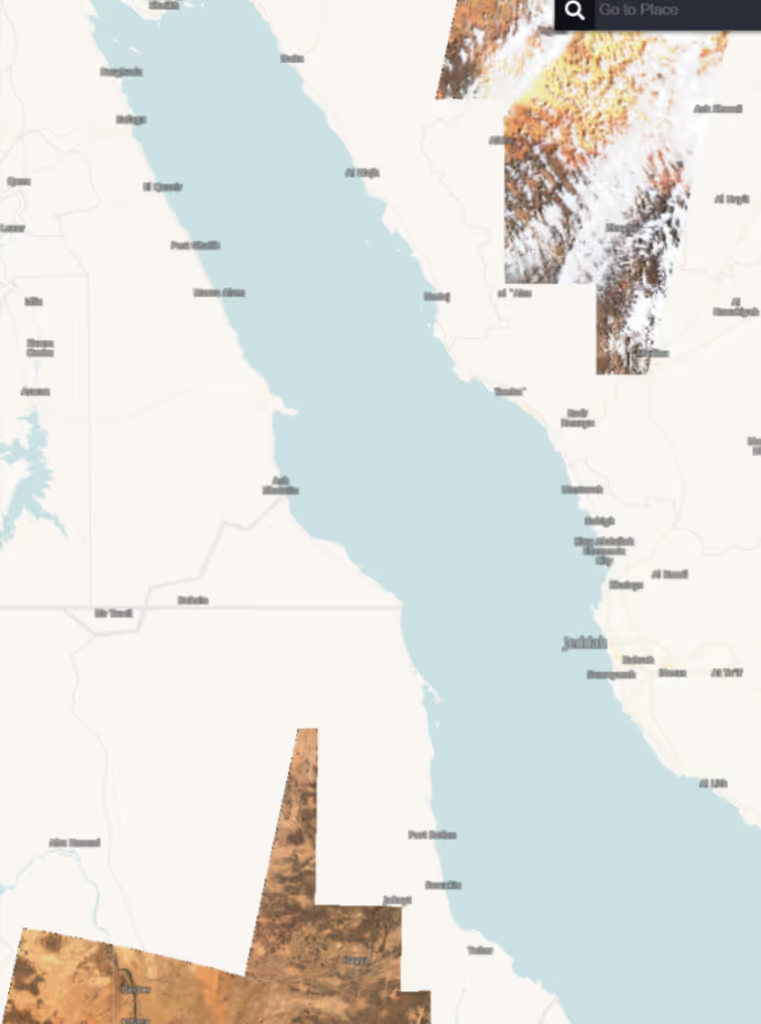
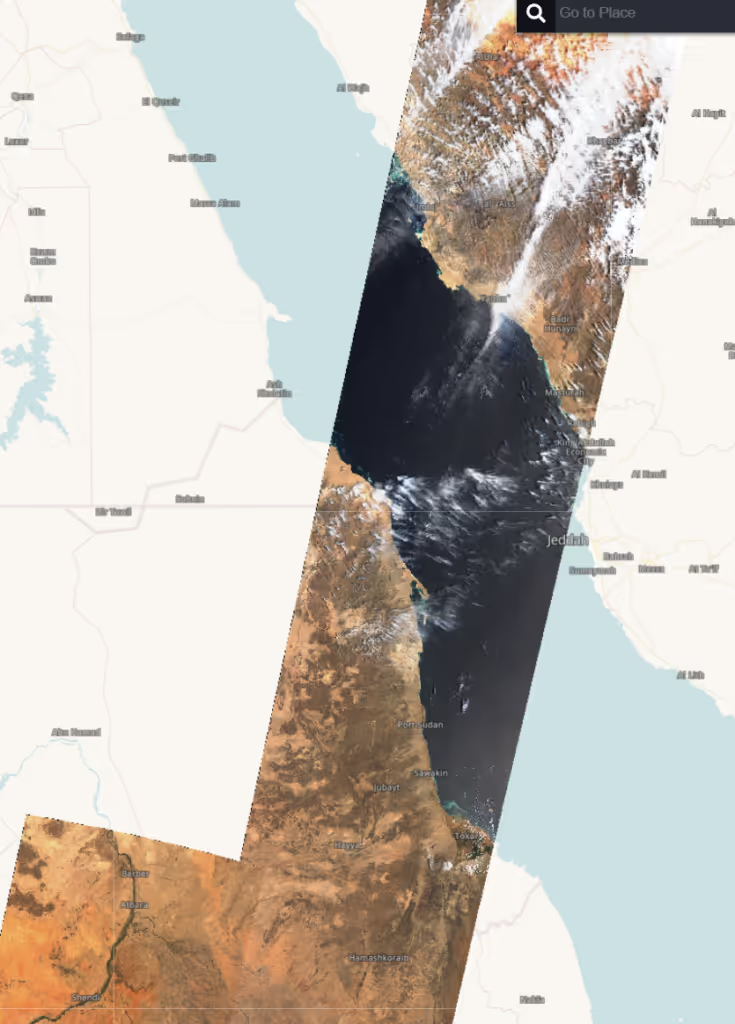
Responding to Hunterbrook’s inquiry, the European Space Agency immediately referred all questions about the matter to the European Commission.
In a subsequent statement, EU Commission spokesperson Thomas Regnier said: “The Copernicus programme operates under a free and open data policy, ensuring that its satellite imagery is available to users worldwide in accordance with applicable regulations and operational considerations. The Sentinel-2 images over the Red Sea area are still accessible.”
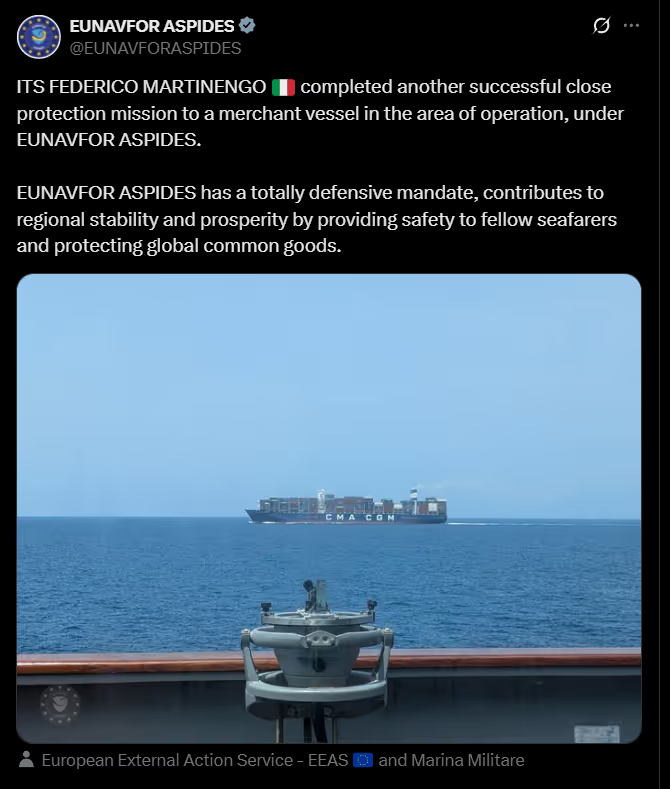
The EU Commission’s “operational considerations” for blocking imagery may revolve around the European Union Naval Force’s (EUNAVFOR) escort mission in the Red Sea, called Operation Aspides.
The EU launched Operation Aspides in early 2024 to escort maritime traffic, particularly EU-owned cargo vessels, and protect them from Houthi attacks in the Red Sea and a large part of the northwest Indian Ocean.

Hunterbrook was able to correlate multiple successful escort operation announcements with blocked Sentinel-2 imagery. On April 28, the day EUNAVFOR announced the successful Italian escort of a French-owned vessel through the Red Sea, imagery went dark.
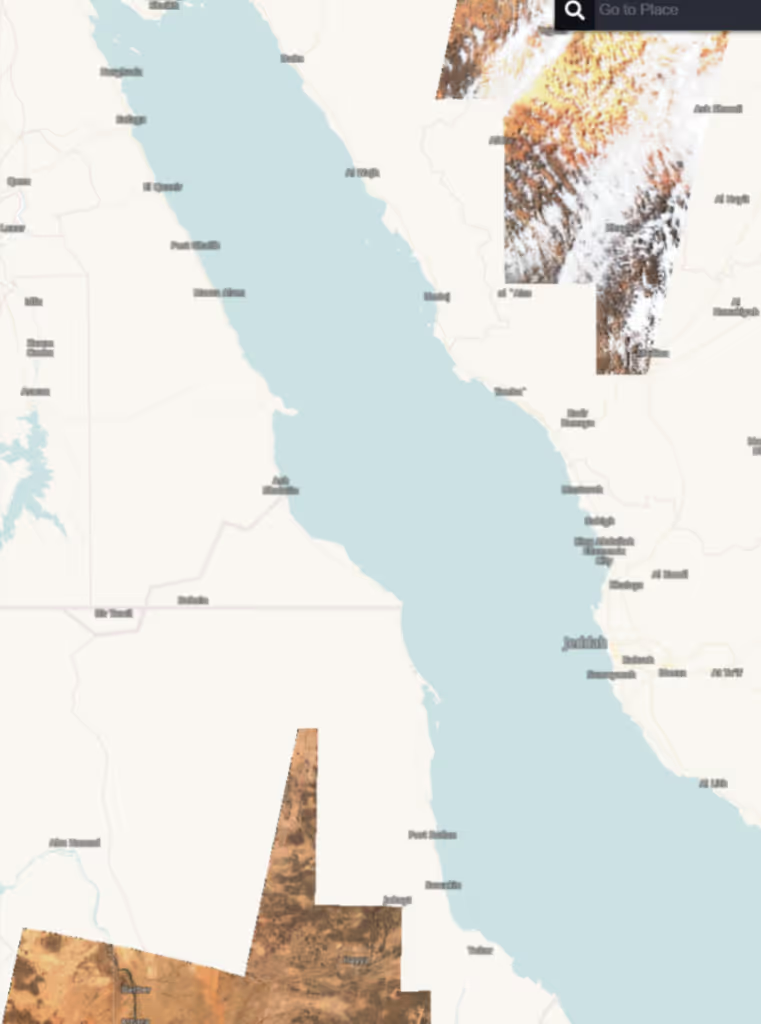
When it comes to protecting assets in the Red Sea, the imagery blocks make sense, says Stefano Ritondale, chief intelligence officer at Artorias and a former Army officer with military intelligence experience.
“It is pretty clear that European based commercial satellite imagery are more vast and of better quality to non-western competitors. Although the Houthis might still have access to commercial imagery, it will very likely be less frequent and possibly of less quality preventing effective collection and targeting,” he added. “It is important to note that degrading and halting are two separate outcomes but it should be the goal to degrade the Houthis ability to collect.
ESA’s Transparency Under Scrutiny Amid Data Restrictions
The European Space Agency’s recent restriction of Sentinel-2 imagery over the Red Sea has reignited longstanding concerns about the agency’s transparency practices. Unlike many national space agencies, ESA operates outside the purview of any public records or freedom of information laws, leaving stakeholders with limited avenues to seek clarification on such decisions.
ESA’s unique legal status stems from its founding convention, which grants the agency and its staff immunity (with some exceptions) from jurisdiction in member states. This framework exempts ESA from national transparency laws, including the European Union’s regulations on access to documents. As a result, ESA is not legally obligated to disclose information or respond to public information requests, a situation that has drawn criticism from journalists and transparency advocates.
The issue has arisen outside of the security realm as well: “The European Space Agency, which redistributes billions of euros in taxpayer money, is not obliged to comply with any Freedom of Information law,” noted science journalist Tereza Pultarova. “It stands above it.”
Chinese Satellite Imagery Allegedly Aiding Houthi Attacks in the Red Sea
Amid the ESA’s restrictions, U.S. officials have accused China’s Chang Guang Satellite Technology Co. (CGSTL) of providing satellite imagery to Iran-backed Houthi rebels in Yemen. According to the U.S. State Department, this intelligence has been used to target U.S. warships and international vessels in the Red Sea. CGSTL, a commercial entity with ties to China’s military, operates the Jilin-1 satellite constellation, capable of high-resolution Earth observation.
In recent weeks, one Chinese military blogger posted images from a Chinese satellite company showing the French aircraft carrier Charles de Gaulle transiting the Suez Canal. The resolution is clear enough to see activity on the deck of the carrier, including individual Dassault Rafale C fighters and support vehicles.
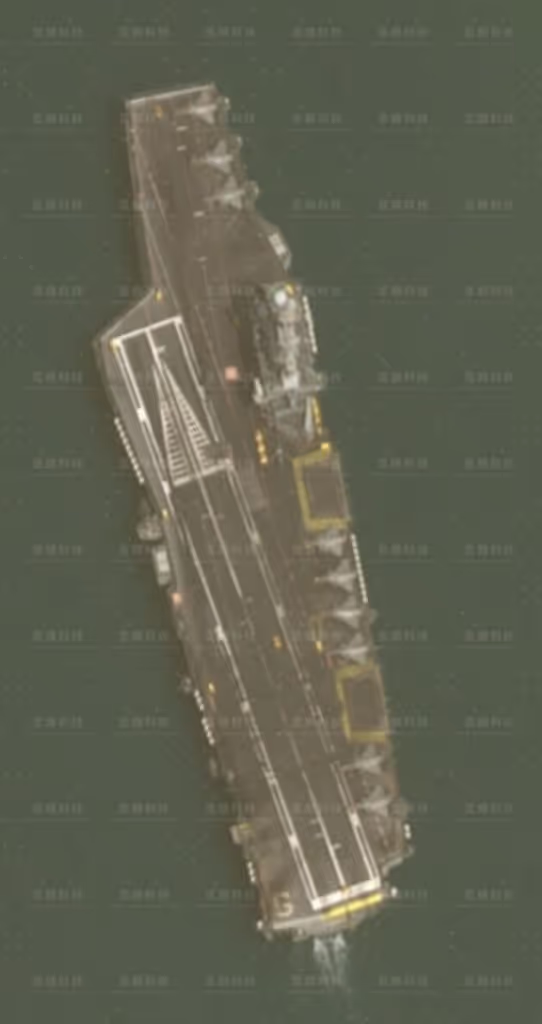
CGSTL has reportedly denied the allegations, stating that “it has no business dealings with Iran or the Houthi forces,” according to the Global Times, and that it complies with relevant laws and regulations.
But CGSTL has a controversial history and has previously faced sanctions from both the U.S. and EU for allegedly providing Russia with satellite imagery. This is not the first alleged incident involving a Chinese commercial satellite provider. In 2023, a Chinese company reportedly sold a pair of satellites to Russia’s Wagner Group.
Those satellites were then allegedly used to plan the group’s infamous mutiny and march on Moscow.
Blake Spendley joined Hunterbrook from the Center for Naval Analyses (CNA), where he led investigations as a Research Specialist for the Marine Corps and US Navy. He built and owns the leading open-source intelligence (OSINT) account on X/Twitter, called @OSINTTechnical (over 1 million followers), which also distributes Hunterbrook Media reporting. His OSINT research has been published in Bloomberg, the Wall Street Journal, and The Economist, among other top business outlets. He has a B.A. in Political Science from USC.
Sam Koppelman is a New York Times best-selling author who has written books with former United States Attorney General Eric Holder and former United States Acting Solicitor General Neal Katyal. He helped build Fenway Strategies into one of the preeminent strategic communications firms in the country—with side quests speechwriting for Michael Bloomberg, running the surrogate remarks operation on the Biden-Harris campaign, and co-founding Mayday, which is now one of the leading information providers on how to access reproductive health care in states with bans. Sam has published in the New York Times, Washington Post, Boston Globe, Time Magazine, and other outlets — and occasionally volunteers on a fire speech for a good cause. He has a BA in Government from Harvard, where he was named a John Harvard Scholar and wrote op-eds like “Shut Down Harvard Football,” which he tells us were great for his social life.