Hunterbrook Media’s investment affiliate, Hunterbrook Capital, does not have any positions related to this article at the time of publication. Positions may change at any time. Full disclosures below.
The Forest Stewardship Council is suspending certification of a logging concession in the Amazon after it drew international scrutiny, including from Hunterbrook Media, for apparently overlapping the territory of an Indigenous tribe living in voluntary isolation.
In a written statement on August 30, the FSC, which certifies forest products for their environmental and social sustainability, announced the “precautionary measure” to safeguard the Mashco Piro, a tribe of hunter-gatherers who are thought to number around 750 members.
The organization explained the decision by citing the tribe’s “extreme vulnerability and the critical need to respect their rights to life, physical integrity, cultural identity, self-determination, and Free, Prior, and Informed Consent.”
The FSC added that it was sending a team to Peru to to consult Indigenous, government, and other groups to “ensure that our actions are informed by on-the-ground realities.”
The decision comes after criticism of the 50,000-hectare formal concession run by Peruvian company Maderera Canales Tahuamanu SAC, or Catahua, for allegedly putting the Mashco Piro in mortal danger of infectious diseases and violent clashes with company workers.
That included my reporting in May for The Washington Post about the social impacts of the logging operation on Peru’s remote jungle border with Brazil, and a June follow-up for Hunterbrook Media focusing on the FSC’s involvement.
Survival International, a campaign group advocating for the dwindling number of Indigenous peoples still living in intentional isolation from the outside world, then launched a campaign in July targeting the FSC for approving Catahua’s operations.
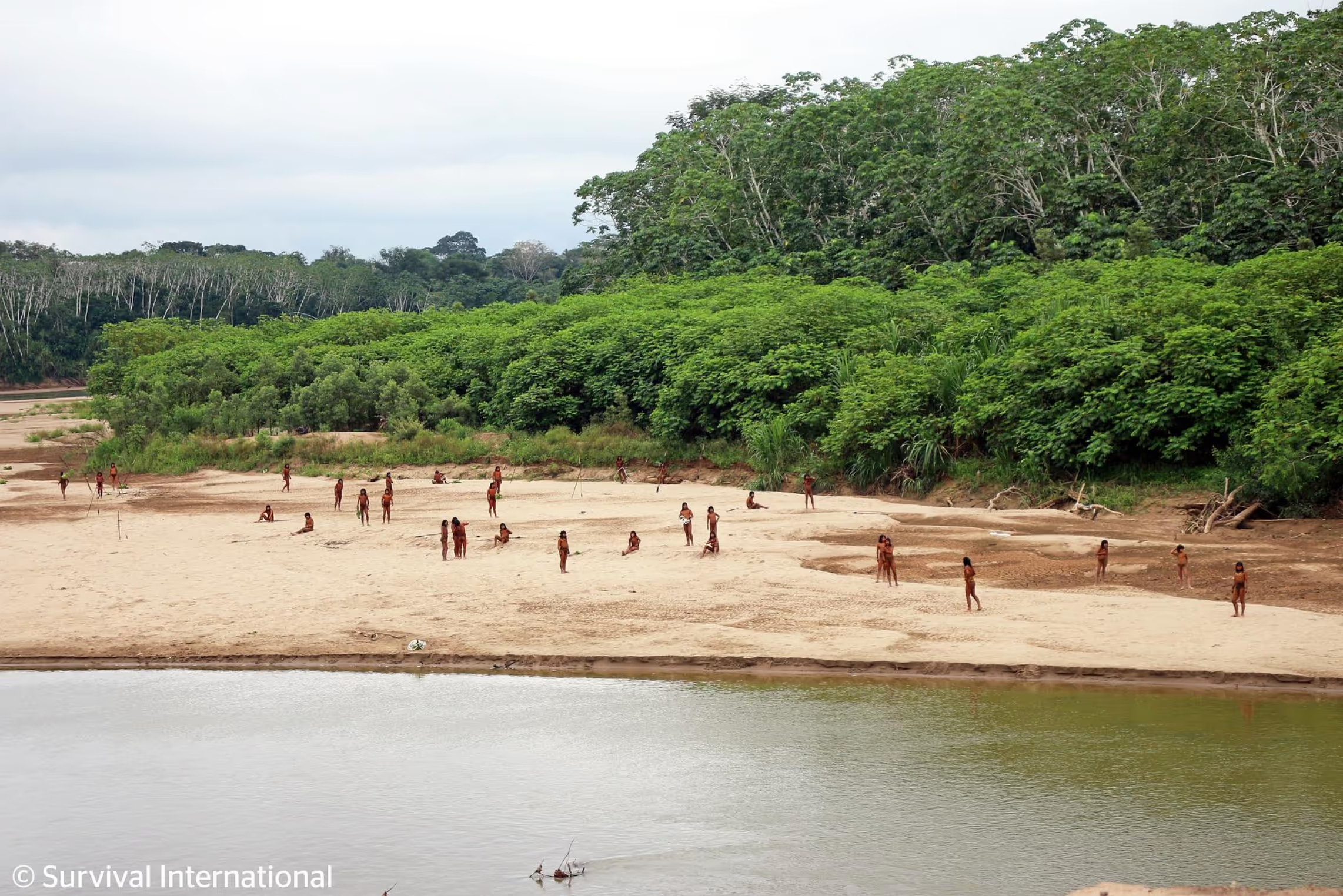
It unveiled its campaign with stunning new photos of dozens of Mashco Piro on a riverbank dangerously close to the logging. The fact that the normally elusive tribe would come out into the open is, critics warn, a sign of the pressure on them and the tropical rainforest ecosystem on which they depend.
The photos intensified the focus on the FSC signing off on Catahua’s logging, apparently in violation of the internationally recognized rights of tribes in voluntary isolation — including for them and their territory to be left alone by outsiders.
In a conversation with Hunterbrook Media, Julio Cusurichi, a local indigenous leader who campaigns on behalf of the Mashco Piro, hailed the FSC decision but warned that it was just an eight-month suspension — echoing an earlier statement he had made to the press: “This is an important step, but it’s not the end of the matter. We’re going to keep up the fight until we get a historic victory.”
Survival International’s Fiona Watson shared a similar sentiment in the statement, adding: “Under Peruvian and international law the Mashco Piro have the right to the ownership of their territory, and not to have it cut down around them.”
Contacted for comment, Catahua’s lawyer Yony Picchotito denied that the company was operating on Indigenous land. Decertification would be “disastrous,” Picchotito said, opening the door to “invaders” to plunder the forest. Picchotito blamed the FSC’s decision on a “campaign of disinformation,” including from the media.
The FSC move comes just as the Mashco Piro are reported to have killed two loggers in another part of the Peruvian Amazon, according to Survival International, highlighting the risks of forced contact with the tribe.
Simeon Tegel is a British freelance journalist based in Lima, Peru, from where he also regularly roams across Latin America. He specializes in environmental stories, democracy and human rights and is a regular contributor to the Washington Post, among other media. A foodie and outdoorsman, he would not be anywhere other than Peru.
Sam Koppelman is a New York Times best-selling author who has written books with former United States Attorney General Eric Holder and former United States Acting Solicitor General Neal Katyal. He helped build Fenway Strategies into one of the preeminent strategic communications firms in the country—with side quests speechwriting for Michael Bloomberg, running the surrogate remarks operation on the Biden-Harris campaign, and co-founding Mayday, which is now one of the leading information providers on how to access reproductive health care in states with bans. Sam has published in the New York Times, Washington Post, Boston Globe, Time Magazine, and other outlets — and occasionally volunteers on a fire speech for a good cause. He has a BA in Government from Harvard, where he was named a John Harvard Scholar and wrote op-eds like “Shut Down Harvard Football,” which he tells us were great for his social life.