Hunterbrook Media’s investment affiliate, Hunterbrook Capital, does not have any positions related to this article at the time of publication. Positions may change at any time. Full disclosures below.
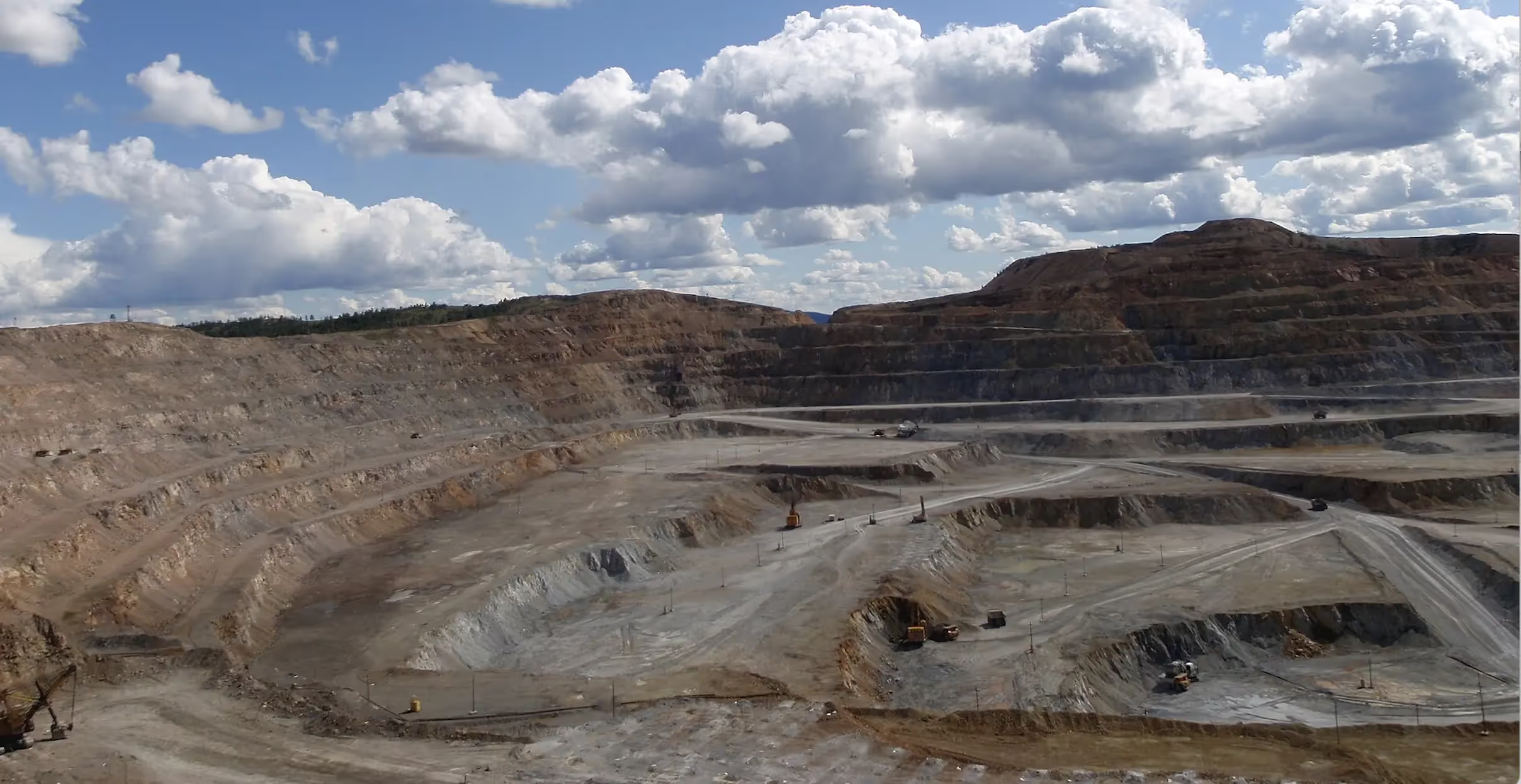
Ahead of the parliamentary election in June, Prime Minister Oyun-Erdene Luvsannamsrai of Mongolia is raising the stakes on an anti-corruption campaign that could significantly impact future foreign investment in Mongolia’s mining sector.
The Mongolian parliament on April 19 approved the Sovereign Wealth Fund law, allowing the government to take a 34% stake in strategic mines and capping individual or group ownership at 34%. A Parliament member said the law aims to ensure the public receives the greatest benefits from strategic mineral deposits. Prime Minister Oyun-Erdene, who submitted the bill, argued that it would put an end to the “stealing of strategic mining deposits.”
There are 16 strategic mining deposits in Mongolia, six of which are state-owned.
Mining accounts for 90% of the country’s exports and 25% of its GDP. Despite Mongolia’s vast resources, about one in three Mongolians still lives in poverty, a problem exacerbated in rural areas by environmental issues due to mining.
Days after the law was passed, the government announced that the state-owned Erdenet Mining Corporation will reclaim a 34% stake in the Achit Ikht copper cathode plant, which processes previously unusable low-grade ore. The company is currently owned by a former chief of staff at the Office of the President Tsagaan Puntsag and his family. The government has accused Tsagaan Punstag of illicit deals and conflict of interest.
The scandal surfaced in 2019 when a local investigative journalist revealed that Tsagaan Puntsag had orchestrated deals to establish and then take ownership of the plant during his time at the Office of the President.
On April 25, the police exposed a Viber chat between Tsagaan and former president Elbegdorj Tsakhia discussing a $13 million transaction related to the plant, allegedly for use in the election campaign.
Elbegdorj denied all the allegations in his Twitter post.
Critics say the Sovereign Wealth Fund law primarily aims to sway voters. Batpurev Ayushsuren, a financial economist, told Hunterbrook Media that the law is a result of the “populism prevalent before elections.” He says it will allow for potential nationalization under the guise of public benefit, creating uncertainty for private companies and future investors.
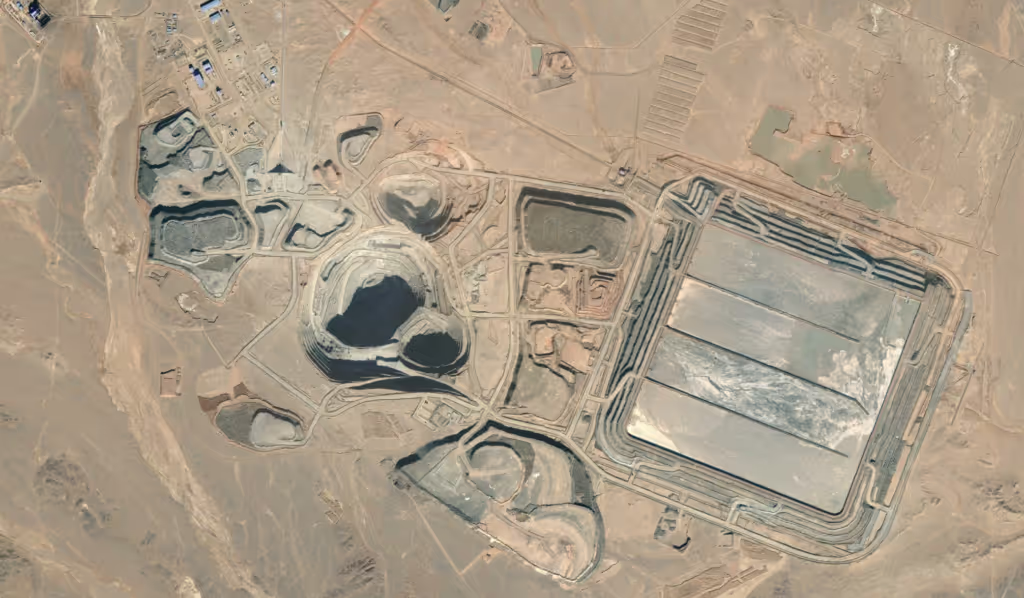
With polls indicating strong support for public ownership of strategic deposits, Prime Minister Oyun-Erdene has cemented his reputation as a corruption fighter by seeking greater control over mineral revenues. For years, he has scrutinized past democratic government mining deals, including those involving Mongolia’s largest mine Oyu Tolgoi, which the government co-owns with Anglo-Australian mining giant Rio Tinto (LON: $RIO).
An investigation into a 2015 deal with Rio, which the government now says was signed illegally by Mongolian officials, has led to the arrests and imprisonments of officials such as former prime minister Saikhanbileg Chimed. He was later released from detention for medical reasons and fled to the U.S.
The law does not affect strategic mines that already have an investment agreement, according to Batpurev Ayushsuren, including Mongolia’s largest Oyu Tolgoi mine, which is already 34% owned by the government.
Munkhchimeg Davaasharav is a freelance journalist and media consultant from Ulaanbaatar, Mongolia. Her journalism, featured in prominent local news media and international outlets like Reuters and The Guardian, spans various topics, from mining to human rights issues. Muugii is pursuing an MA in Media and Gender at the University of Sussex as a Chevening scholar.
Jenny Ahn joined Hunterbrook after serving many years as a senior analyst in the US government. She is a seasoned geopolitical expert with a particular focus on the Asia-Pacific and has diverse overseas experience. She has an M.A. in International Affairs from Yale and a B.S. in International Relations from Stanford. Jenny is based in Virginia.