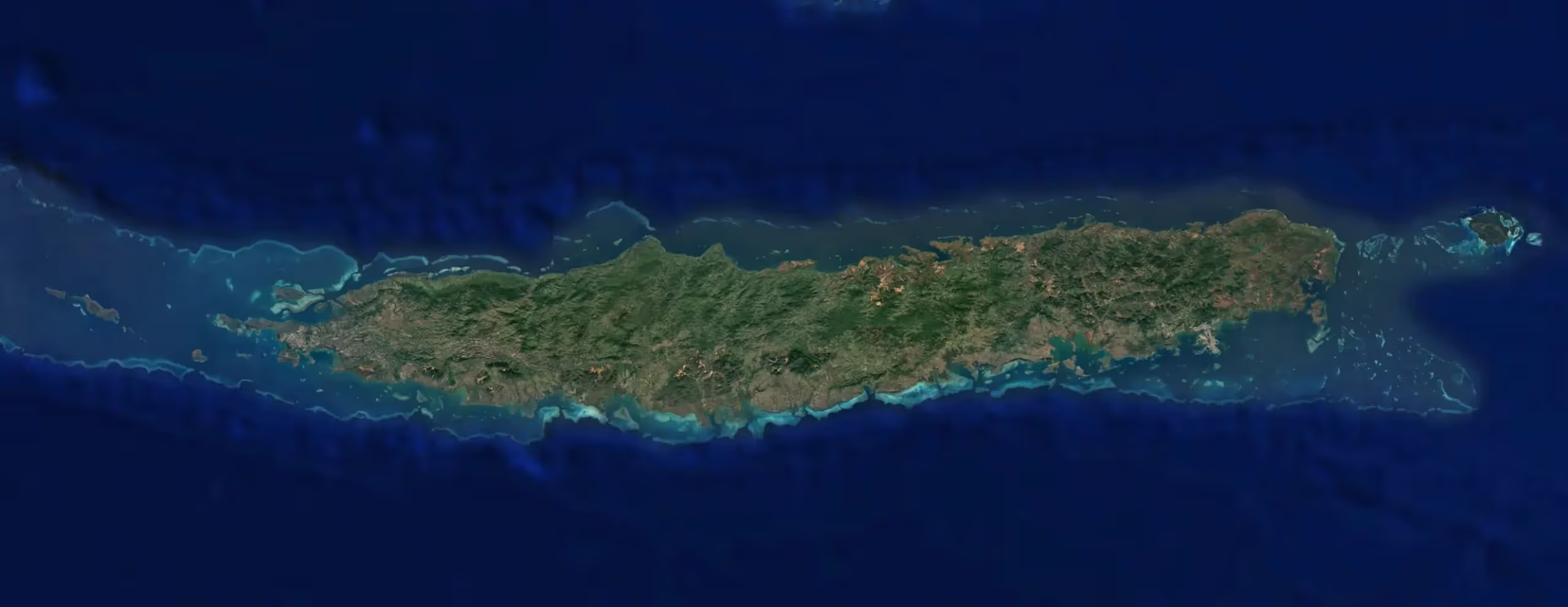
Based on Hunterbrook Media’s reporting, Hunterbrook Capital is long nickel. Positions may change at any time. See full disclosures below.
- The arrest and covert extradition of activists from New Caledonia by France has restarted riots that began in February and catalyzed a state of emergency in May.
- Nickel is the foundation of New Caledonia’s economy, a commodity used from stainless steel to EV batteries, and a French strategic interest.
- New Caledonia is among the world’s largest nickel suppliers.
- Nickel ore stockpiles at New Caledonia’s largest refinery, the Doniambo smelter in Nouméa, were depleted during the prior wave of conflict last month.
- Hunterbrook Media is tracking satellite imagery, AIS data, and other sources to see if the brief resumption of New Caledonia’s nickel trade will hold amid new risks.
Over the weekend, a jet departed New Caledonia, the French territory midway between Australia and Fiji. But it was nowhere to be found on public flight trackers, according to transponder data examined by Hunterbrook Media.
The plane seems to have crept into the night sky with its transponder off, reportedly carrying detained pro-independence activists secretly bound for mainland France.
As news broke of the flight, independence activists sparked fresh riots in New Caledonia. The conflict threatens to disrupt the fragile peace of recent weeks after months of protests and uncertainty in the global nickel market.
Protesters have been seen blocking major roads and fighting with security forces in towns including Koumac, Paita, and Dumbea, according to Reuters. In Poya, a massive crowd blockaded Route 1, the island’s main highway. A town hall, a police station, and several other buildings were set alight across the island. This latest conflict is a reverberation of violence from earlier in the year.
That conflict impacted nickel production on the island. Due to New Caledonia’s significant output, commodity analysts cited the unrest as a factor contributing to the spring surge in global nickel prices.
The island was among the largest suppliers of nickel globally last year. Its massive network of nickel mines can be seen from space, covered in reddish-brown open pits.
According to a report by Reuters, the chair and CEO of Eramet S.A. (EPA: $ERA), a major French mining company with operations in New Caledonia, declared the situation earlier this year a threat to the supply chain — saying it needed to be addressed “urgently.”
In recent weeks, Hunterbrook Media has tracked the slow stabilization of the nickel supply chain across the territory with satellite imagery and AIS ship tracking data.
The imagery examined by Hunterbrook Media showed a clear decrease in the total amount of nickel ore stockpiled at the Doniambo smelter in the capital, Nouméa, one of two major processing facilities on the island.
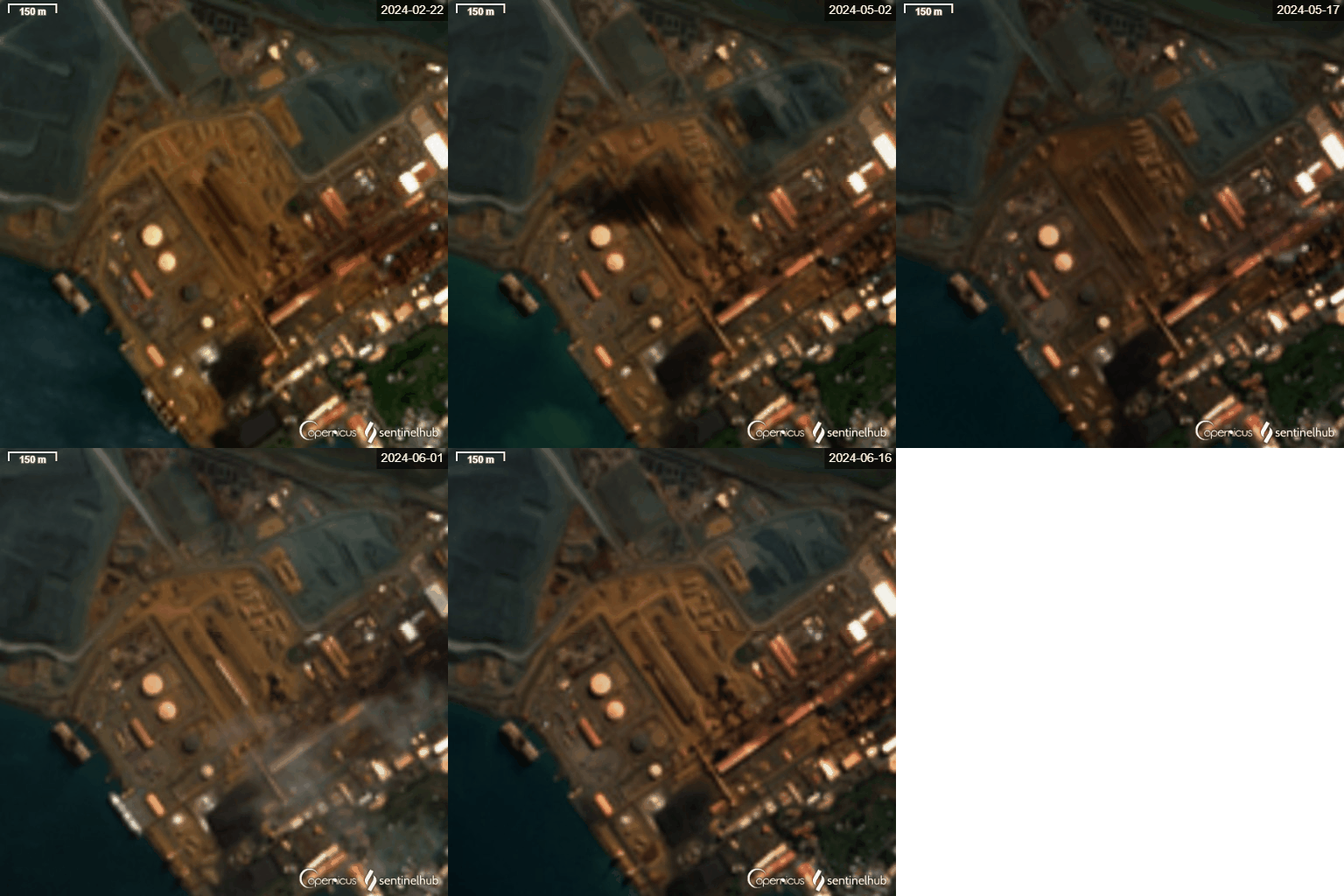
Sentinel-2 imagery showing the Doniambo smelter in Nouméa between February and June, 2024. Nickel ore piles in the center of the complex can be seen dwindling as shipments slowed.
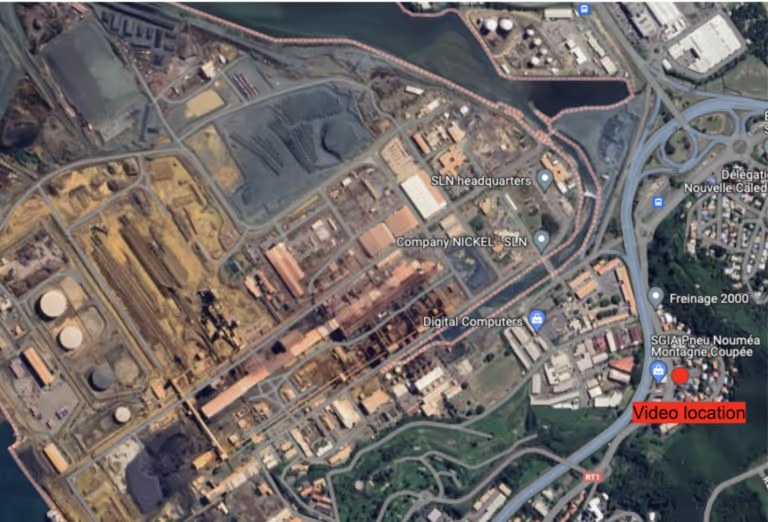
Unrest and damage were significant around the refinery, according to Hunterbrook Media’s analysis and geolocation of on-the-ground and satellite imagery.
Just over a half kilometer from the refinery gates, protestors torched a major bottling plant.
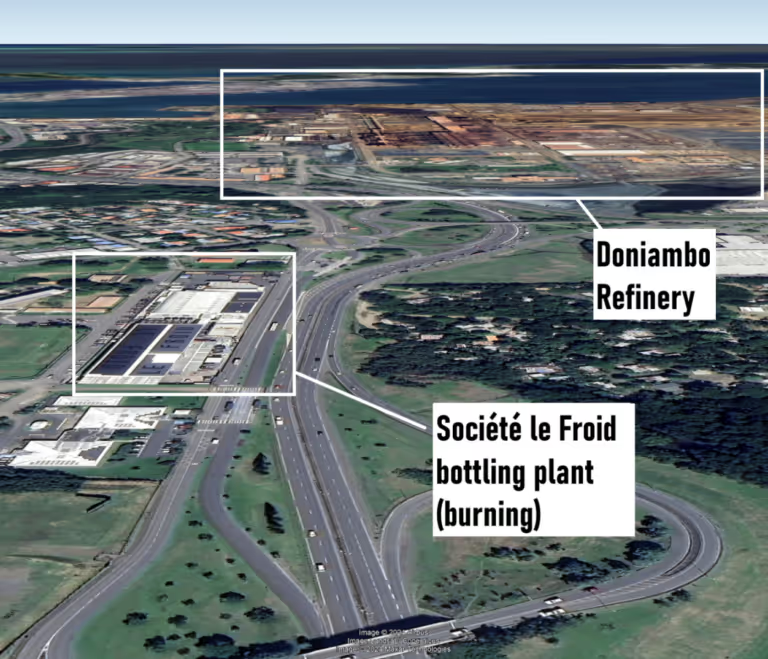
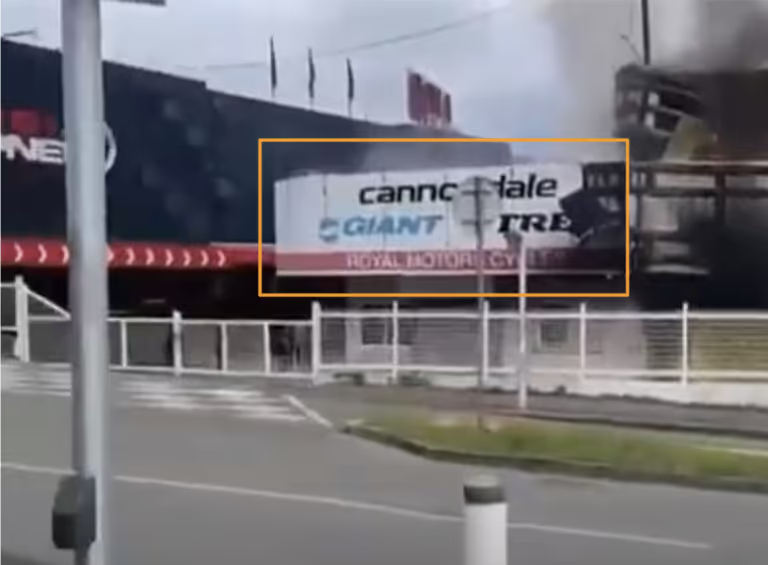
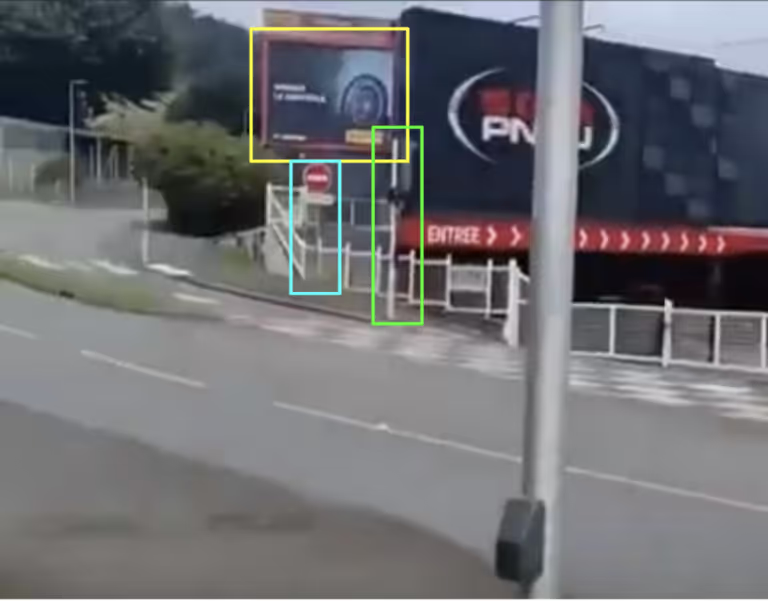
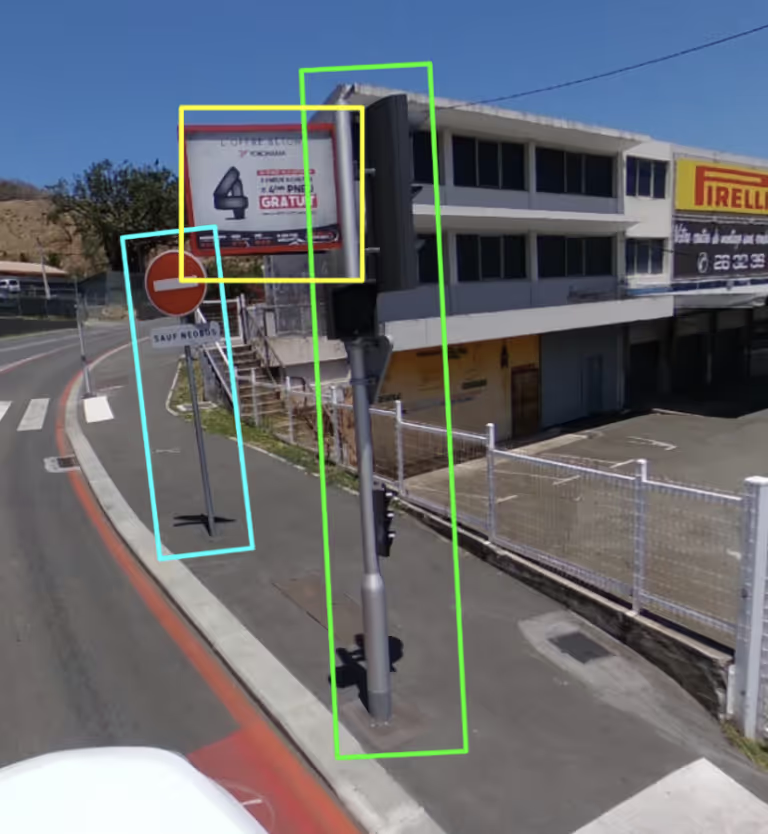
A Hunterbrook Media contributor also geolocated a Royal Motors Cycles building that had been burned within several hundred meters of the Doniambo smelter in Nouméa.
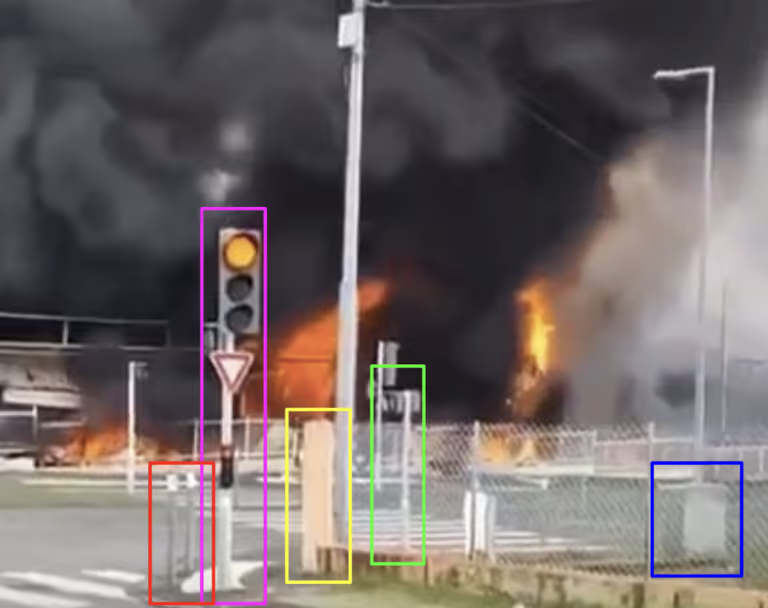
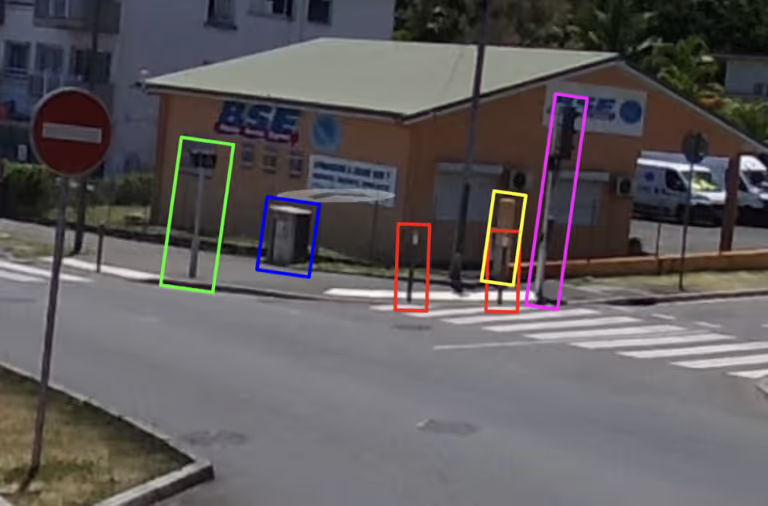
Government agencies made a series of efforts to calm the tensions. Notably, President Macron deployed over 1,000 gendarmes and police to the region, supported by military units, and suspended the voting reforms that had sparked the violence in the first place. As a result, according to AIS data, nickel ore deliveries to the smelter had resumed by early June.
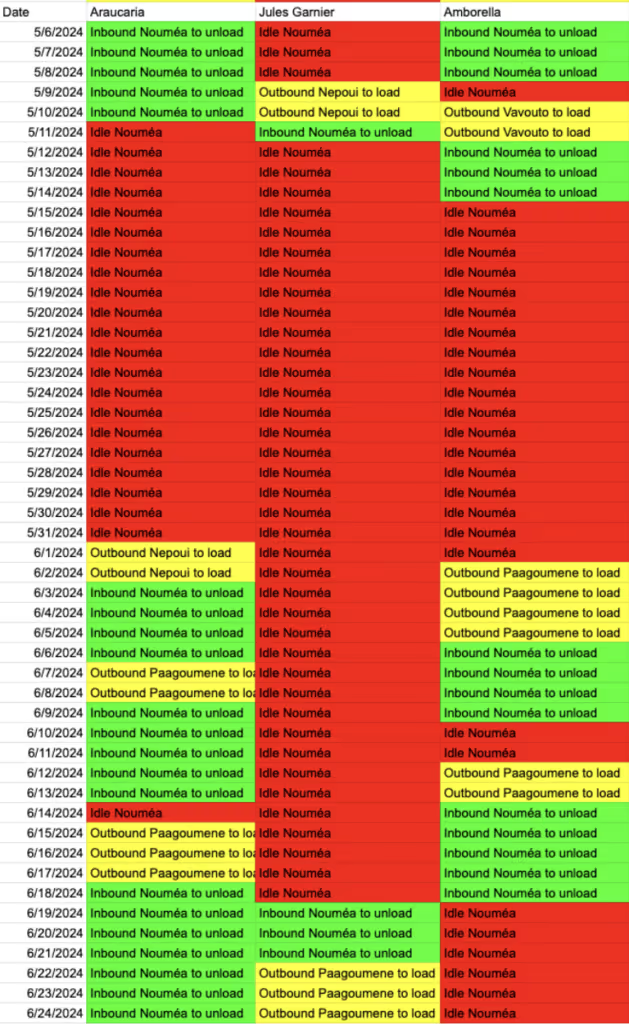
The bulk carrier Araucaria could be seen docked at the Doniambo port on June 11, according to an image obtained by Hunterbrook Media.
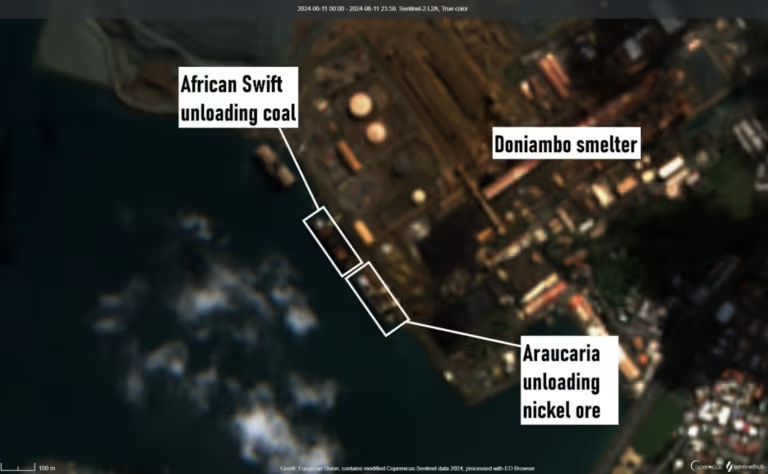
Whether this recovery can withstand the new unrest remains to be seen.
The secret extradition
At least eight members of the Field Action Coordinating Unit, a group of pro-independence activists — including its leader, Christian Tein — were passengers on the ghost flight.
On June 20, French gendarmes stormed CCAT’s headquarters in downtown Nouméa. This was less than a month after France had invited Tein to join a delegation of indigenous leaders who met French President Macron during his visit to Noumea on May 23.
Union Calédonienne — New Caledonia’s oldest political party and the territory’s foremost pro-independence organization — said the arrests recalled “the catastrophic spiral into which Minister Pons dragged the country during the events of 1984-1988.” This refers to a turbulent period in New Caledonia’s history known as Les Événements (The Events).
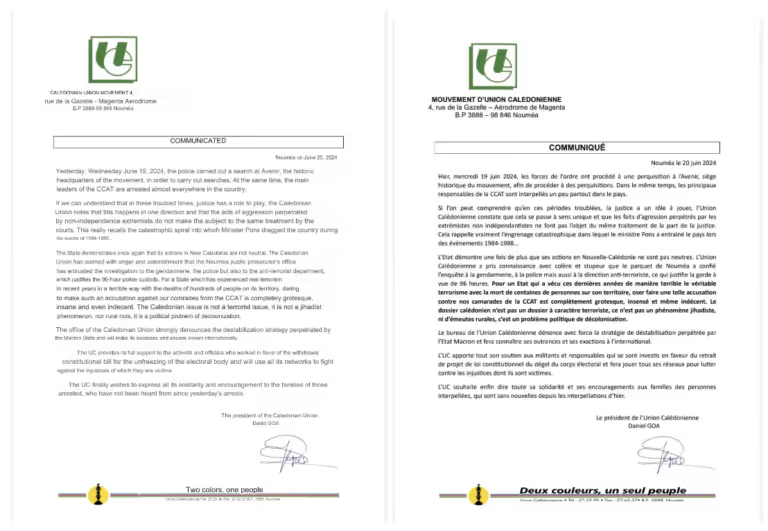
On the morning of June 22, the investigating judge abruptly informed lawyers for the arrested CCAT activists that their clients had been secretly loaded onto a chartered jet the night before and moved to pretrial detention in Metropolitan France.
According to Le Monde, “The lawyers are all the more surprised as transfers to mainland France, which are extremely rare and usually involve convicted prisoners who are willing to leave, take a very long time to organize and can take up to several months.”
Union Calédonienne denounced the extradition as an “extreme decision which illustrates that the independence of justice is a farce in New Caledonia.”
Historical context and current tensions
New Caledonia’s current crisis is deeply rooted in a complex history of colonization and the ongoing struggle for independence. The indigenous Kanak people, who make up approximately 41% of the territory’s population, have long sought greater autonomy and recognition of their rights.
Europeans and other ethnic groups now comprise the majority of the populace in the archipelago.
The 1998 Nouméa Accord marked a significant milestone, aiming to grant greater autonomy to New Caledonia. This agreement came after Les Événements, which saw violent clashes between pro-independence activists and those supporting continued French rule.
In early 2024, tensions reignited when the French government proposed an amendment to expand voting rights to French residents who have lived in New Caledonia for ten years. This move was seen by pro-independence groups as an attempt to dilute the Kanak vote and undermine the spirit of the Nouméa Accord.
The situation began to unravel rapidly in February 2024, when police confronted protesters in the capital city of Nouméa.
Violence flared up again on April 9, when pro-independence protesters blockaded the village of La Foa, according to Radio New Zealand. This action coincided with discussions in the local congress regarding a “nickel pact,” a French initiative offering financial aid to support New Caledonia’s struggling nickel industry in exchange for significant industry reforms.
The violence quickly escalated, with widespread destruction and looting in the capital, Nouméa. By mid-May, the situation had deteriorated to the point where France declared a 12-day state of emergency and deployed additional security forces.
On May 19, video emerged of French armored cars bulldozing roadblocks on Nouméa’s main highway, Route 1.
Around the period of the state of emergency, nickel prices hit a local peak — though, of course, many factors impact nickel prices on any given day.
The violence resulted in at least five deaths, including two gendarmes and three Kanak individuals.
But eventually, President Macron seemingly heeded a major demand of the protestors on June 12. He suspended the voting reform bill, stating, as translated by The Guardian, “We cannot leave ambiguity during this period. It must be suspended to give full strength to dialogue on the ground and the return to order.”
Pro-independence activists, however, fear that Macron may reintroduce the bill at a later date.
France had achieved relative peace in New Caledonia in recent weeks with force — after deploying its military. But the government may struggle to regain stability after this latest outbreak of violence, especially as France’s attention may be diverted by the upcoming summer Olympics in Paris and contentious elections.
Hunterbrook Media is continuing to monitor shipping data, satellites, and other OSINT in the region to track whether the global nickel market will once again be disrupted. Subscribe at newsletter.hntrbrk.com for live updates or follow on X at @hntrbrkmedia.
Blake Spendley joined Hunterbrook from the Center for Naval Analyses (CNA), where he led investigations as a Research Specialist for the Marine Corps and US Navy. He built and owns the leading open-source intelligence (OSINT) account on X/Twitter, called @OSINTTechnical (over 1 million followers), which also distributes Hunterbrook Media reporting. His OSINT research has been published in Bloomberg, the Wall Street Journal, and The Economist, among other top business outlets. He has a B.A. in Political Science from USC.
Sam Koppelman is a New York Times best-selling author who has written books with former United States Attorney General Eric Holder and former United States Acting Solicitor General Neal Katyal. He helped build Fenway Strategies into one of the preeminent strategic communications firms in the country—with side quests speechwriting for Michael Bloomberg, running the surrogate remarks operation on the Biden-Harris campaign, and co-founding Mayday, which is now one of the leading information providers on how to access reproductive health care in states with bans. Sam has published in the New York Times, Washington Post, Boston Globe, Time Magazine, and other outlets — and occasionally volunteers on a fire speech for a good cause. He has a BA in Government from Harvard, where he was named a John Harvard Scholar and wrote op-eds like “Shut Down Harvard Football,” which he tells us were great for his social life.
Daniel Sherwood contributed reporting. Sherwood joined Hunterbrook from The Capitol Forum, a premium subscription financial publication, where he was an Editor & Senior Correspondent, writing and managing market-moving investigative reports and building the Upstream database. Prior to The Capitol Forum, Daniel has experience conducting undercover investigations into fossil fuel companies and other research. He also served as an Honors Law Clerk in the Criminal Enforcement Division of the EPA. He has a JD from Michigan State University. Daniel is based in Michigan.